


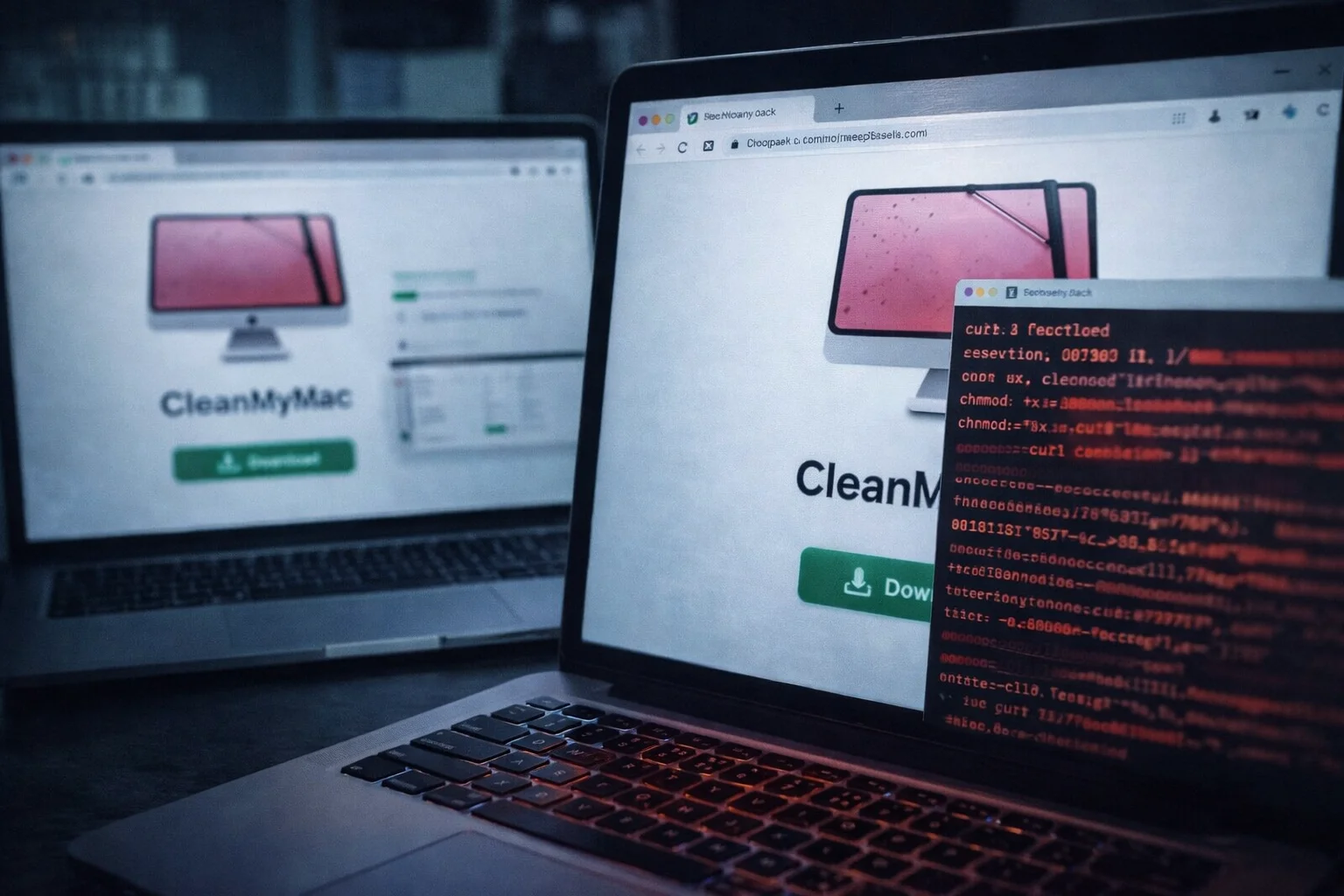
Cybercriminals are targeting Apple users through a fake CleanMyMac website that spreads macOS malware. The campaign tricks victims into installing malicious software disguised as a trusted system tool.
Attackers created a convincing website that imitates the legitimate CleanMyMac download page. Many users search online for the utility when trying to clean or optimize their devices.
Victims who follow the instructions on the fake page unknowingly install malware instead of the real application. Security researchers warn that the campaign focuses on stealing sensitive information from infected systems.
Fake Website Impersonates Popular Mac Utility
CleanMyMac is a widely known maintenance tool used by many macOS users. The program helps remove unnecessary files and improve system performance.
Attackers took advantage of the software’s popularity by creating a nearly identical website. The fake page mimics the design and branding of the legitimate product.
Visitors see what appears to be a normal download page for the utility. The instructions encourage users to install the application manually.
However, the process does not deliver the legitimate program. Instead, it initiates a malware infection on the victim’s device.
Because the website closely resembles the real one, many users may not notice the difference.
Attack Relies on Social Engineering
The infection method depends on social engineering rather than technical vulnerabilities. Victims receive instructions that guide them through the installation process.
The fake site instructs users to open the macOS Terminal and run a command. That command downloads and executes a malicious script from a remote server.
Because users execute the command themselves, built-in security protections may not block the action. This approach allows attackers to bypass several macOS safeguards.
Researchers note that this tactic increases the success rate of the attack.
Infostealer Malware Collects Sensitive Data
The campaign distributes a macOS infostealer designed to harvest sensitive information. Once installed, the malware begins collecting data from the infected device.
The stolen information may include:
- saved browser passwords
- authentication cookies and session data
- browsing history
- cryptocurrency wallet details
- messaging platform sessions
- system and device information
Attackers send this data to remote command servers for further use.
The malware can also maintain persistence on the infected system. This allows attackers to continue interacting with the device after the initial compromise.
Malware Includes Geographic Safeguards
Researchers observed that the malware performs checks before fully executing on a device. One check looks for a Russian keyboard layout on the system.
If that keyboard layout appears, the malware stops running. This behavior often appears in campaigns linked to Russian-speaking cybercriminal groups.
Such groups frequently avoid targeting systems located in their own region.
The malware also sends system details and a unique identifier to its command server. Attackers can use this information to track infected machines and manage operations.
Conclusion
The fake CleanMyMac website campaign shows how easily attackers can abuse trusted software brands. By cloning a popular utility page, criminals created a convincing trap for macOS users.
The attack relies on social engineering rather than advanced exploits. Victims unknowingly run commands that install malware capable of stealing sensitive information.
Researchers warn that users should download software only from verified sources. Running unknown commands from websites can expose devices to serious security risks.
0 responses to “Fake CleanMyMac Website Spreads macOS Infostealer Malware”