


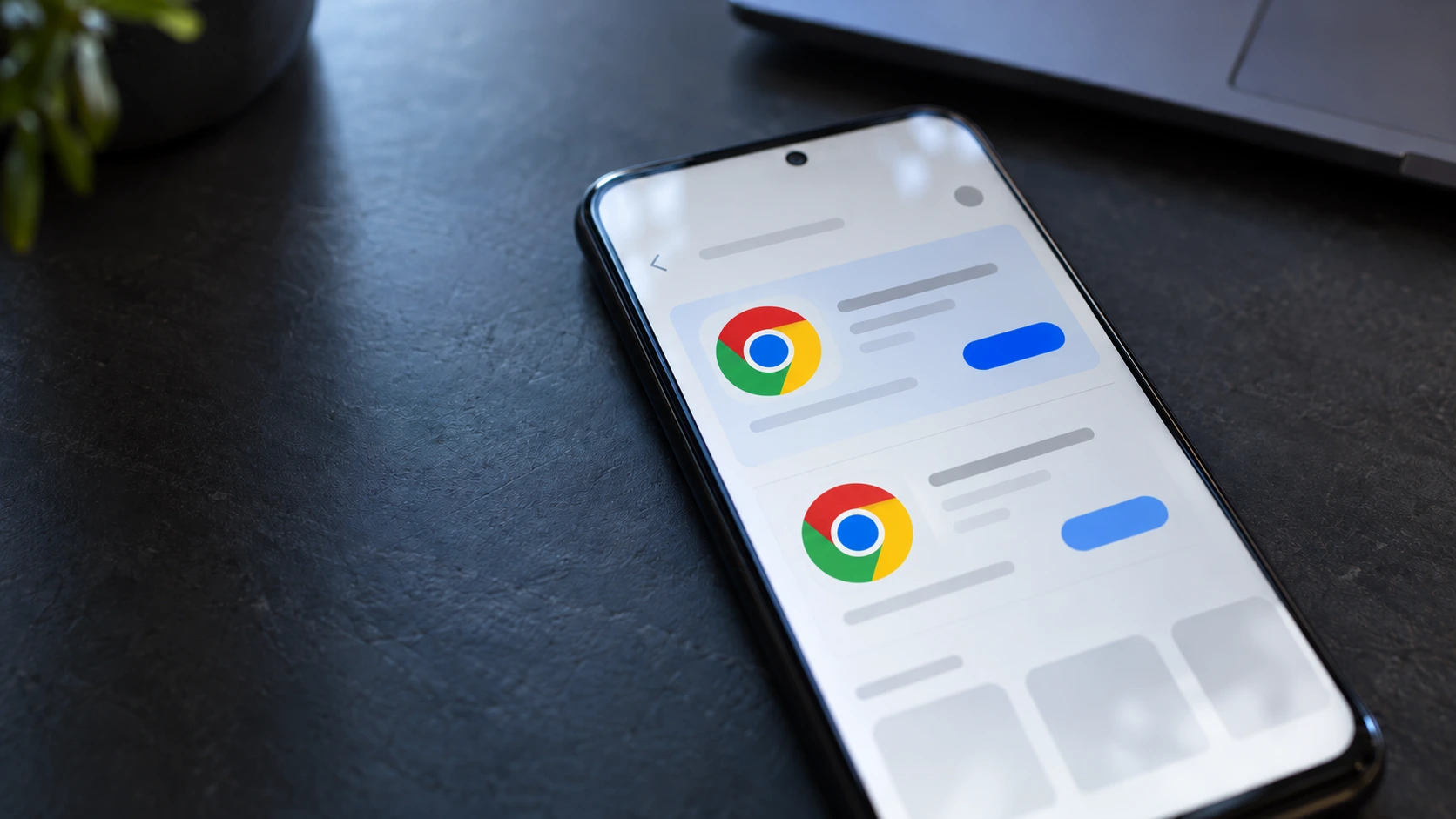
A fake Chrome app on Google Play copied the browser’s branding and displayed more than 100,000 downloads. A screenshot also showed the impersonator appearing in a sponsored position above Google’s genuine browser.
However, the download figure covers the app’s entire history, including its earlier existence as a game. It therefore remains unclear how many people installed it believing they were downloading Chrome.
Google has since removed the listing. Nevertheless, the incident raises questions about how its store reviews and advertising checks handled an app impersonating its own product.
A Game Became a Chrome Lookalike
The app originally launched in August as a game called Ball Bounce. On September 30, its listing changed to imitate Chrome, adopting the browser’s name, icon and description.
Despite those changes, the developer remained Hizbartech rather than Google LLC. Its Android package identifier also stayed unchanged: com.ballbounce.Hizbartech.
That identifier connected the Chrome lookalike to the earlier game. Consequently, the cumulative download total cannot establish how successful the impersonation itself became.
The distinction matters because the listing’s popularity could have included installations from users who originally wanted Ball Bounce.
Users Reported Messaging Features and Repeated Ads
People who examined the fake Chrome app described a messaging-style interface instead of a working web browser. According to their accounts, it included AI-generated avatars and prewritten responses.
Meanwhile, some users suggested that the developer used Chrome’s identity to attract installations and generate advertising revenue. One account described ads playing repeatedly after launch.
However, those observations do not establish the developer’s intentions or provide a complete security assessment.
The available reports also do not confirm whether the app contained malware or collected personal information without permission. Claims that it was harmless therefore remain unverified.
Sponsored Placement Adds to Scrutiny
A screenshot shared on Reddit showed the imitation browser occupying a sponsored search position above the legitimate Chrome listing.
However, a separate check could not reproduce that advertisement. The screenshot therefore documents a reported appearance, without establishing how frequently Google displayed the promotion or how many users saw it.
At the time of the initial reports, Google had not explained how the app passed its checks. It also had not clarified how the impersonating listing appeared in a sponsored position.
Removal Leaves Questions About Store Safeguards
The incident has also drawn criticism because Google has promoted tighter Android developer verification measures as a security safeguard.
Those measures concern the wider distribution of Android apps, including installation outside Google Play, commonly called sideloading.
Against that backdrop, an impersonator inside Google’s own store creates an uncomfortable example of gaps in platform oversight.
Although Google removed the app, questions remain about the review of its branding changes and the checks governing sponsored listings.
0 responses to “Fake Chrome App Tops 100,000 Downloads on Google Play”