


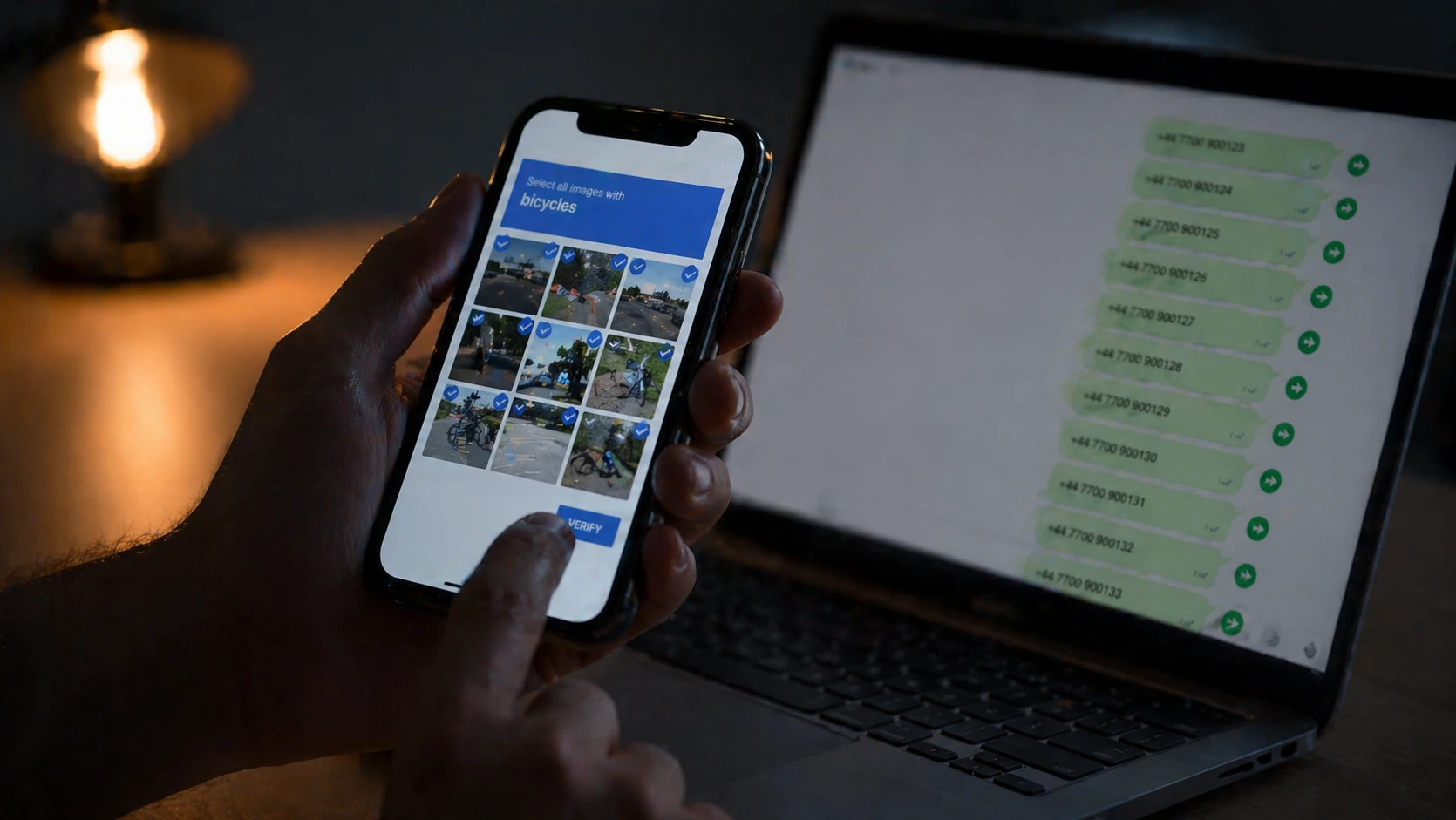
A fake CAPTCHA scam is tricking users into sending premium SMS messages without realizing it. Victims often discover the issue only after seeing unexpected charges on their phone bills.
Fake verification pages hide malicious actions
Attackers use fake CAPTCHA pages that closely mimic legitimate verification systems. The prompts appear simple and familiar, which lowers suspicion and encourages users to continue.
Behind the scenes, these interactions trigger hidden actions. In many cases, the device opens a messaging app with pre-filled content ready to send to international numbers.
Users may complete several steps before noticing anything unusual. By that point, multiple messages may already be prepared or sent.
Charges build quickly across multiple numbers
This scam relies on volume rather than a single action. Messages are sent to numerous international numbers linked to high-cost destinations.
A single interaction can result in dozens of outgoing texts. Each message carries a small fee, but the total can reach around $30 or more.
Because billing delays are common, victims often fail to connect the charges to the original activity.
Deceptive flow keeps users engaged
The attack usually starts when users land on a deceptive or mistyped website. The page design closely resembles trusted platforms, making the interaction feel legitimate.
Victims are guided through multiple fake verification steps. Scripts run in the background to trigger actions and keep users engaged throughout the process.
Some campaigns also use navigation tricks that make it difficult to leave the page. This increases the likelihood of repeated interactions and higher charges.
Fraud model enables global scale
The fake CAPTCHA scam operates within a broader telecom fraud model. Attackers profit by routing messages through premium-rate numbers and collecting a share of the fees.
This setup allows campaigns to scale across different regions while spreading activity across multiple networks. As a result, detection becomes more difficult.
Conclusion
The fake CAPTCHA scam shows how familiar online elements can be used to trigger hidden costs. A simple verification step can lead to multiple paid actions without clear consent.
As these tactics evolve, users need to stay cautious when interacting with unexpected verification pages, especially when unusual steps appear.
0 responses to “Fake CAPTCHA scam triggers $30 premium message charges”