


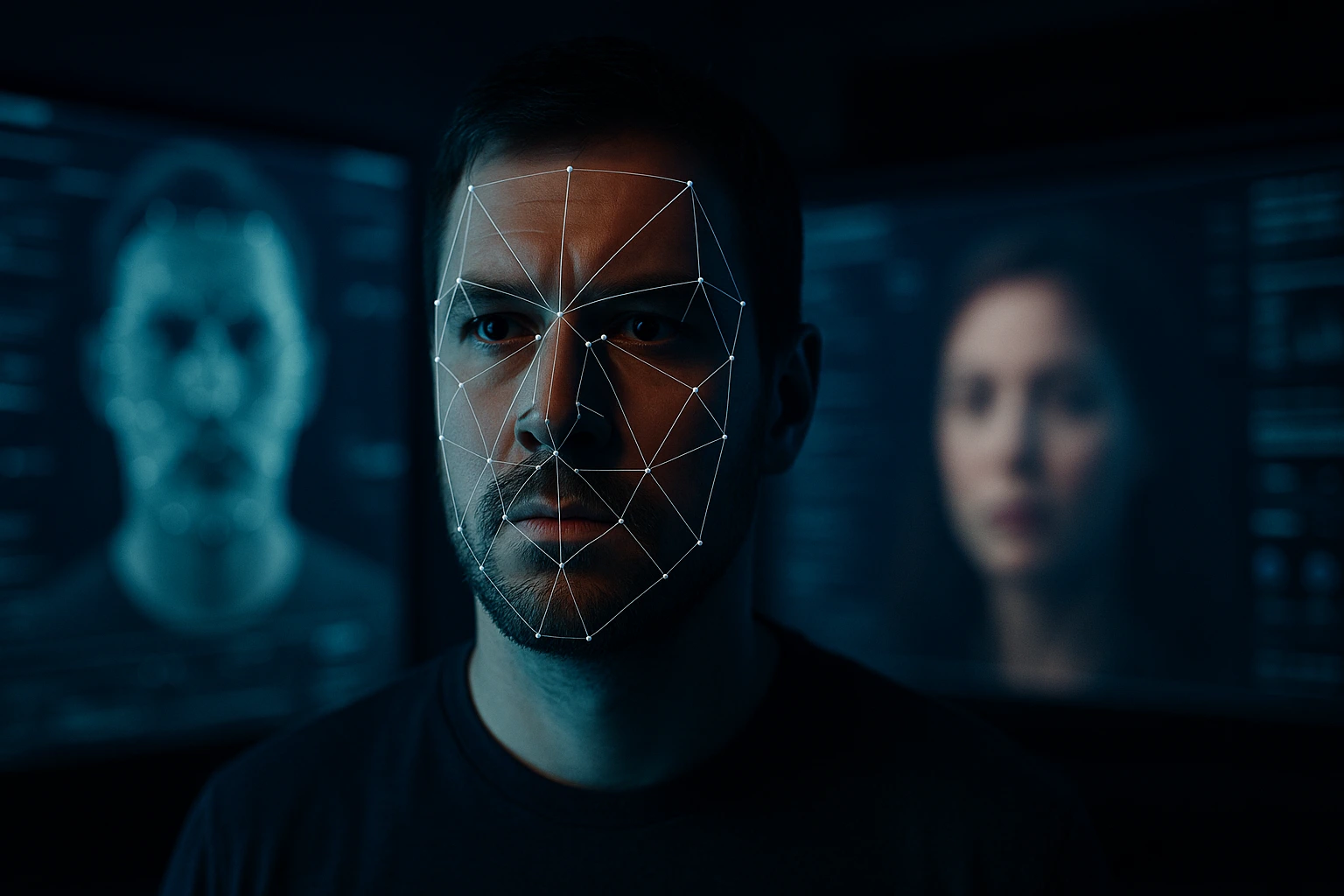
Facial recognition failure continues to expose major weaknesses in the technology. While developers boast about accuracy in lab tests, real-world performance often tells a different story. These flaws create risks for privacy, civil rights, and trust in AI-driven security systems.
Lab Accuracy vs. Real-World Use
Facial recognition systems often score above 99% accuracy in controlled environments. Yet those numbers do not hold up when conditions change. Surveillance cameras capture poor lighting, blurred angles, and obstructed faces, all of which reduce accuracy. The gap between testing and reality leaves room for errors that affect thousands of people daily.
Who Gets Misidentified Most
The impact of facial recognition failure is not equal across groups. Studies show women, older adults, and people with darker skin tones face far higher error rates. Some reports found Black women misidentified up to 35% of the time, while white men had errors below 1%. These biases raise concerns about fairness and the potential misuse of technology in law enforcement and public spaces.
Human Bias Adds to the Problem
Even when systems flag possible matches, human operators play a role. Investigations reveal that automation bias often pushes decision-makers to trust machine output without proper review. This practice increases the chance of wrongful arrests and false accusations. When technology and human error combine, the results can be damaging and hard to reverse.
Why the Numbers Mislead
Benchmarks like those from the National Institute of Standards and Technology measure algorithms under ideal conditions. They do not reflect the messy realities of real-world deployment. Relying on these numbers without broader testing makes it easy to oversell accuracy while ignoring bias.
Conclusion
The ongoing facial recognition failure shows that the technology is far from ready for unrestricted use. High lab accuracy means little if systems fail when tested against diverse populations and real-world conditions. Without strong oversight, transparent testing, and bias reduction, facial recognition risks becoming more harmful than helpful. Companies and regulators must act before these failures erode public trust even further.
0 responses to “Facial Recognition Failure Highlights Bias and Accuracy Gaps”