


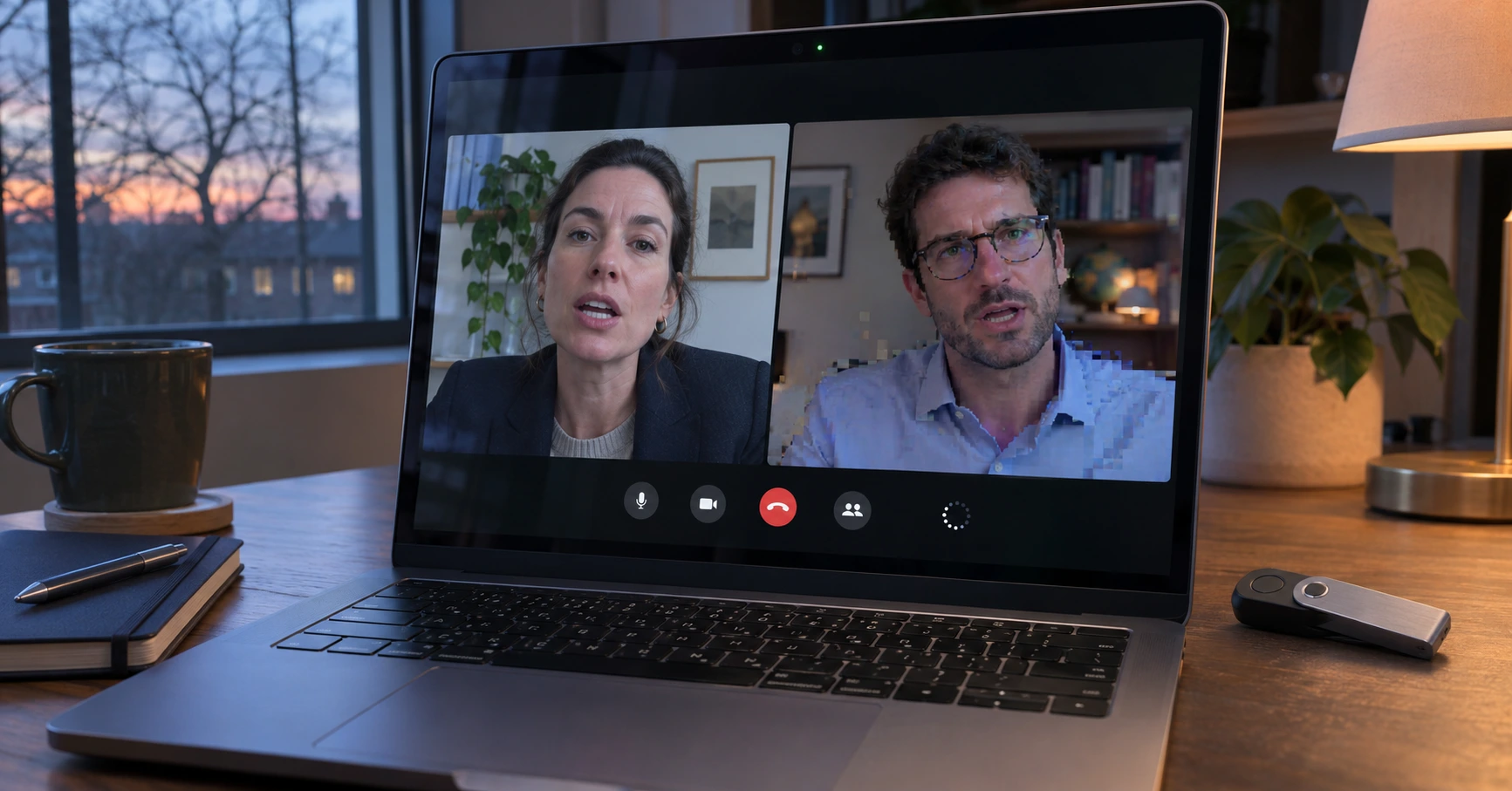
US authorities seized the cloud infrastructure behind the FaceStealer campaign, disrupting an 18-month North Korean operation that stole more than $400 million in cryptocurrency. Investigators also found more than 900 webcam recordings that the attackers had secretly made of tech workers.
The operation targeted people working in cryptocurrency and Web3, as well as developers who maintain open-source software. Researchers attributed the FaceStealer campaign to BlueNoroff, a North Korean hacking group. They identified 677 targets across 58 countries, with company founders and senior executives among the main targets.
Familiar faces made the meeting invitations convincing
According to the FBI, many invitations came from contacts whose Telegram, LinkedIn, Slack or Discord accounts the attackers already controlled. When someone joined a call, they saw what appeared to be a colleague waiting for the meeting to start. In some cases, several familiar faces appeared on screen.
The people on screen were earlier victims whose footage the attackers had kept. While the new participant waited, the attackers recorded them through their webcam. That gave the group another familiar face to use in future calls, while access to victims’ contact lists helped it identify people likely to recognize them.
The attackers then blamed a supposed technical problem for interrupting the meeting. They offered what looked like an update or installer, but anyone who ran it risked installing malware that stole cryptocurrency data and account credentials. The FBI said the group sometimes waited months, or even more than a year, before targeting someone again. Investigators suspect the attackers were waiting for the person’s cryptocurrency holdings to grow.
Open-source developers also faced fake meeting requests
In one case, the attackers compromised the maintainer of a JavaScript library with tens of millions of weekly downloads. The developer had joined what appeared to be a Microsoft Teams meeting and recognized one of the participants. Prompt detection interrupted the attack. However, the FBI documented other attempts against developers who maintain npm packages and Rust crates.
The FBI advises recipients to confirm unexpected invitations through a separate channel. For a legitimate meeting, participants can open the official app themselves and enter the invitation code. The agency also recommends keeping webcams off until needed and avoiding scripts or installers offered during a call as technical fixes.
Separately, the US Justice Department announced that authorities and private companies had frozen more than $2.7 billion linked to a Binance cryptocurrency theft. Of that frozen amount, more than $1.2 billion was subject to court authorization for seizure or restraint.
0 responses to “FaceStealer campaign used fake calls to steal over $400M”