


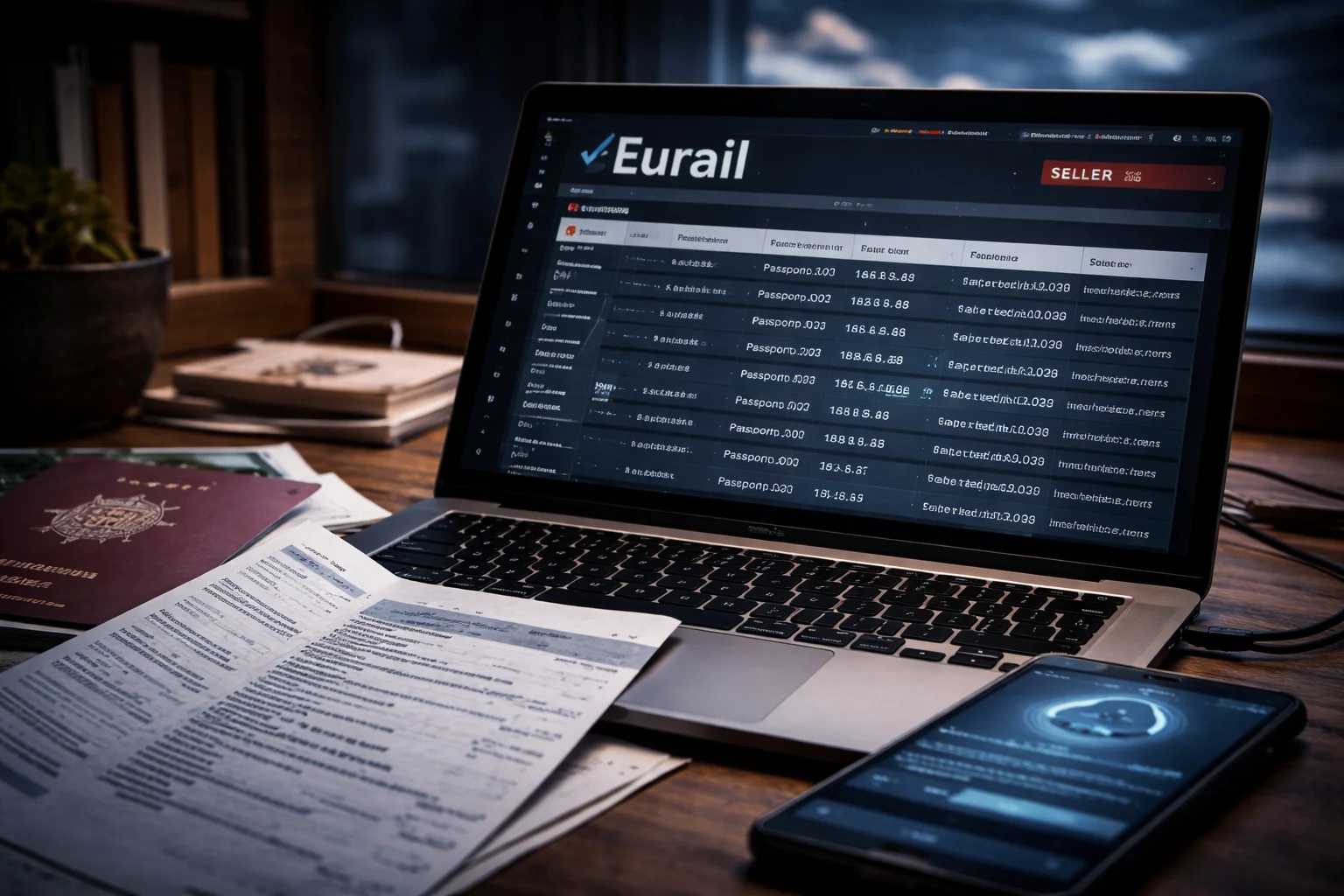
Travel records contain more than booking details. The Eurail data breach now shows how sensitive that information can be after stolen customer data surfaced for sale on dark web forums. Criminals published samples publicly, confirming the incident moved beyond an internal investigation into active exploitation.
Because the service connects international rail journeys, the impact may extend across multiple countries.
What information was exposed
Eurail confirmed attackers accessed a database containing personally identifiable traveler information. The leaked material goes far beyond email addresses and basic contact records.
Reportedly exposed data includes:
- Full names
- Passport or identification numbers
- IBAN bank details
- Phone numbers and email addresses
- Health-related travel data
Threat actors also shared proof files in messaging channels to attract buyers while offering the complete dataset privately.
Why the leak is serious
The Eurail data breach creates higher risk than typical account compromises. Passport and banking information enable impersonation rather than simple spam campaigns. Attackers can combine details to craft believable scenarios connected to real trips.
Victims may receive messages referencing routes, refunds, or document verification requests. Because the data matches legitimate travel activity, scams become difficult to distinguish from genuine communication.
The exposure could therefore persist long after passwords are changed.
Company response and investigation
Eurail reported the incident to regulators and continues reviewing affected records. The organization plans to notify impacted customers individually once verification finishes.
The company has not yet confirmed the final number of affected travelers. Authorities across different jurisdictions may participate due to the international nature of the service.
What affected users should do
Travelers should assume targeted fraud attempts may occur and take preventive steps:
- Monitor bank accounts for unusual transactions
- Be cautious with refund or itinerary messages
- Change reused passwords
- Enable multi-factor authentication where available
Remaining alert to document verification requests is especially important, as attackers may attempt identity confirmation scams.
Conclusion
The Eurail data breach highlights how travel platforms store information useful for identity theft. With passport and banking details circulating online, criminals can build convincing fraud scenarios rather than generic phishing attempts.
The situation may continue to pose risks even after technical containment. Careful monitoring and skepticism toward travel-related messages remain the best protection while the full scope becomes clear.
0 responses to “Eurail data breach exposes traveler details online”