


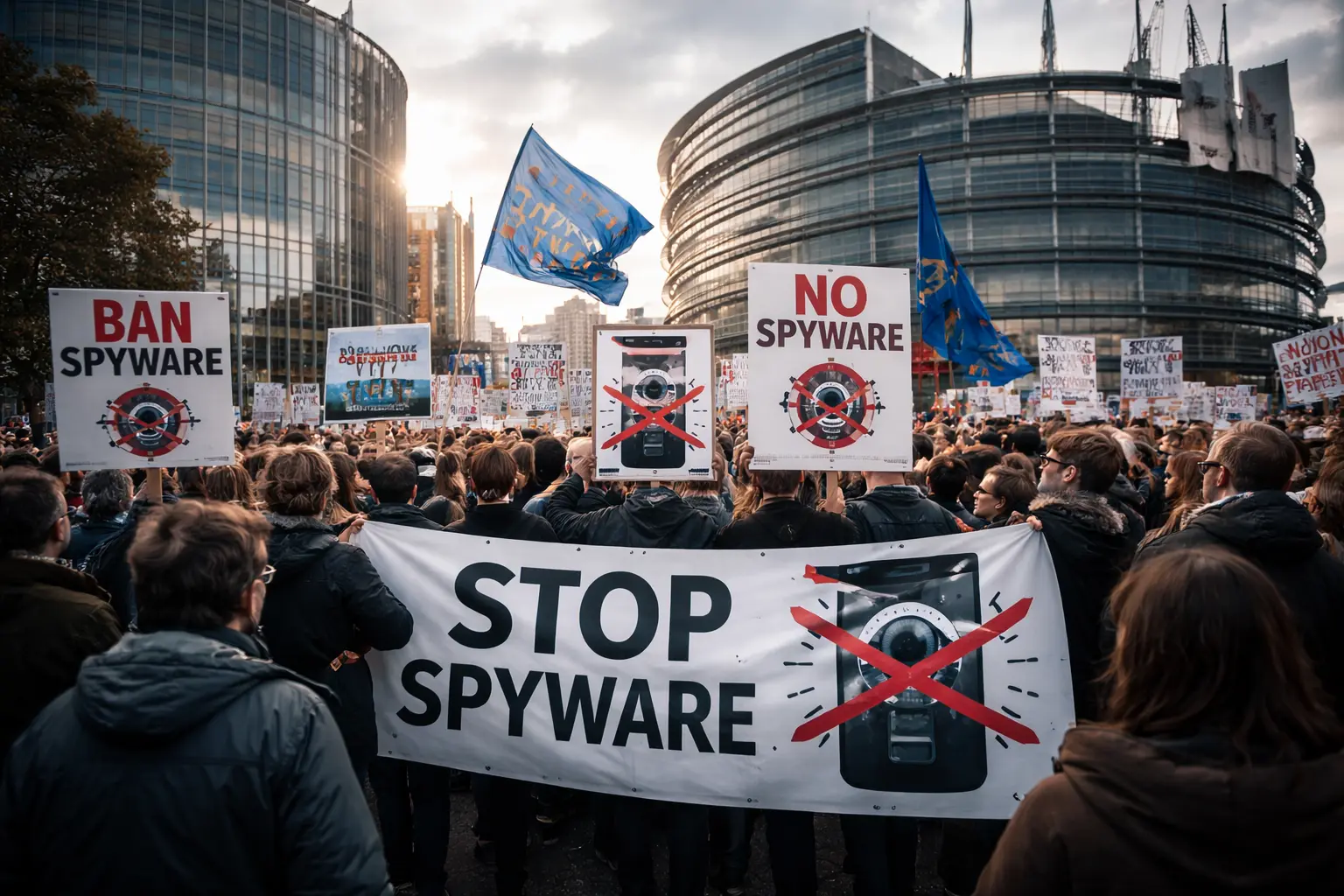
European rights groups are pushing for a full EU spyware ban, warning that commercial surveillance tools pose a serious threat to fundamental rights. Civil society organisations argue that governments and regulators have failed to prevent abuse, allowing spyware to target journalists, activists, lawyers, and political figures across the bloc.
The campaign reflects growing frustration with slow regulatory progress and repeated revelations of unlawful surveillance.
Why Rights Groups Want a Total Ban
Advocates say commercial spyware enables intrusive monitoring that undermines privacy, free expression, and democratic oversight. These tools can access messages, files, microphones, cameras, and location data without user awareness. Once deployed, victims often have no way to detect or challenge the surveillance.
Rights groups argue that existing safeguards have proven ineffective. Investigations continue to uncover misuse across multiple EU member states, yet authorities have taken limited action to stop the trade or use of spyware.
Failures of Regulation and Oversight
Current EU frameworks allow governments to purchase and deploy spyware under national security justifications. Rights groups say this approach creates loopholes that enable abuse while shielding operators from accountability.
They also warn that fragmented national oversight fails to protect individuals across borders. Spyware vendors operate commercially, but accountability remains inconsistent and weak.
What the Proposed Ban Would Cover
The proposed EU spyware ban would block the development, sale, import, and use of commercial spyware within the union. Rights groups also want restrictions on the trade of vulnerabilities and exploits used to support these tools.
Supporters argue that removing the legal market would reduce incentives to develop invasive surveillance technologies and limit their spread beyond lawful investigations.
Security Arguments and Counterpoints
Some policymakers argue that spyware plays a role in serious crime and terrorism investigations. Rights groups counter that security concerns do not justify unchecked surveillance. They point to repeated cases where authorities used spyware against non-criminal targets.
Advocates stress that democratic societies must prioritise proportionality, transparency, and judicial oversight. They argue that current practices fail to meet these standards.
Growing Pressure on EU Institutions
Pressure is mounting on EU institutions to act decisively. Rights groups warn that continued inaction risks normalising mass surveillance and eroding trust in democratic institutions.
They urge lawmakers to move beyond inquiries and recommendations and adopt binding legislation that clearly prohibits commercial spyware.
Conclusion
The push for an EU spyware ban reflects deep concern over the unchecked expansion of commercial surveillance. European rights groups argue that regulation has failed and that only a full ban can protect fundamental freedoms. As evidence of abuse continues to surface, pressure on EU lawmakers to draw firm legal boundaries is intensifying.
0 responses to “European Rights Groups Push for Full EU Spyware Ban”