


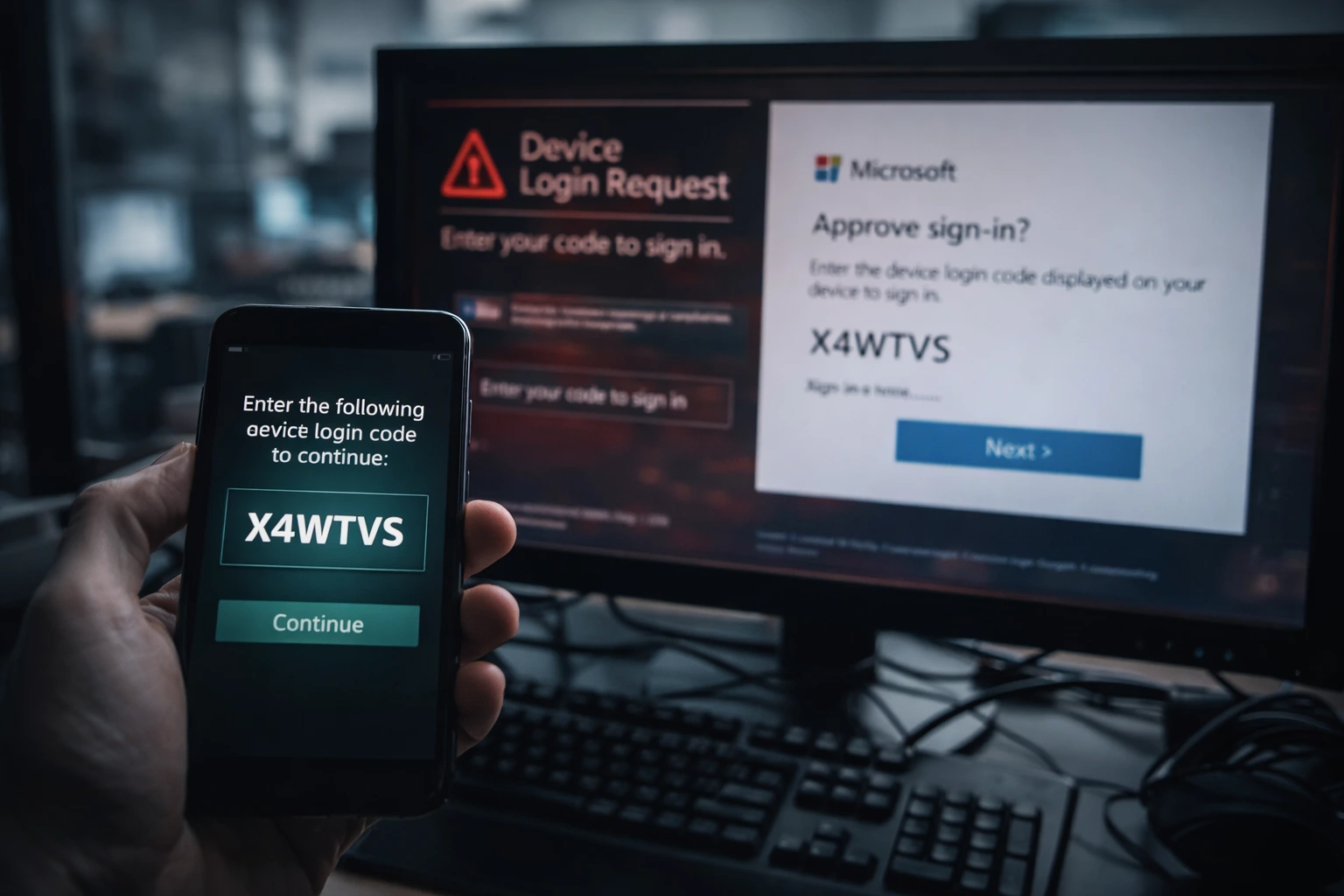
Device code phishing is scaling fast. Attackers have increased activity by 37 times as new phishing kits spread online. What once required technical skill now comes packaged into simple tools.
This shift turns a quiet technique into a mainstream threat.
Attackers Exploit Trusted Login Flows
Attackers abuse a legitimate device login process to run this attack. They generate a login code linked to their own session. Then they trick the victim into entering that code on a real authentication page.
The process feels normal to the user. The page is genuine, and nothing looks out of place.
When the victim enters the code, they grant access directly to the attacker. The attacker never needs the password.
Phishing Kits Accelerate the Spread
Phishing kits drive the rapid growth of this method. These kits remove technical barriers and let more attackers launch campaigns.
Most kits include:
- Pre-built phishing scenarios
- Templates that copy trusted services
- Ready-to-use hosting setups
- Basic protections against automated scans
These tools turn a targeted tactic into a scalable operation.
Attackers Bypass MFA Through User Action
This technique defeats strong authentication controls by design. The victim completes a real login flow and approves access themselves.
Because of that, MFA and passkeys do not stop the attack.
Attackers receive valid session tokens after approval. They can keep access even if the user changes their password later.
Attackers Target Enterprise Workflows
Attackers focus heavily on business accounts, especially in environments like Microsoft 365. They design lures that match everyday tasks.
Common examples include:
- Document access requests
- Meeting invitations
- Security notifications
These messages blend into normal activity. Users often follow the steps without hesitation.
Some campaigns automate the entire flow, which increases both speed and success rates.
Detection Tools Struggle With This Method
This attack avoids most traditional phishing signals. Security systems see normal authentication activity instead of suspicious behavior.
Several factors make detection harder:
- Users interact with real login pages
- Systems log valid authentication events
- No fake credential harvesting occurs
- User actions appear intentional
This creates a gap between visibility and actual risk.
Conclusion
Device code phishing shows how attackers adapt to stronger defenses. They no longer need to break authentication systems. They simply use them.
That shift removes clear warning signs and makes attacks harder to spot.
As phishing kits continue to spread, this method will likely grow even further. Security teams must focus on user-driven access patterns, not just login validity.
0 responses to “Device code phishing attacks surge 37x”