


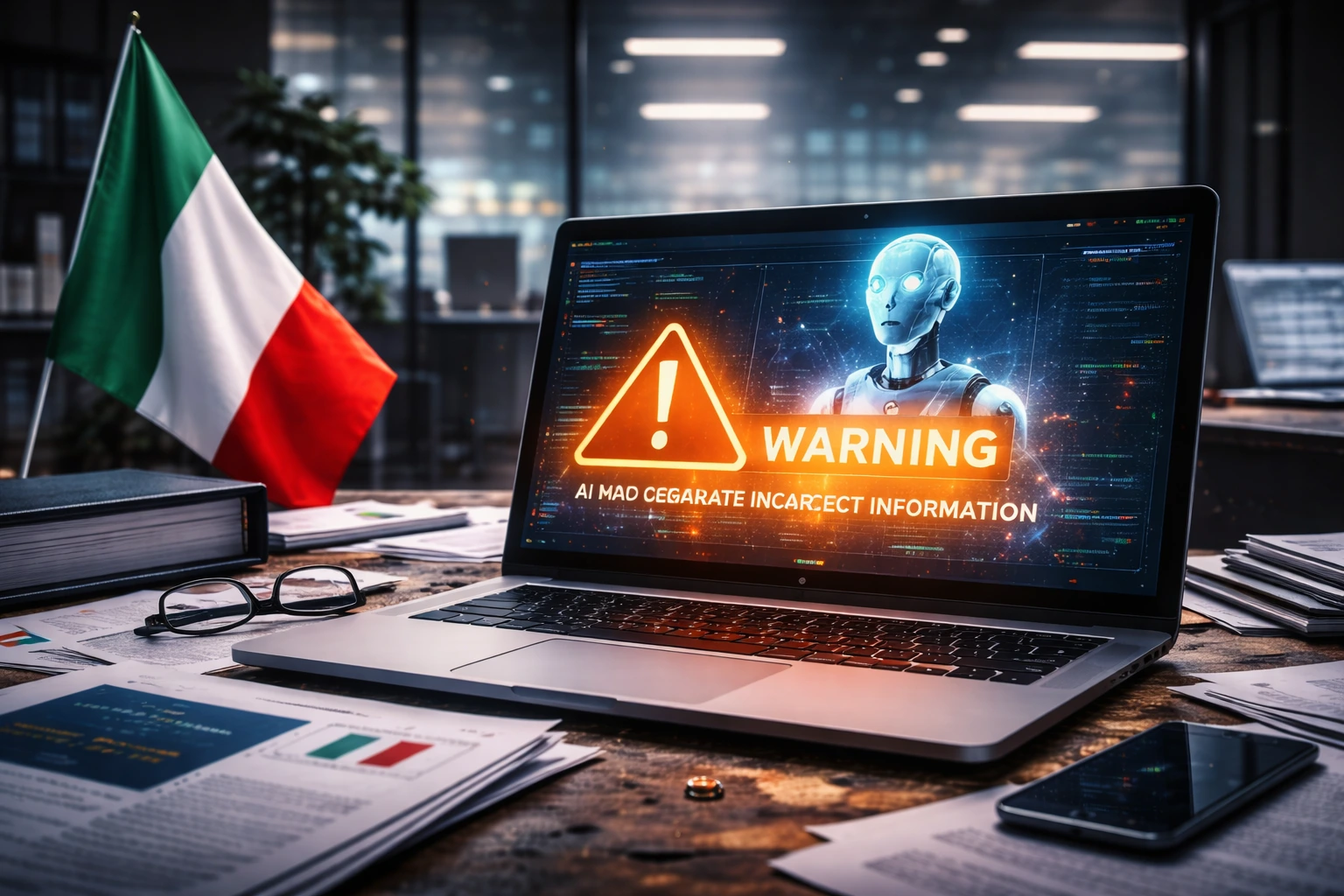
Italy has formally closed the DeepSeek Italy AI probe after the AI company agreed to strengthen user warnings about hallucinations generated by its large language model. Regulators had raised concerns that users were not clearly informed about the risk of receiving confident but inaccurate responses.
The case reflects growing regulatory attention on how AI systems communicate uncertainty and limitations, especially as generative tools become widely used by the public.
Why Italy Opened the DeepSeek AI Probe
Italian authorities launched the probe after complaints alleged that DeepSeek’s chatbot could produce incorrect or misleading answers without adequate disclosure. These hallucinations appeared authoritative, which increased the risk that users would rely on false information.
Regulators argued that insufficient transparency could mislead consumers and undermine trust in AI services. The investigation focused on whether the platform provided clear, visible explanations about how AI-generated content should be interpreted.
What DeepSeek Agreed to Change
To resolve the probe, DeepSeek committed to improving how it communicates hallucination risks to users. The company agreed to introduce clearer warnings that explain AI limitations in plain language.
These disclosures now appear more prominently during user interactions rather than being buried in documentation or terms. Regulators accepted the changes as effective consumer safeguards.
No financial penalties were issued as part of the resolution.
Why AI Hallucination Warnings Matter
Large language models generate text based on probabilities rather than verified facts. This can lead to responses that sound accurate but contain errors, omissions, or fabricated details.
Without clear warnings, users may assume outputs are reliable, particularly in areas involving health, finance, or legal topics. Transparency helps users apply appropriate caution and avoid treating AI responses as authoritative sources.
Clear risk communication is becoming a core expectation for responsible AI deployment.
Broader Regulatory Implications in Europe
The outcome of the DeepSeek Italy AI probe aligns with Europe’s wider push for accountable AI development. Authorities increasingly expect AI providers to explain system limitations in ways that ordinary users can understand.
Rather than banning services outright, regulators are focusing on transparency measures that reduce harm while allowing innovation to continue. Similar scrutiny is likely to expand across other AI platforms operating in the European market.
Conclusion
The DeepSeek Italy AI probe closure highlights how regulators are addressing AI hallucination risks through transparency rather than punishment. By requiring clearer warnings, Italian authorities aim to protect users from misleading outputs while setting expectations for responsible AI design. The case signals that clear communication about AI limitations is no longer optional for providers operating in regulated markets.
0 responses to “DeepSeek Italy AI Probe Ends Over Hallucination Warnings”