


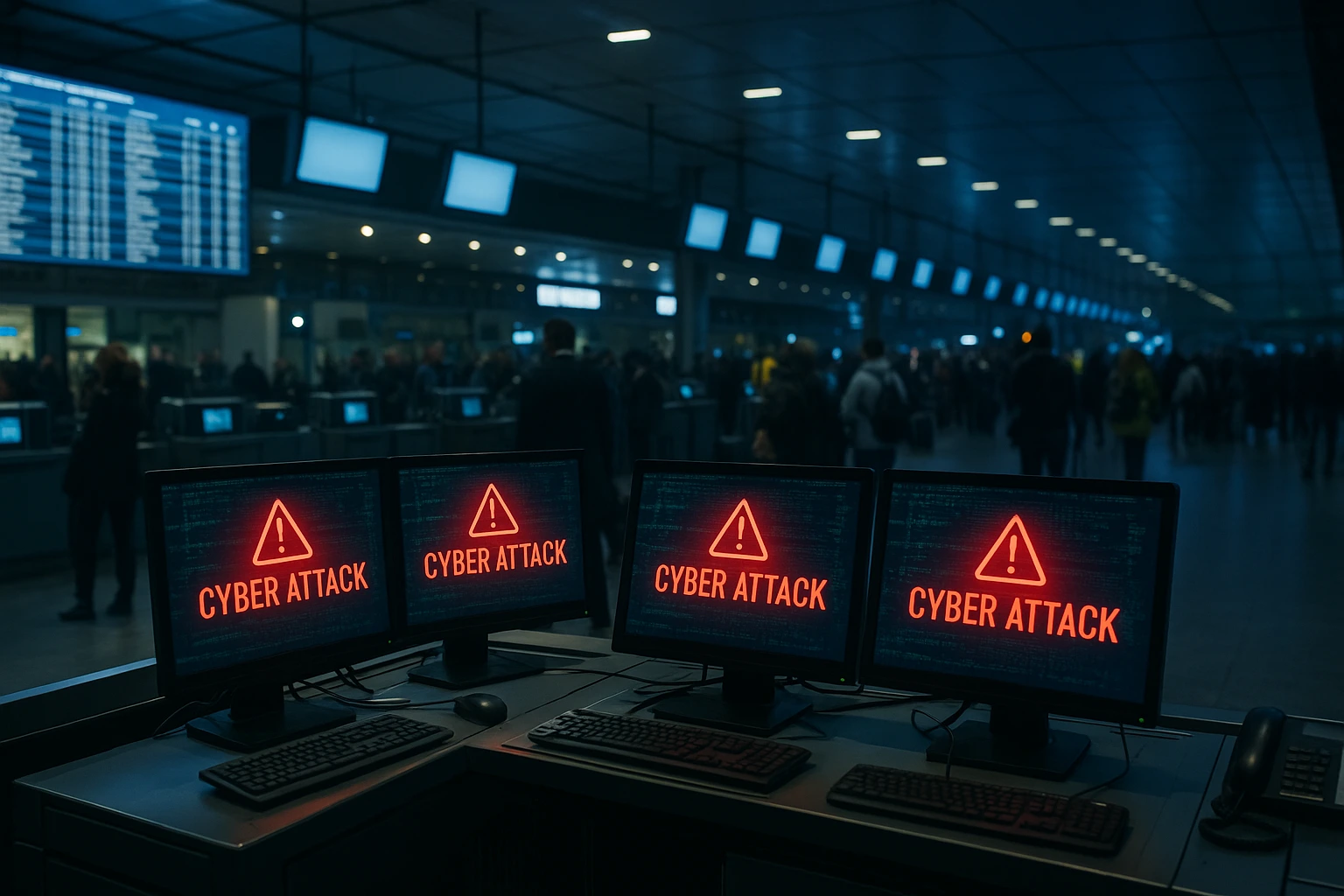
A cyberattack has disrupted Collins Aerospace’s MUSE system, halting check-in and boarding operations at several major European airports. The incident, which began on September 19, 2025, caused widespread delays and cancellations. Affected hubs include London Heathrow, Berlin Brandenburg, Brussels Airport, and others.
What Happened
The MUSE platform, a core system used for passenger check-in, baggage drop, and boarding, was taken offline by the attack. Without access to digital systems, airport staff had to process passengers manually. This included printing boarding passes, handling baggage without automation, and relying on handwritten procedures.
Officials confirmed that while flights continued to operate, delays were unavoidable. Long queues and passenger frustration were reported across the affected airports.
Impact on Airports and Passengers
- Brussels Airport faced major disruptions, with numerous flights canceled and others delayed for hours.
- Berlin Brandenburg reported extended wait times but managed to keep most flights running.
- London Heathrow, Europe’s busiest airport, confirmed that flights remained operational but with heavy pressure on check-in counters.
- Airports in Ireland, including Dublin and Cork, experienced minor effects as the system outage rippled through Europe.
Passengers were advised to arrive early, prepare for longer wait times, and check flight status before traveling.
Cause and Industry Response
The incident has been attributed to a cyberattack on Collins Aerospace, a division of RTX. The company acknowledged the issue and said its teams are working to restore normal operations. While the exact nature of the attack remains unclear, authorities are treating it as a critical cybersecurity event affecting aviation infrastructure.
Broader Implications
The disruption highlights the risks tied to heavy reliance on third-party software. A single cyberattack on a vendor system can ripple across multiple countries, creating chaos for airlines and passengers.
Security experts stress the importance of stronger defenses for aviation technology. Manual backup processes remain necessary but strain resources and highlight the fragile balance between efficiency and resilience.
Conclusion
The cyberattack on Collins Aerospace’s MUSE system halted operations at some of Europe’s busiest airports, including Heathrow and Brussels. While manual procedures allowed flights to continue, the disruption exposed serious vulnerabilities in aviation technology. The incident serves as a stark reminder that stronger cybersecurity and resilient systems are essential for global air travel.
0 responses to “Cyberattack Halts Operations at Major European Airports”