


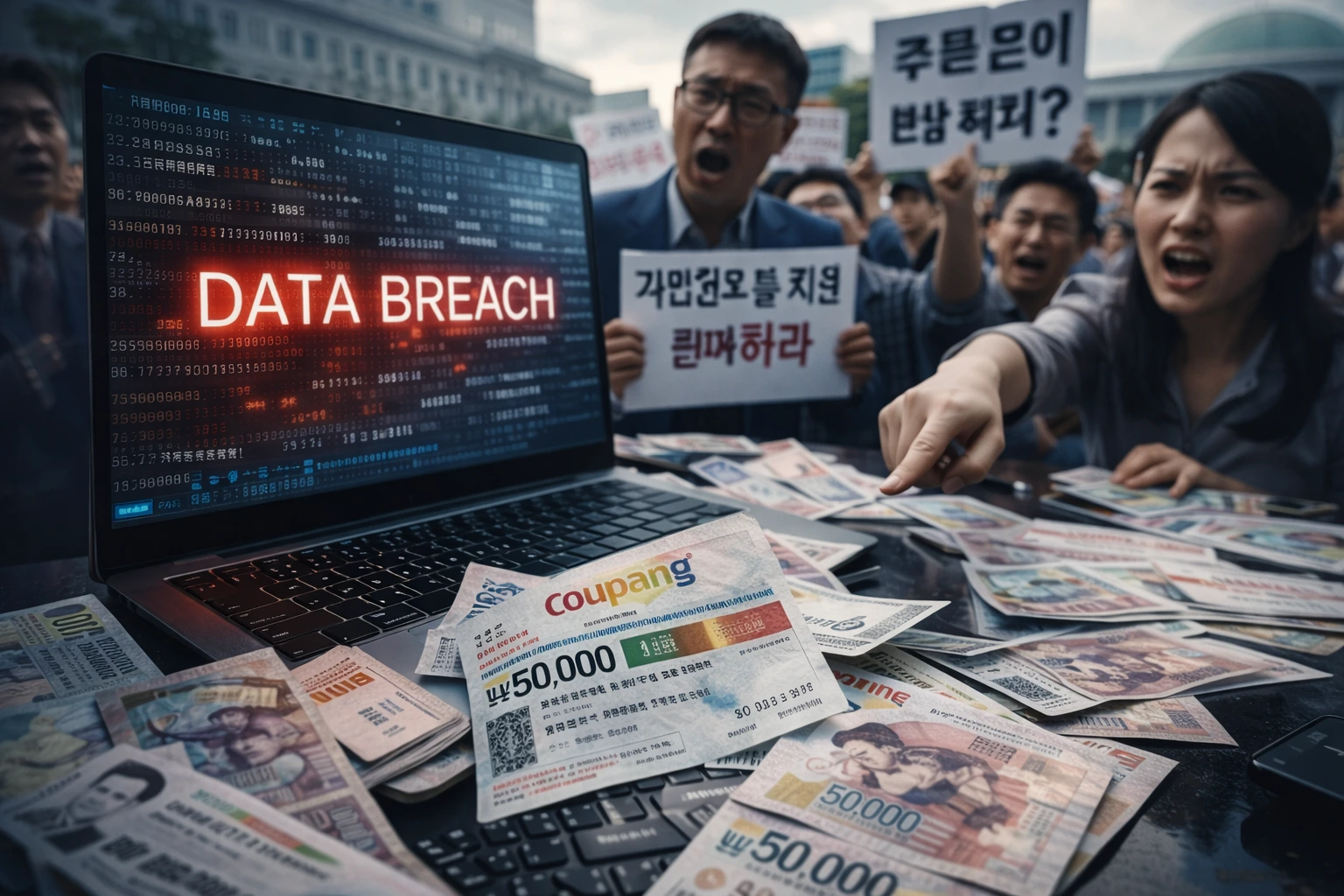
Public anger continues to grow after South Korean e-commerce giant Coupang unveiled its response to one of the country’s largest data leaks. The Coupang data breach exposed personal information belonging to tens of millions of users, forcing the company to announce a massive compensation package. Instead of easing concerns, the plan has triggered criticism from customers, regulators, and politicians.
Many affected users argue that Coupang’s response prioritizes business interests over meaningful accountability. The controversy now extends beyond cybersecurity and into corporate responsibility and consumer trust.
What Happened in the Coupang Data Breach
The Coupang data breach affected approximately 33.7 million users in South Korea. Investigators traced the incident to unauthorized access by a former employee who retained access to internal systems. The breach exposed personal data such as names, email addresses, phone numbers, and delivery details.
Coupang stated that attackers did not access passwords or payment information. Despite that reassurance, the scale of exposed personal data placed the incident among the most serious breaches in South Korea’s digital commerce sector.
Authorities continue to examine whether internal security controls failed to prevent improper access after the employee’s departure.
Details of the $1 Billion Compensation Plan
Coupang announced a compensation package valued at roughly $1.18 billion, equivalent to 1.69 trillion Korean won. The company promised every affected user a 50,000-won voucher usable across Coupang’s services, including shopping, food delivery, travel, and digital platforms.
Coupang described the move as an effort to restore trust and demonstrate responsibility. The company emphasized the unprecedented scale of the compensation and framed it as a proactive response rather than a legal obligation.
However, public reaction quickly turned critical.
Why Users and Lawmakers Are Angry
Critics argue that the compensation does not provide real restitution. The vouchers require users to spend money within Coupang’s ecosystem, which many see as a marketing incentive rather than compensation for harm.
Lawmakers questioned whether the plan truly benefits victims or simply redirects losses back into the company. Consumer advocacy groups echoed those concerns, stating that exposed personal data can cause long-term harm that vouchers cannot address.
The backlash reflects growing frustration with how large technology companies handle data protection failures.
Political and Legal Fallout
The Coupang data breach has drawn political attention at the highest levels. Lawmakers summoned company leadership to parliamentary hearings to explain the breach and the compensation strategy. Coupang founder Kim Bom issued a public apology but did not attend multiple hearings, citing scheduling conflicts.
His absence intensified criticism and fueled accusations of avoiding accountability. Opposition lawmakers described the situation as disrespectful to affected citizens and regulators.
Beyond South Korea, the breach has triggered legal action abroad. Investors have filed a U.S. securities lawsuit alleging that Coupang failed to disclose cybersecurity risks in a timely manner.
Impact on Trust and Corporate Accountability
The breach and its aftermath have damaged Coupang’s public image. While some investors reacted positively to the company’s financial commitment, many consumers remain skeptical of its intentions.
The incident has reignited debate about how companies should compensate users after large-scale data exposure. Regulators now face pressure to strengthen enforcement and impose clearer standards for restitution.
Trust, once lost, remains difficult to rebuild.
Conclusion
The Coupang data breach highlights the growing tension between corporate damage control and public expectations after major cybersecurity incidents. While the company pledged more than $1 billion in compensation, the voucher-based approach has fueled backlash instead of restoring confidence.
As regulators scrutinize the breach and legal challenges mount, the case may shape future expectations around accountability, transparency, and consumer protection in the digital economy.
0 responses to “Coupang Data Breach Triggers $1 Billion Compensation Backlash”