


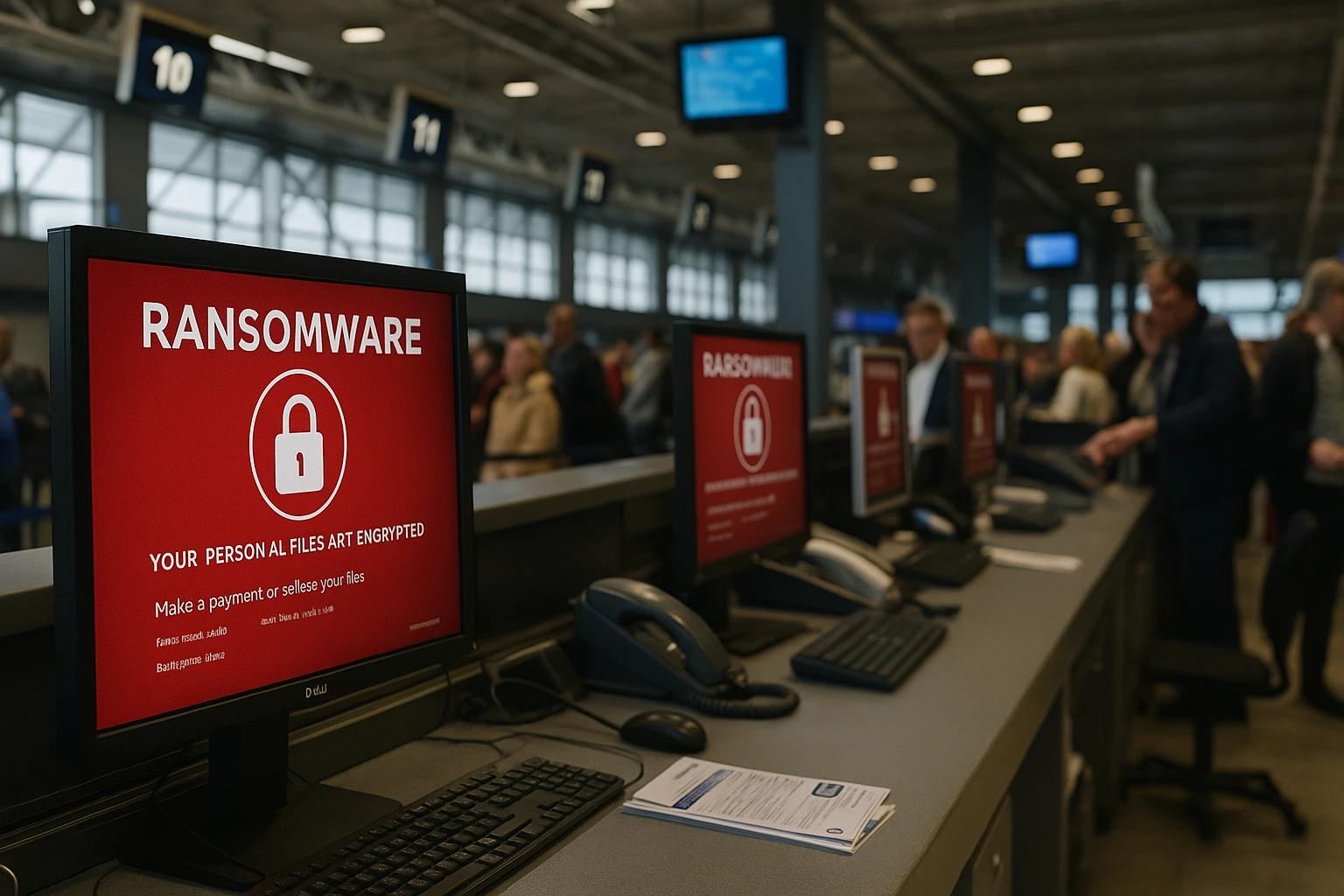
The Collins Aerospace ransomware attack caused widespread disruption across several major European airports. The incident targeted the company’s MUSE passenger-processing platform, which handles check-in, boarding, and baggage operations for multiple airlines. As systems went offline, airports were forced to switch to manual procedures, creating delays and operational gridlock.
Passenger systems forced offline across Europe
Airports in major hubs experienced outages that affected automated kiosks, bag-drop systems, and boarding processes. Many airlines reverted to manual check-ins, resulting in long queues, slower turnaround times, and increased staffing demands. Some airports also reported flight delays and isolated cancellations as teams struggled to manage operations without automated tools.
The disruption lasted several days as technical teams worked to isolate the affected systems. Airlines and airport authorities maintained limited functionality by using paper-based check-in and manual identity verification. These emergency measures helped keep operations running, but they offered only a fraction of normal capacity.
Why attackers targeted Collins Aerospace
Collins Aerospace plays a core role in aviation workflows. Its MUSE platform is used by airlines across Europe, making it a high-value target for criminals seeking maximum impact. By compromising a single vendor, attackers were able to disrupt multiple airports at once.
The Collins Aerospace ransomware incident highlights a broader trend in which cybercriminals focus on upstream suppliers rather than individual companies. Supply-chain attacks allow threat actors to trigger cascading failures across interconnected systems. In sectors like aviation, where timing and coordination are critical, even short outages carry significant consequences.
Impact on aviation and critical infrastructure
The attack exposed vulnerabilities in airport technology ecosystems. Many airports depend heavily on centralized platforms to manage passenger flows, equipment integration, and security processes. When these platforms go down, the operational impact is immediate and widespread.
The incident also raised concerns about business-continuity planning. While manual procedures allowed airports to remain functional, they were far slower and more error-prone. Industry analysts warn that aviation must improve redundancy measures, strengthen vendor oversight, and ensure backup systems can support high passenger volumes during outages.
Collins Aerospace response and recovery
Collins Aerospace confirmed that it initiated containment measures and began working with forensic teams to restore affected systems. The company coordinated with airlines and airport authorities to bring services back online gradually. Although the attack caused significant disruption, the company stated that it does not expect long-term financial consequences.
Internally, the incident has prompted evaluations of security controls, vendor protections, and data-access protocols. Airlines are also reviewing their reliance on external passenger-processing systems and assessing alternative solutions for emergency fallback.
Conclusion
The Collins Aerospace ransomware attack shows how a single supplier compromise can trigger widespread disruption across an entire industry. As aviation grows more dependent on interconnected digital systems, both vendors and airlines must strengthen resilience, implement better security controls, and prepare for rapid response in the face of future cyberattacks.
0 responses to “Collins Aerospace ransomware attack disrupts major European airports”