


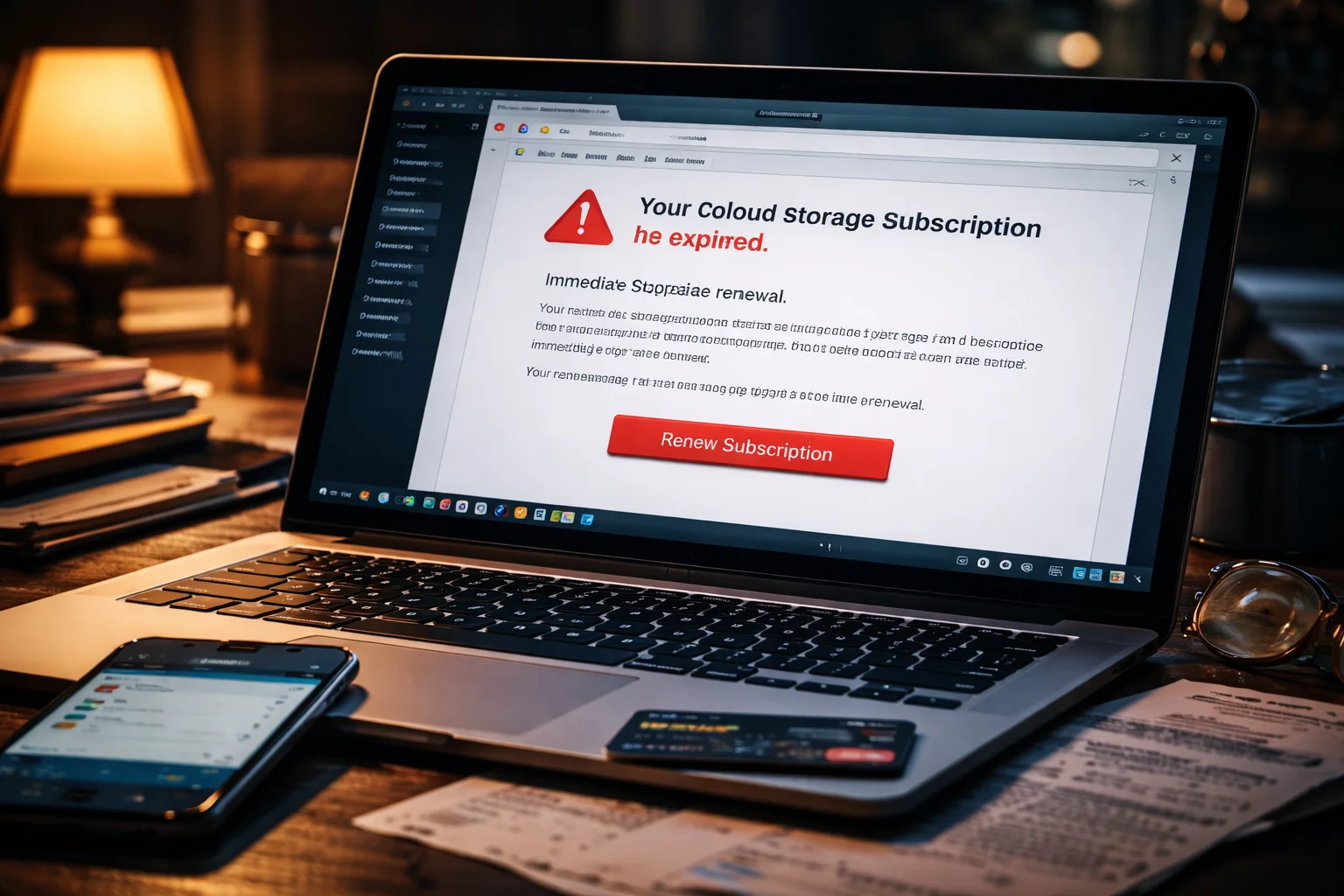
A cloud storage scam is hitting inboxes with fake renewal and payment failure warnings. The messages aim to trigger panic and fast clicks. Attackers frame the email as a final notice. They claim your subscription will end and your files will vanish.
These emails look polished and familiar. They borrow the language of major cloud brands. They also lean on urgency to bypass your judgment. The goal stays simple. Scammers want your login details, card data, or both.
How the fake renewal emails hook victims
The cloud storage scam usually starts with a subject line that screams urgency. It may claim a payment failed or a renewal got declined. The email often warns about service suspension. Some versions threaten backup disruption or deletion.
Scammers add details to feel legitimate. They may include your email address in the message. They may also show fake invoice numbers or renewal dates. Those extras create a false sense of accuracy. That credibility push makes people act quickly.
A prominent button drives the next step. It may say “Update payment,” “Renew now,” or “Fix billing.” The design copies real billing reminders. The layout aims to reduce doubt. The attacker wants you to click before you verify anything.
What happens after you click
Once you click, the scam shifts into capture mode. Some links lead to a fake login portal. The page mimics a real sign-in flow. It asks for your email and password. It may also request a one-time code.
Other links lead to a fake billing screen. The page asks for card numbers and address details. It may claim it needs verification. That story helps them collect sensitive data. Many victims share information without noticing small inconsistencies.
Some campaigns also use redirects. The first page can look harmless. The next page delivers the actual phishing content. That chain makes the scam harder to spot. It also gives criminals more ways to evade filters.
Why this scam spreads so fast
This cloud storage scam scales easily through bulk email tools. Attackers can send waves in short bursts. They can also rotate templates and sender details. Those changes help them dodge blocks. They also keep the message feeling “new.”
The theme works because storage feels personal. People keep photos, documents, and work files there. A threat to that access creates instant fear. Scammers exploit that emotion. They rely on stress to override caution.
The scam also fits everyday habits. Real services do send renewal reminders. Many users expect billing emails. That familiarity lowers suspicion. A rushed moment becomes a costly mistake.
How to protect yourself from fake renewal traps
Treat billing emails as prompts, not instructions. Avoid clicking buttons in unexpected renewal notices. Instead, open the service app or type the site address yourself. Check your subscription status directly there.
Look for signs of manipulation. Watch for forced urgency and vague threats. Pay attention to odd wording and mismatched branding. Also check the sender details carefully. Even small inconsistencies can reveal fraud.
Use stronger account protection. Turn on multi-factor authentication where possible. Prefer phishing-resistant options when available. Keep unique passwords for important accounts. That step limits damage if a scam succeeds.
Conclusion
A cloud storage scam that pushes fake renewals can trick even careful users. The emails look legitimate and pressure quick action. Clicks can lead to stolen logins, card theft, and account takeover. Calm verification beats urgency every time. When you check billing inside the real service, you cut the scam off at the source.
0 responses to “Cloud storage scam floods inboxes with fake renewals”