


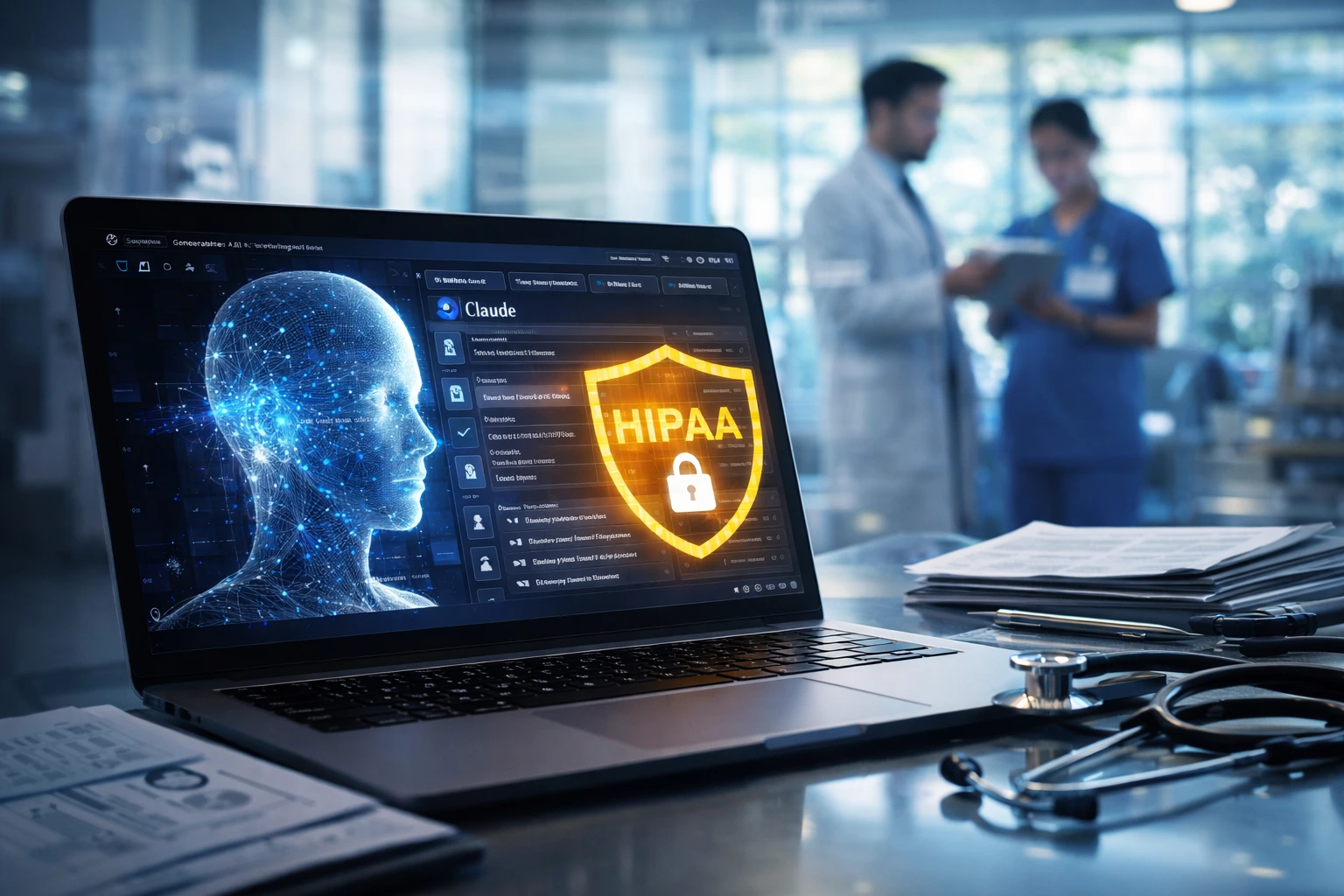
Anthropic has introduced a Claude HIPAA feature that allows its AI system to operate inside regulated healthcare environments. The update enables organisations to use Claude while meeting strict privacy and security requirements tied to sensitive medical data. This move positions the AI assistant for practical use by healthcare providers, insurers, and digital health platforms that handle protected health information.
As AI adoption accelerates in medicine, compliance has become a key barrier. Anthropic aims to address that challenge by offering a version of Claude that aligns with healthcare regulations rather than operating outside them.
What the Claude HIPAA feature actually does
The Claude HIPAA feature allows organisations to deploy Claude in environments that require HIPAA compliance. This means the AI can process and respond to prompts that involve protected health information without storing or using that data outside approved safeguards. Healthcare teams can use Claude to analyse documentation, summarise medical records, or assist with administrative tasks while keeping patient data protected.
The feature also supports structured data access from approved medical sources. Clinicians can use the AI to interpret clinical guidelines, eligibility criteria, or regulatory documentation without exposing sensitive information to non-compliant systems.
How healthcare teams can use it
Healthcare providers can apply the Claude HIPAA feature to reduce time spent on documentation and information retrieval. The AI can assist with drafting clinical summaries, reviewing coverage requirements, and organising patient-provided data. These use cases focus on efficiency rather than diagnosis, keeping the AI in a supportive role.
Patients may also benefit indirectly. By streamlining internal workflows, providers can respond faster to inquiries and reduce administrative delays tied to manual data handling.
Why HIPAA compliance matters for AI
HIPAA compliance remains one of the biggest obstacles to deploying AI tools in healthcare. Without proper safeguards, AI systems cannot legally process patient data, regardless of their technical capability. By addressing compliance directly, Anthropic removes a major blocker that has kept many AI tools out of clinical environments.
However, organisations still carry responsibility for how they configure and manage AI usage. Compliance depends on correct implementation, internal controls, and ongoing oversight rather than the AI model alone.
What this signals for regulated industries
The Claude HIPAA feature reflects a broader shift in the AI market toward regulated sectors. Vendors increasingly recognise that healthcare, finance, and government adoption depends on meeting legal and compliance standards first. AI tools that cannot operate within those constraints risk exclusion from high-value use cases.
Anthropic’s move suggests that future AI development will focus as much on governance and deployment models as on raw model capability.
Conclusion
The Claude HIPAA feature marks a significant step toward making AI usable in healthcare without compromising privacy requirements. By enabling HIPAA-aligned deployment, Anthropic expands Claude’s role from general assistant to regulated workflow support tool. As healthcare organisations explore AI adoption, compliance-ready features like this will likely shape which platforms gain long-term trust.
0 responses to “Claude HIPAA feature opens new paths for AI in healthcare workflows”