


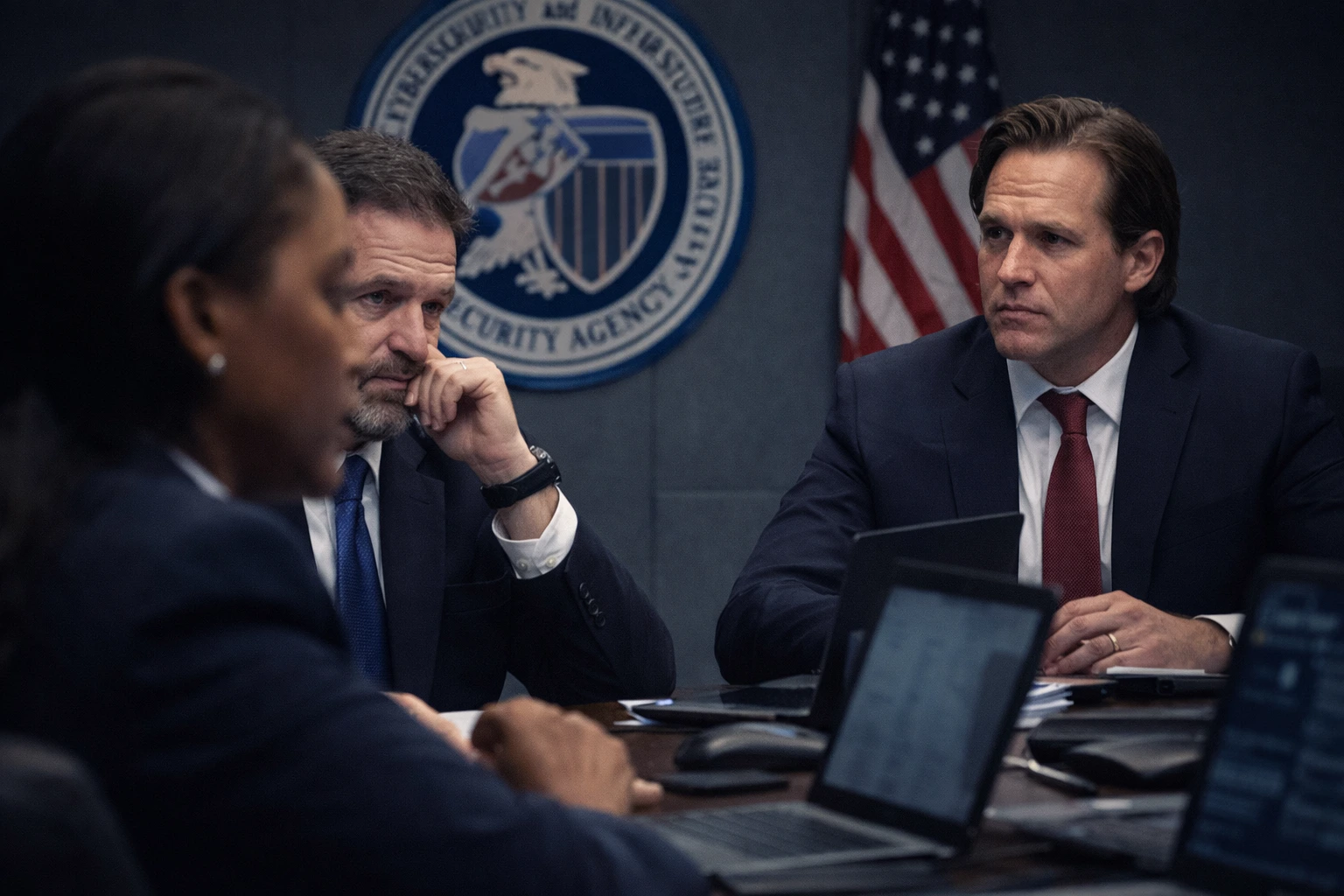
Internal leadership failures inside a U.S. cybersecurity agency became public after a senior official remained in place despite repeated removal attempts. The CISA Costello dispute reveals how hesitation at the top, combined with internal resistance, prevented decisive action during a sensitive political period.
The situation unfolded while the agency faced intense scrutiny over election security and misinformation. Instead of resolving the issue quietly, leadership allowed uncertainty to persist, exposing weaknesses in governance and decision-making.
How the Dispute Began
Concerns about the official’s role and conduct emerged internally over time. Senior leadership questioned trust, internal alignment, and the ability to manage sensitive responsibilities. These concerns triggered discussions about forcing a departure.
However, leadership failed to move beyond internal debate. Discussions continued without a clear resolution, allowing the situation to linger.
Why Removal Efforts Stalled
Multiple obstacles prevented decisive action.
- Disagreement over authority slowed internal consensus
- Legal concerns created hesitation at senior levels
- Political sensitivity increased fear of public backlash
- Leadership avoided direct confrontation
Together, these factors produced paralysis. Leaders acknowledged the problem but stopped short of acting.
What Internal Communications Revealed
Internal emails show growing frustration among agency officials. Some warned that delays damaged morale and weakened leadership credibility. Others argued that aggressive action risked political fallout.
These opposing views hardened positions. Leadership failed to break the deadlock.
Political Context Increased the Risk
The dispute unfolded during heightened debate over election security and government influence. Any personnel decision carried political risk. Leaders feared that removal could be misinterpreted or weaponized publicly.
This climate encouraged caution instead of resolution. The result was prolonged uncertainty.
Consequences for Agency Effectiveness
The unresolved situation diverted attention from core cybersecurity work. Lawmakers and external observers questioned whether leadership could enforce accountability internally.
Credibility suffered as the issue remained unresolved. The agency appeared divided at a time when public trust mattered most.
Lessons for Federal Leadership
The CISA Costello dispute highlights the cost of indecision. Leadership authority weakens when problems remain unaddressed. Clear governance and timely action prevent internal conflicts from escalating.
Political pressure complicates decision-making, but avoidance creates longer-term damage.
Conclusion
The CISA Costello dispute exposed structural and leadership weaknesses inside a critical cybersecurity agency. Internal resistance, legal caution, and political fear combined to block decisive action. The episode shows how unresolved internal conflicts can undermine authority, credibility, and operational focus when leadership hesitates under pressure.
0 responses to “CISA Costello dispute reveals leadership breakdown at agency”