


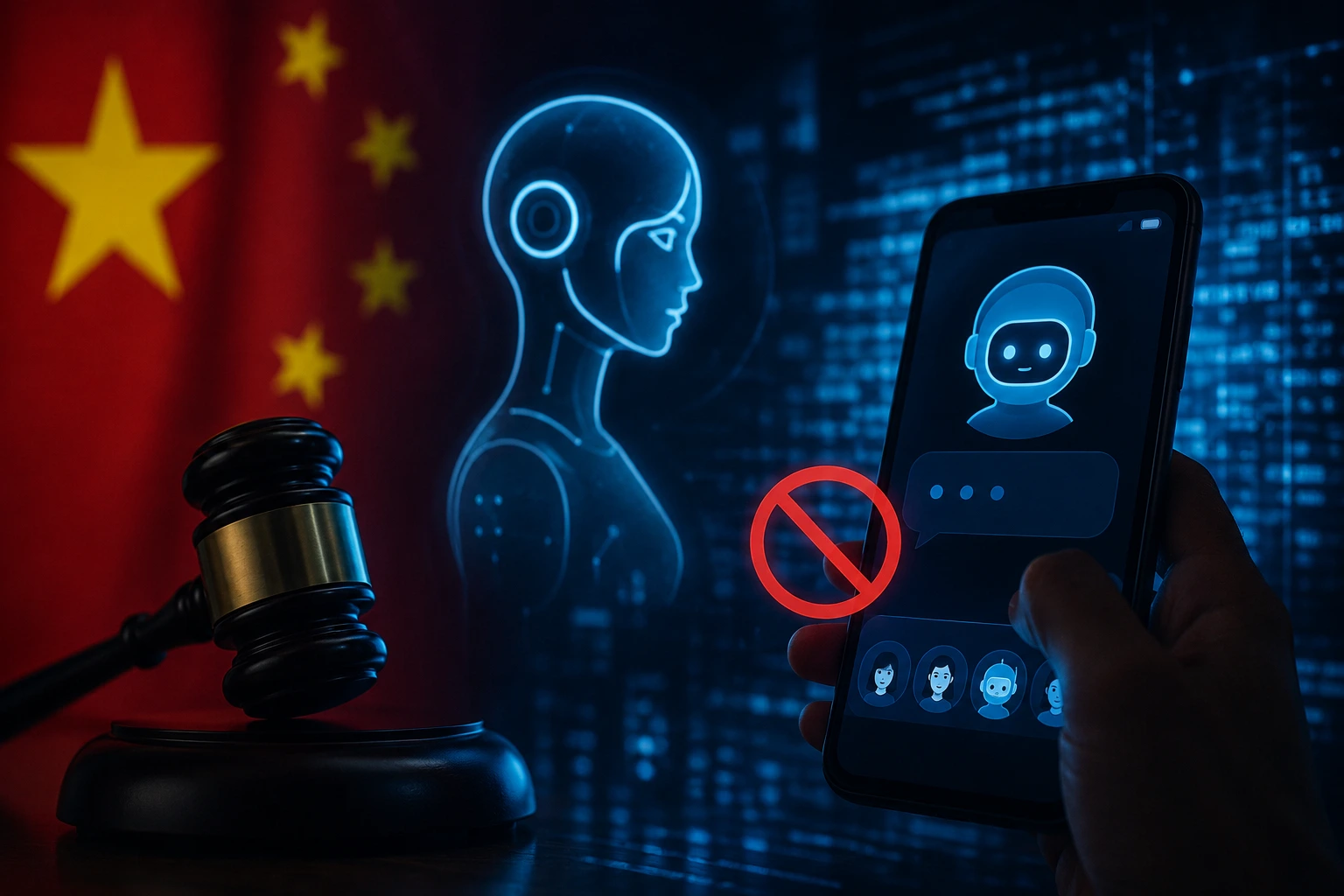
China’s biggest technology companies are rolling back China AI companion features ahead of new government regulations targeting emotionally engaging chatbots.
ByteDance, Alibaba, and Tencent are removing or separating companion-style tools before Beijing’s new rules take effect on July 15. The move reflects both tighter regulation and growing questions over whether consumer AI companions can become profitable.
China AI Companion Platforms Remove Emotional Features
ByteDance will remove the custom AI persona feature from its Doubao chatbot on July 15. The tool previously allowed users to create personalized AI characters with unique personalities, backgrounds, and speaking styles.
Alibaba is making similar changes to its Qwen chatbot, while Tencent’s Yuanbao platform is also scaling back companion-style features.
The new rules focus on China AI companion services that encourage long-term emotional relationships with users. They cover virtual girlfriends and boyfriends, AI therapists, emotional support companions, personalized tutors, and role-playing characters.
Officials say the measures are designed to reduce the risks associated with emotionally engaging AI.
New Regulations Add Privacy and Child Protections
The new rules require China AI companion platforms to introduce stronger protections for children.
Companies will also be prohibited from using sensitive conversations with AI companions to train future AI models unless strict privacy safeguards are in place.
Pan Helin, a member of the Ministry of Industry and Information Technology’s expert committee, told the South China Morning Post that AI agents still require users to have a certain level of understanding because the technology is not yet mature.
China Takes a Different Path Than the US
China’s regulatory approach differs sharply from developments in the United States, where concerns about AI companions have primarily led to legal action.
OpenAI-backed Character.AI has faced several lawsuits alleging its chatbots encouraged unhealthy emotional dependence among vulnerable users.
Earlier this year, Google, which holds the Character.AI license, reached a settlement in one lawsuit involving claims that chatbot interactions contributed to the death of a teenager. Broader litigation against Character.AI remains ongoing.
Enterprise AI Becomes the Priority
The regulatory changes also reflect the commercial challenges facing consumer AI products.
Long conversations with personalized AI companions require substantial computing power while generating relatively little revenue. Industry estimates suggest some consumer AI features earned less than 10 cents for every yuan spent on computing infrastructure, making the model difficult to sustain.
As a result, companies are shifting investment away from China AI companion services and toward enterprise AI products, including customer support, workplace assistants, education, and research tools.
Alibaba’s Qwen expanded its enterprise API offering in June, with Luckin Coffee, KFC, and China Eastern Airlines already testing the service. Unlike consumer companion chatbots, enterprise AI tools offer clearer returns on investment and remain largely unaffected by the new regulations.
0 responses to “China AI Companion Crackdown Begins as ByteDance and Alibaba Remove Chatbot Features”