


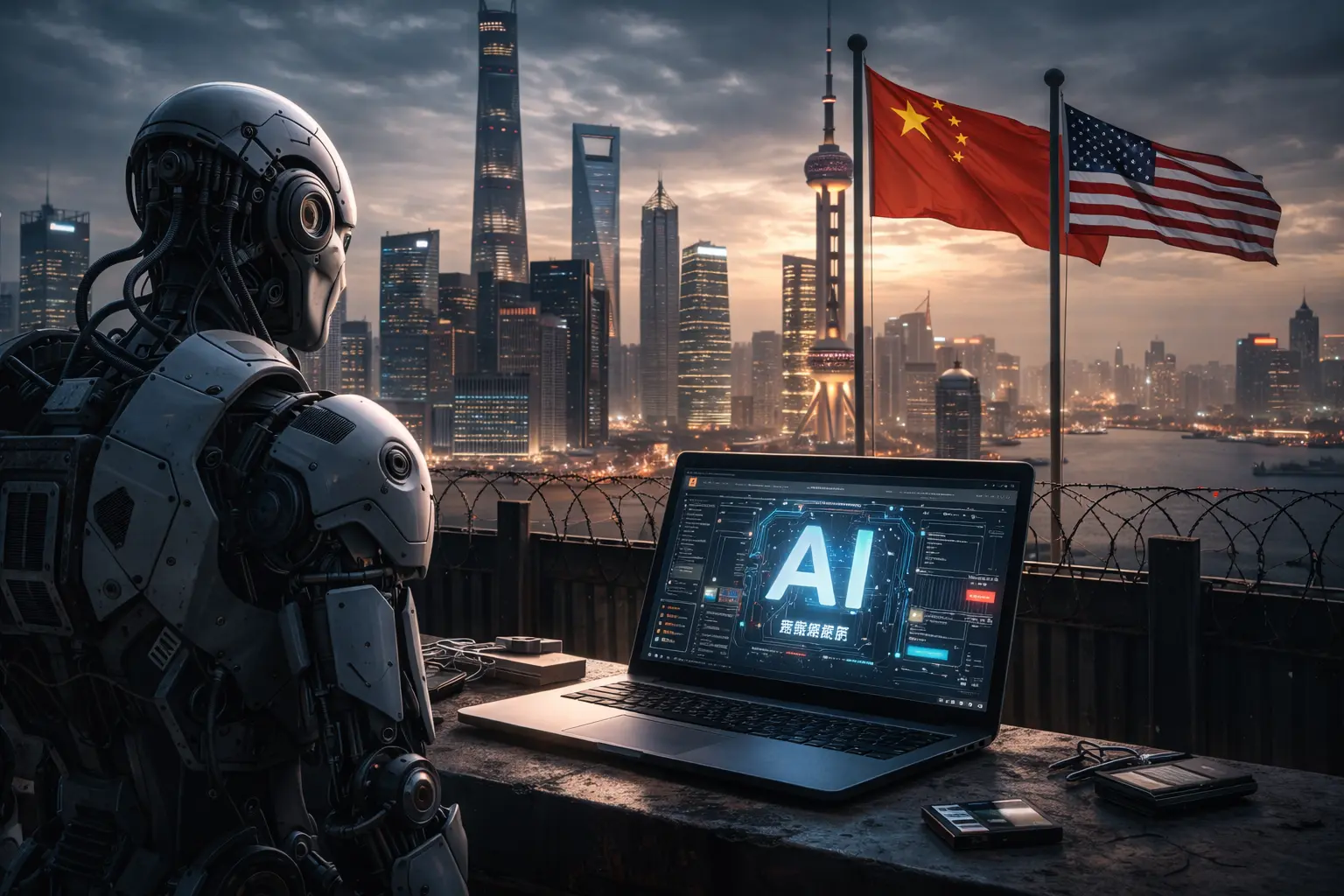
China’s artificial intelligence sector continues to accelerate, with domestic models increasingly narrowing the gap with leading U.S. technologies. This progress comes even as multiple governments move to restrict or block Chinese AI platforms over security and data protection concerns. The situation highlights the growing tension between rapid innovation and national security priorities.
Chinese developers now compete more directly in areas once dominated by Western firms. Their advances signal a shift in the global AI balance, even as geopolitical scrutiny intensifies.
China’s rapid AI progress
Chinese AI companies have made steady gains in model performance, efficiency, and deployment speed. Improved infrastructure stability and large-scale computing access allow developers to train and refine models faster than in previous years. These advantages help offset limitations caused by restricted access to advanced semiconductor technology.
Despite ongoing challenges in producing cutting-edge chips domestically, Chinese firms continue to innovate through software optimization and alternative hardware strategies. This approach enables them to deliver competitive AI systems without relying solely on the most advanced processors.
DeepSeek draws international scrutiny
One Chinese AI platform, DeepSeek, has attracted particular attention from regulators outside China. Several governments have restricted its use on official systems after raising concerns about data handling practices and potential national security risks.
Officials worry that data processed through Chinese-based infrastructure could fall under domestic legal frameworks that differ from Western privacy standards. These concerns have driven bans or limitations within government agencies, even as the platform gains popularity among private users.
Why governments are taking action
Authorities cite data sovereignty and transparency as key reasons for blocking DeepSeek. Regulators want clear assurances about where data travels, how long companies store it, and who can access it. When platforms cannot meet those expectations, governments often choose restriction over risk.
These actions do not reflect doubts about technical capability. Instead, they reveal broader unease about cross-border data flows and strategic dependence on foreign AI systems.
The global AI competition intensifies
The rise of Chinese AI platforms reinforces a broader trend toward a multipolar AI ecosystem. While U.S. companies still lead in several high-end applications, Chinese models appeal to users who prioritize cost efficiency and accessibility.
This competition places pressure on governments to balance innovation with protection. Policymakers now face difficult decisions about encouraging domestic AI growth while limiting exposure to technologies they consider sensitive.
Conclusion
China’s advances show that China AI catching up is no longer a distant possibility but an active global reality. As Chinese models grow more capable, regulatory scrutiny will likely increase rather than fade. The future of AI development will depend on how governments manage the intersection of technological progress, data security, and international competition.
0 responses to “China AI catching up as governments block DeepSeek over security concerns”