


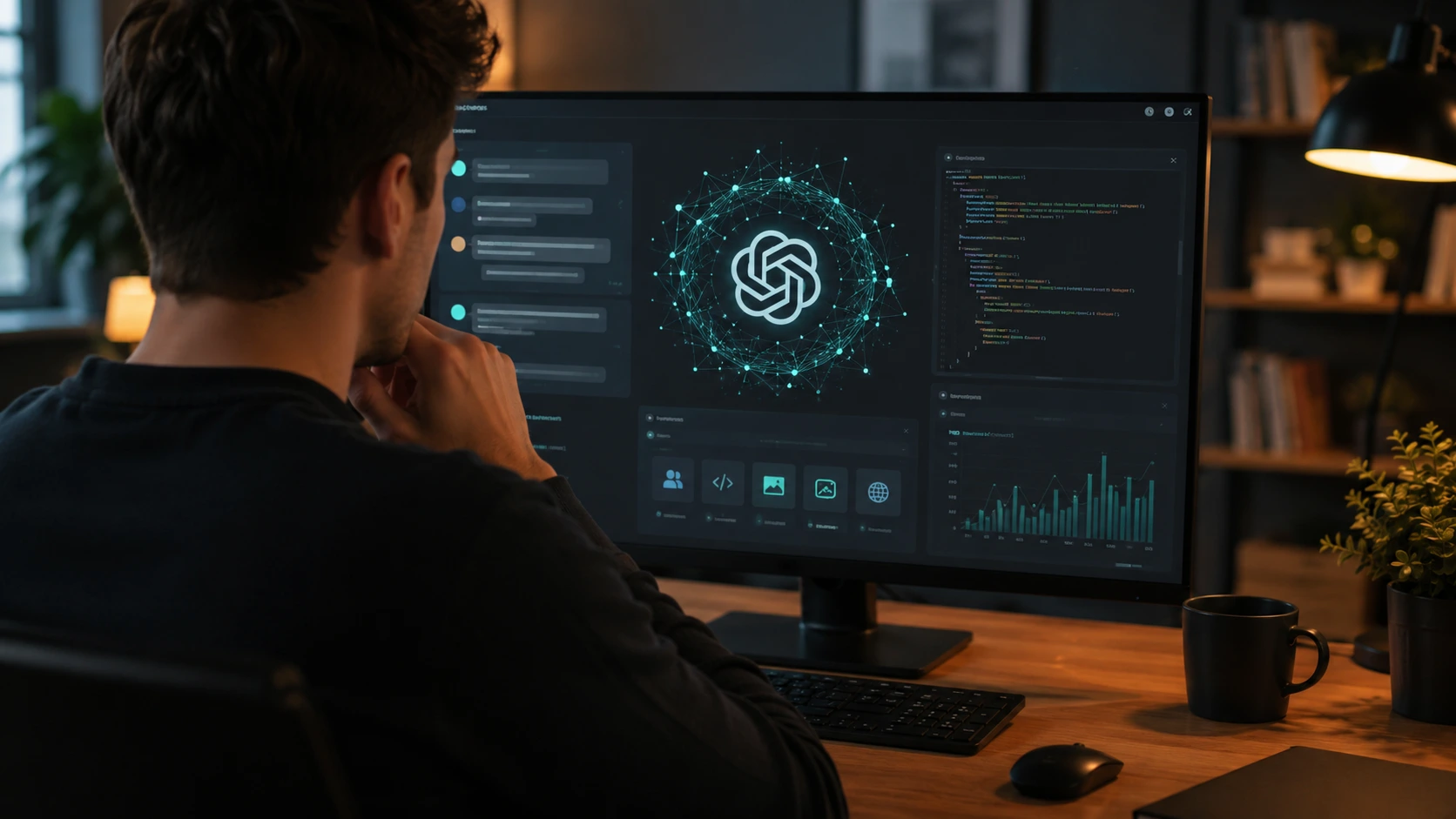
OpenAI is preparing what could become the biggest ChatGPT overhaul since the platform launched. The company wants to transform its popular chatbot into a broader AI platform that does much more than answer questions. Internal plans suggest future versions of ChatGPT will place greater emphasis on AI agents, coding tools, and integrated services that help users complete tasks without leaving the platform.
The changes highlight OpenAI’s ambition to turn ChatGPT into a central hub for work, productivity, and digital assistance.
OpenAI Eyes a Superapp Strategy
OpenAI’s plans suggest the company wants ChatGPT to evolve into a so-called “superapp.” Instead of acting as a standalone chatbot, the platform would bring together multiple AI-powered tools under a single interface.
Users could move between conversations, coding projects, research tasks, image generation, and automated workflows without switching products. The goal appears to be reducing friction while keeping users inside OpenAI’s ecosystem for longer periods.
Technology companies across the world have pursued similar strategies. By combining multiple services in one place, platforms can increase engagement and create new revenue opportunities.
AI Agents Become a Core Feature
A major part of the ChatGPT overhaul focuses on AI agents. These systems go beyond answering questions and can actively perform tasks on a user’s behalf.
Future AI agents may help users conduct research, organize projects, analyze information, complete repetitive workflows, and interact with external services. Instead of providing instructions, the system could handle much of the work itself.
The approach reflects a broader shift taking place across the artificial intelligence industry. Developers increasingly view AI agents as the next evolution of digital assistants.
As competition intensifies, companies are racing to build systems that can deliver real-world actions instead of simple responses.
Coding Tools Take Center Stage
The overhaul also places greater attention on OpenAI’s coding capabilities. Reports indicate that coding tools will receive more prominent placement throughout the ChatGPT experience.
Software development has become one of the most valuable applications of generative AI. Businesses increasingly rely on AI-powered coding assistants to speed up development, identify bugs, and automate routine programming tasks.
By integrating coding features more deeply into ChatGPT, OpenAI can strengthen its appeal among developers, startups, and enterprise customers.
The move also helps the company compete in a market where AI-assisted software development is becoming increasingly important.
Enterprise Demand Continues to Grow
Business customers remain a major focus for OpenAI. Enterprise adoption of AI tools has accelerated during the past year as organizations look for ways to improve productivity and reduce manual workloads.
A broader ChatGPT platform could help companies consolidate several AI functions into a single service. Instead of managing separate tools for research, coding, automation, and content generation, organizations may be able to access those capabilities through one platform.
That convenience could become a significant advantage as competition in the AI sector continues to increase.
Conclusion
The ChatGPT overhaul signals a major shift in OpenAI’s long-term vision. The company is no longer positioning ChatGPT as a simple chatbot. Instead, it is building a platform designed to support coding, automation, research, and task execution through a unified AI experience. If OpenAI successfully delivers that vision, ChatGPT could become one of the most comprehensive digital productivity platforms on the market.
0 responses to “ChatGPT Overhaul Pushes OpenAI Beyond Chatbots”