


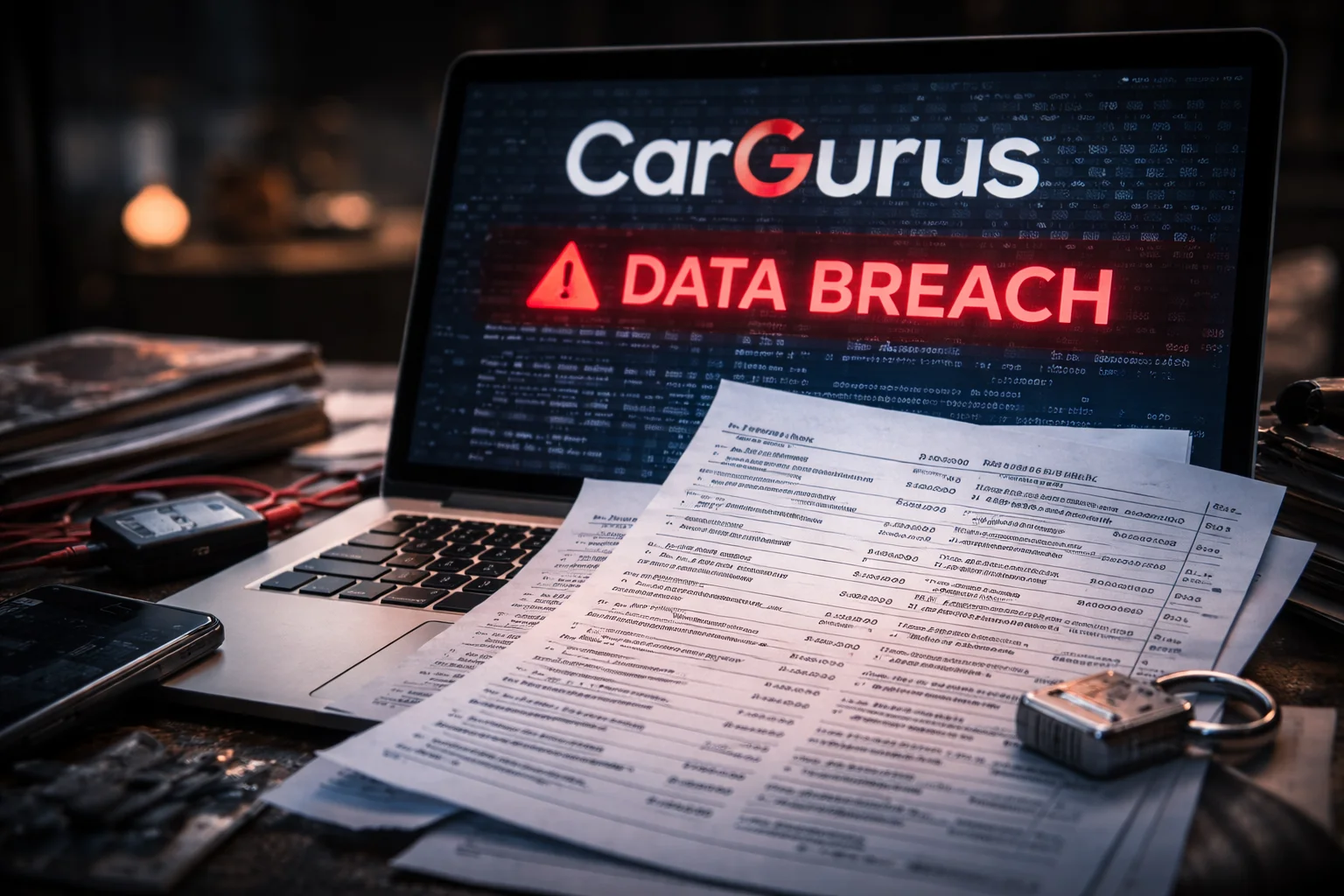
A massive dataset linked to CarGurus has surfaced online after the ShinyHunters hacking group reportedly followed through on a failed extortion attempt. The CarGurus data breach involves approximately 12.4 million records, now circulating publicly after negotiations between the attackers and the company allegedly collapsed.
The release raises renewed concerns about large-scale data theft, public leaks, and the growing trend of criminals using extortion as leverage before publishing stolen information.
How the Data Was Released
ShinyHunters allegedly attempted to pressure CarGurus into paying a ransom in exchange for keeping the stolen data private. When those efforts did not succeed, the group published a 6.1GB archive containing millions of records.
This tactic follows a familiar pattern. Threat actors increasingly combine data theft with public exposure threats, creating reputational and legal pressure on victim organizations. When companies refuse to comply, attackers often publish the data to demonstrate credibility and maintain their reputation within cybercriminal circles.
What Information Is Included
Analysis of the dataset indicates that it contains various types of personally identifiable information connected to CarGurus users and related accounts. Reportedly exposed data includes:
- Email addresses
- Full names
- Phone numbers
- Physical addresses
- IP addresses
- Account identifiers
- Finance pre-qualification application data
- Dealer subscription details
While some email addresses may have appeared in earlier breach compilations, the dataset appears to contain additional details that could increase the risk of targeted attacks.
Potential Risks for Affected Users
The scope of the CarGurus data breach creates opportunities for phishing campaigns, identity fraud, and social engineering attacks. When attackers gain access to structured datasets containing contact information and contextual details, they can craft more convincing scams.
Even previously exposed email addresses become more valuable when paired with updated personal data. Criminals often merge multiple breach datasets to refine targeting strategies and improve attack success rates.
Users connected to the platform should remain alert to suspicious emails, phone calls, and unsolicited messages. Enabling multi-factor authentication and updating passwords on related accounts can reduce the risk of follow-on compromise.
ShinyHunters’ Track Record
ShinyHunters has developed a reputation for publishing large-scale data leaks after failed ransom negotiations. The group frequently advertises stolen databases on underground forums, sometimes providing samples to validate their claims.
This case reflects a broader shift in cybercrime tactics. Data theft alone now serves as both leverage and punishment. The public release of stolen records increases pressure on organizations while amplifying harm to affected users.
Conclusion
The CarGurus data breach highlights the persistent threat posed by data-extortion groups that combine theft with public exposure. With 12.4 million records reportedly published, the incident demonstrates how quickly sensitive information can move from private systems to public forums.
For users, vigilance remains essential. For organizations, the case reinforces the importance of strong data protection, incident response readiness, and transparent communication when breaches occur.
0 responses to “CarGurus Data Breach Exposes 12.4 Million Records”