


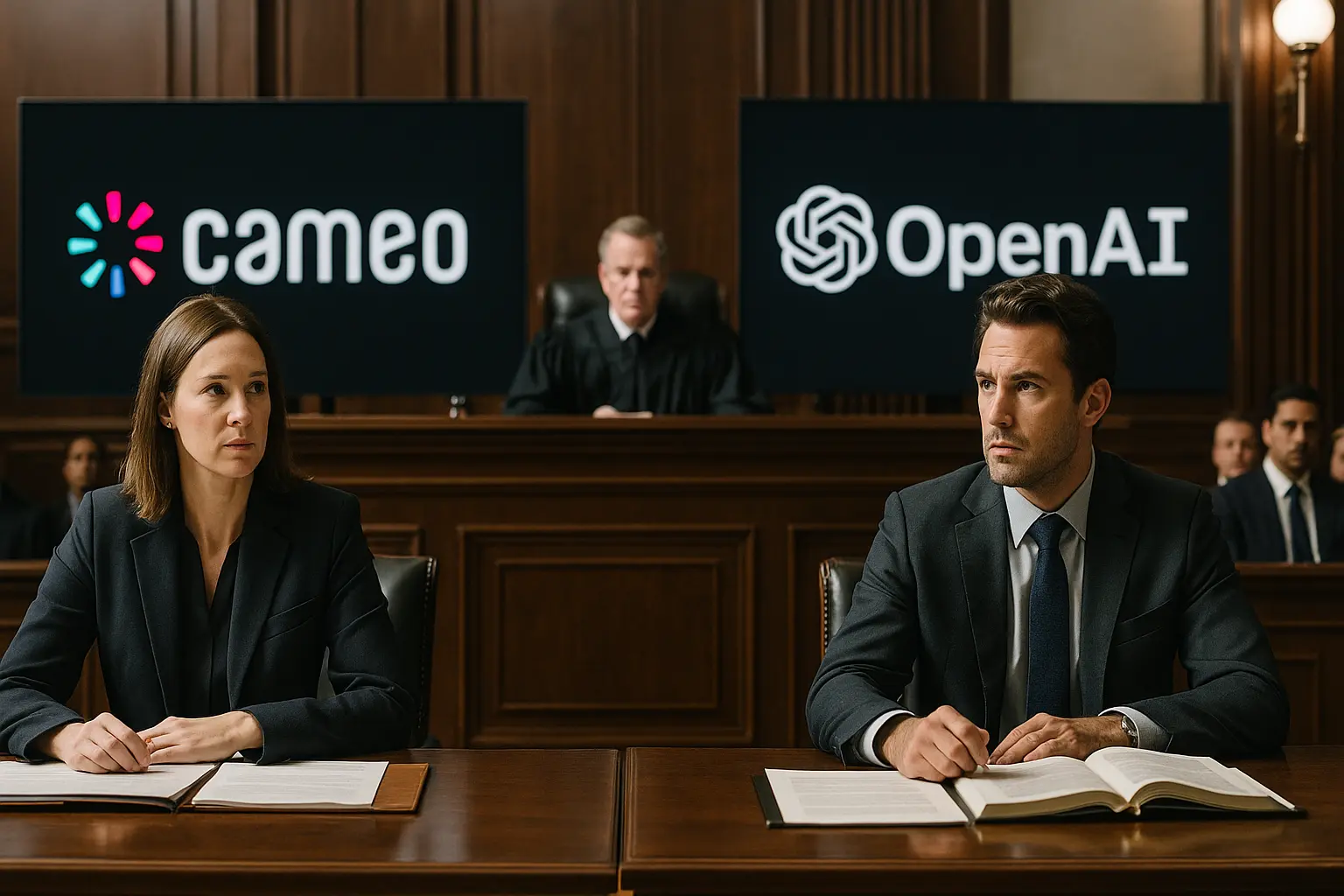
A new legal battle dubbed the Cameo vs OpenAI lawsuit shines a bright light on naming conflicts in the AI era. The video-platform Cameo claims that OpenAI’s launch of a feature called “Cameo” inside its model Sora infringes on its trademark and imitates its identity. The dispute highlights brand risk and legal uncertainty as AI features adopt familiar terminology.
How the conflict began
Founded in 2017, Cameo allows users to commission personalized videos from celebrities. The service built a recognizable brand and trademark around its name. When OpenAI rolled out a feature also called “Cameo”, Cameo responded by filing a lawsuit. The platform alleges that OpenAI’s use of the name causes confusion, capitalises on Cameo’s goodwill and dilutes its brand value. OpenAI disputes those claims and argues the term is generic and open for use.
Legal and brand implications
Trademark law focuses on whether a later use of a mark will cause confusion among consumers about origin or affiliation. Cameo argues that the name use overlaps with its domain: user-driven celebrity content. OpenAI counters it offers a distinct service and the term “cameo” is descriptive. The outcome may clarify how naming rights hold up when tech features resemble established platforms.
For brands, the case signals caution. A lot of AI firms pick everyday words for their features. That strategy may trigger conflict. For legacy brands, the risk is losing clarity or allowing dilution of their identity when a different business uses similar names in adjacent spaces.
Broader consequences for tech and entertainment
The dispute reflects a bigger trend. AI companies increasingly borrow or reuse familiar brand language. Entertainment platforms face pressures over likeness rights, user expectations and naming overlaps. The Cameo vs OpenAI lawsuit may force more careful naming strategies. It may also prompt platforms to monitor emerging features for possible brand impact.
If courts favour Cameo, AI firms will likely tighten naming reviews to avoid likeness disputes. If OpenAI prevails, the ruling may loosen naming restrictions for generic-word features. For users, the decision might shape how easily they distinguish between existing services and new AI-powered ones.
Conclusion
The Cameo vs OpenAI lawsuit offers more than a clash over a word. It probes how brands and AI features coexist when names converge and services overlap. Cameo argues its trademark is at risk. OpenAI claims the term falls into common usage. The verdict will shape naming practices, brand protection and user clarity in the evolving AI-entertainment landscape.
0 responses to “Cameo vs OpenAI lawsuit over “Cameo” name”