


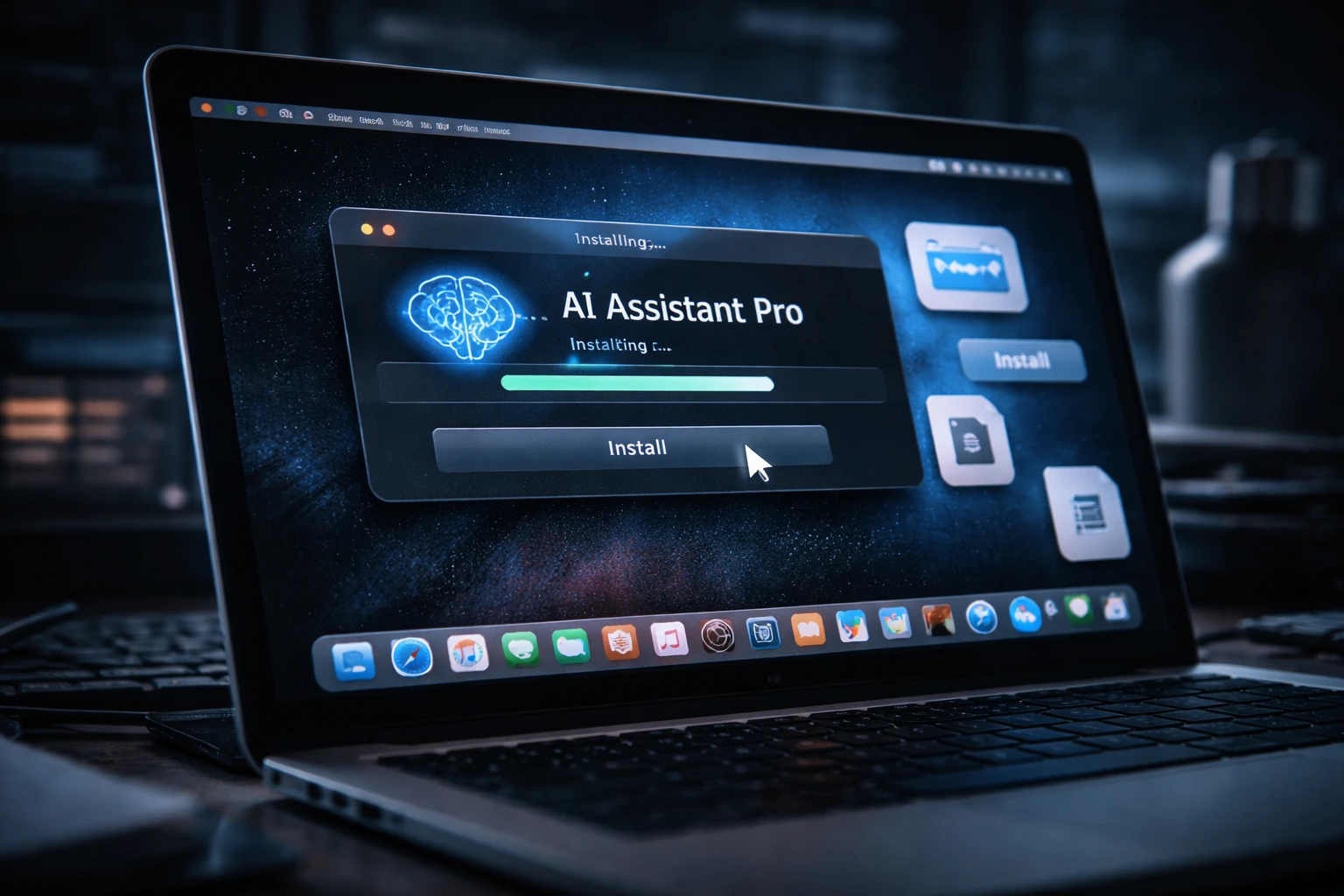
Mac users are facing a new wave of malware distributed through fake artificial intelligence tools. The AMOS infostealer campaign uses trusted-looking applications to convince victims to install the threat themselves. Instead of exploiting software vulnerabilities, attackers rely on user trust and curiosity around AI software.
Malware distributed through AI ecosystem
Researchers discovered attackers spreading malicious add-ons disguised as useful tools. The applications appeared to offer productivity, media, or finance features, but they actually delivered the infostealer.
Once installed, the malware quietly collected sensitive information from the device. Because users believed they were installing legitimate software, the attack bypassed traditional security suspicion.
How the infection works
The AMOS infostealer relies on social engineering rather than technical exploits. Victims are guided into executing commands or installing software that appears harmless.
Common delivery methods include fake installers, cloned developer repositories, and search engine ads that lead to malicious downloads. After execution, the malware scans the system and prepares stolen data for exfiltration.
Information targeted by attackers
After gaining access, the malware extracts authentication and financial information across multiple applications. The goal is to gather reusable access credentials.
Stolen data typically includes:
- Browser passwords and session cookies
- Cryptocurrency wallet data
- System and application credentials
- Local documents and stored files
Criminal groups later use this information for account takeover, fraud, or network intrusion.
Part of a broader cybercrime model
The AMOS infostealer operates as a service that other criminals can deploy. Attackers distribute the malware while operators manage infrastructure and stolen data handling.
This model lowers the barrier to entry, allowing less technical criminals to conduct effective attacks. The collected logs are often sold and reused in larger operations such as ransomware incidents.
Why AI apps are effective lures
Artificial intelligence software spreads quickly because users actively search for new tools and extensions. That urgency reduces verification behavior and increases installation rates.
Attackers exploit this trust. When malware hides inside a helpful-looking tool, victims willingly grant system access without realizing the risk.
Conclusion
The AMOS infostealer campaign highlights a shift toward deception-based macOS attacks. Instead of breaking protections, criminals persuade users to open the door themselves.
Verifying download sources and avoiding unofficial extensions remains essential. As AI adoption grows, attackers will continue using trusted platforms as delivery channels.
0 responses to “AMOS infostealer targets macOS users through fake AI apps”