


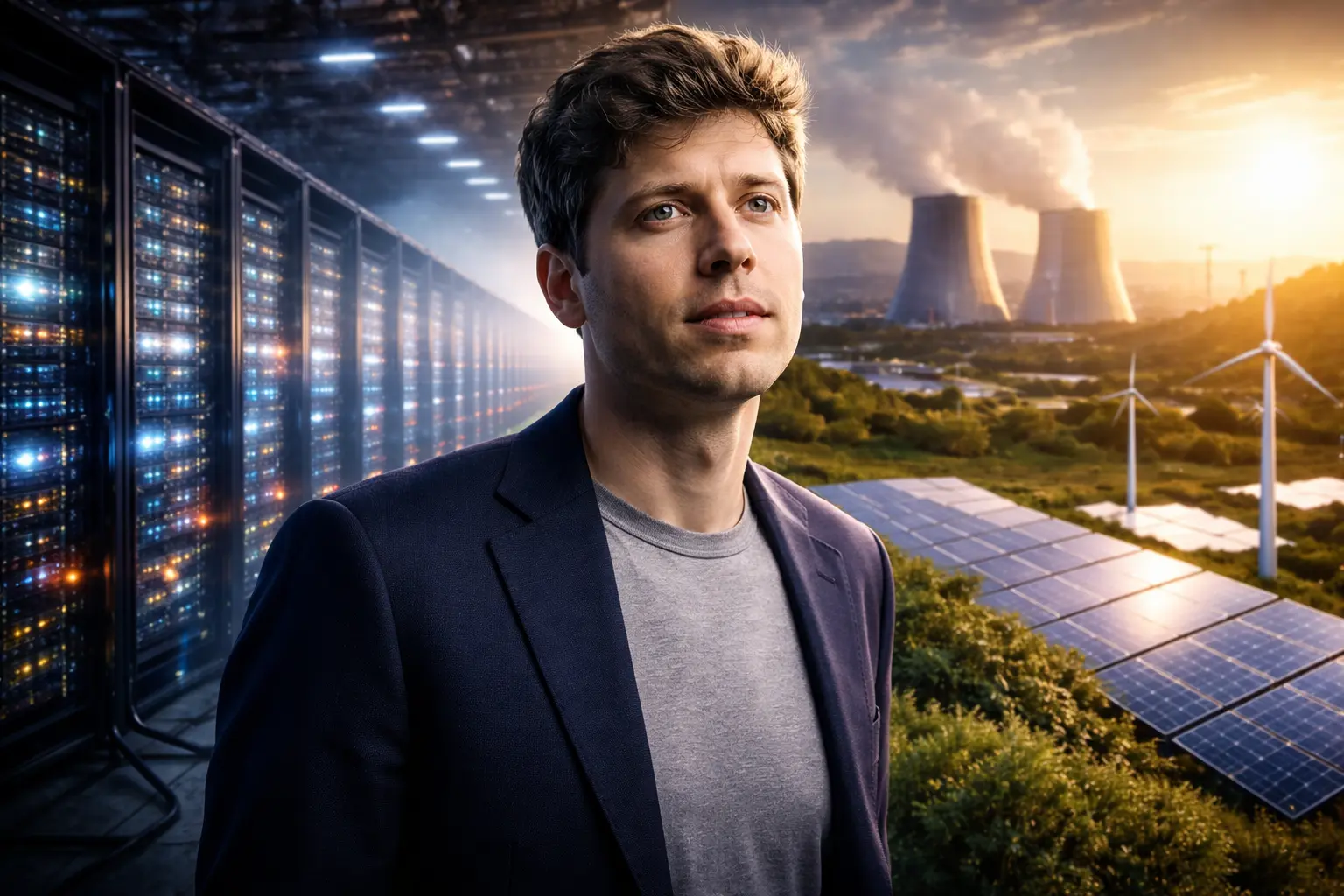
The Altman AI energy debate intensified after OpenAI CEO Sam Altman defended artificial intelligence power consumption during a public discussion on sustainability. Altman acknowledged that AI systems consume significant electricity, yet he argued that critics should view this demand within a broader context of global energy use.
His comments sparked strong reactions from both supporters and environmental critics. As AI adoption accelerates, concerns about energy usage continue to shape industry conversations.
Altman’s Argument on AI Power Use
During a recent public appearance, Altman addressed concerns about the environmental footprint of large AI models. He compared the energy required to train and operate AI systems with the lifetime energy consumption of humans. By drawing that parallel, he aimed to challenge what he described as selective scrutiny of AI infrastructure.
Altman also suggested that advances in data center cooling and hardware efficiency reduce some environmental pressures. However, he did not deny that AI workloads require substantial electricity, particularly as demand for generative AI services continues to rise.
His remarks focused less on minimizing consumption and more on reframing how society evaluates technological energy use.
Rising Energy Demand From AI
The Altman AI energy debate reflects a measurable shift in global power consumption. AI training requires high-performance computing clusters that operate continuously. In addition, inference workloads — the real-time responses users receive — generate ongoing energy demand.
Data centers that support AI services already account for a growing share of electricity usage in several countries. As businesses integrate AI into everyday operations, these demands will likely expand further.
Critics argue that without aggressive investment in clean energy, AI growth could strain power grids and increase carbon emissions.
Industry Push for Cleaner Energy
Altman emphasized the need for long-term energy solutions rather than limiting AI innovation. He pointed to cleaner energy sources such as nuclear, solar, and wind as necessary infrastructure to sustain AI expansion. According to his view, the focus should shift toward scaling reliable low-carbon energy production.
Technology companies increasingly invest in renewable energy partnerships and advanced grid systems. Many industry leaders recognize that AI’s future depends on stable, sustainable electricity supplies.
Still, building that infrastructure requires significant policy coordination and capital investment.
Public and Industry Reaction
The Altman AI energy debate generated mixed responses across technology and environmental communities. Some observers praised his willingness to address the issue directly. Others criticized the comparison between AI systems and human development as oversimplified.
Environmental advocates maintain that concentrated data center power usage demands transparent reporting and measurable efficiency targets. Meanwhile, AI developers stress the transformative benefits that advanced systems deliver to healthcare, education, and productivity.
These competing perspectives continue to shape how policymakers and corporations approach AI regulation and energy planning.
Conclusion
The Altman AI energy debate highlights the tension between technological progress and environmental responsibility. While AI systems deliver powerful capabilities, they also increase electricity demand at scale. Altman’s defense reframed the conversation, but it did not resolve concerns about sustainability.
As AI infrastructure expands, balancing innovation with clean energy investment will determine whether the technology scales responsibly. The long-term solution will depend on improving efficiency while accelerating the global transition to sustainable power sources.
0 responses to “Altman AI Energy Debate Intensifies Over Environmental Impact”