


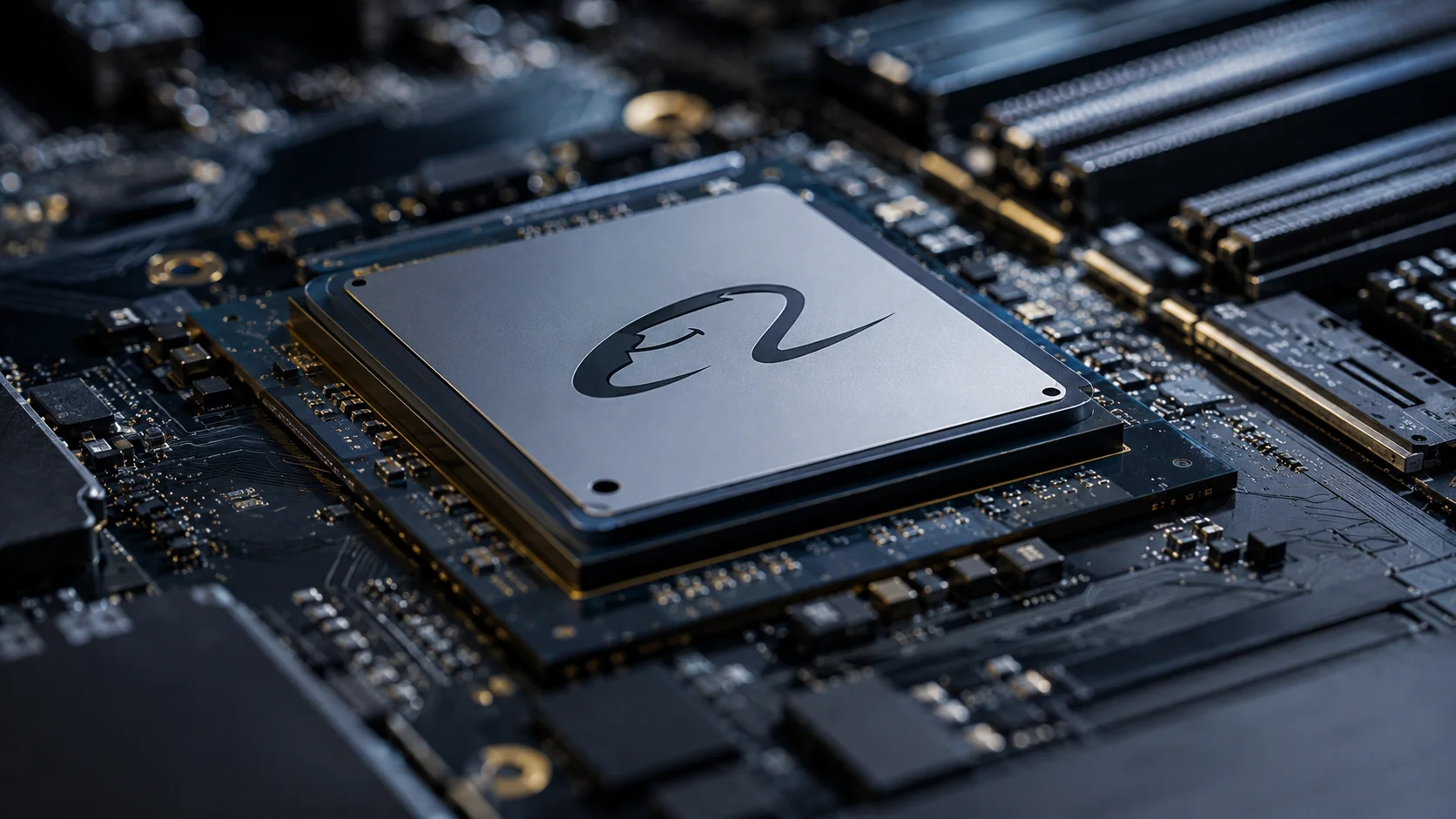
Alibaba has introduced a new artificial intelligence chip as Chinese technology companies continue reducing dependence on Nvidia hardware. The announcement comes amid ongoing US export restrictions limiting China’s access to advanced AI accelerators and semiconductor technology.
The new Alibaba AI chip was revealed during the Alibaba Cloud Summit alongside broader AI infrastructure and cloud expansion plans. The company says the hardware was designed for demanding AI workloads, cloud computing, and autonomous AI systems.
Alibaba Reveals New Zhenwu M890 AI Chip
Alibaba introduced the Zhenwu M890 through its semiconductor division, T-Head. According to the company, the processor delivers significantly stronger performance than its previous generation AI hardware.
The chip reportedly focuses on memory-intensive AI processing, inference operations, and large-scale coordination tasks tied to modern AI agents and cloud infrastructure. Alibaba also introduced a new AI server platform called Panjiu AL128, which integrates 128 accelerators inside a single rack system designed for enterprise deployments.
Alibaba stated that Chinese enterprise customers can immediately access the infrastructure through Alibaba Cloud services. The company also confirmed plans for future chip generations scheduled for release during the next several years.
China Continues Moving Away From Nvidia Dependence
The Alibaba AI chip launch reflects China’s broader effort to reduce reliance on Nvidia and other foreign semiconductor providers. US export controls continue restricting Chinese access to advanced AI accelerators used for large-scale machine learning and cloud computing.
Chinese technology companies increasingly invest in domestic alternatives as geopolitical tensions continue reshaping semiconductor supply chains. Reports suggest several major firms have already expanded adoption of locally developed AI processors from companies including Alibaba and Huawei.
Alibaba acknowledged that some domestic AI chips still trail Nvidia’s most advanced hardware in raw performance. However, the company argues that tighter integration between AI models, cloud infrastructure, and proprietary hardware can narrow the practical performance gap.
Alibaba Expands AI and Cloud Investments
Alongside the new chip announcement, Alibaba revealed broader plans to expand its AI infrastructure business. The company reportedly plans to invest tens of billions of dollars into AI and cloud development during the coming years.
Alibaba also introduced Qwen 3.7-Max, an upgraded large language model focused on reasoning tasks, coding operations, and long-duration AI workloads. The company claims the model can maintain stable performance during extended inference sessions lasting more than 30 hours.
Executives also stated that hundreds of thousands of Zhenwu chips have already shipped across multiple industries and enterprise deployments.
Global AI Hardware Competition Intensifies
The Alibaba AI chip announcement highlights the rapidly intensifying competition surrounding AI hardware and cloud infrastructure. Nvidia continues dominating the global AI accelerator market, but Chinese firms increasingly view domestic semiconductor development as both a commercial priority and a national strategic objective.
Researchers expect competition between Nvidia, Alibaba, Huawei, and other AI hardware companies to accelerate further as organizations race to build vertically integrated AI ecosystems combining chips, cloud systems, models, and deployment infrastructure.
The broader AI market is also shifting toward greater control over entire infrastructure stacks instead of relying heavily on third-party hardware providers.
Conclusion
Alibaba has launched a new AI chip designed to strengthen China’s domestic AI infrastructure and reduce reliance on Nvidia hardware. The Zhenwu M890 represents another major investment in local semiconductor development as export restrictions continue reshaping the global AI industry.
The announcement also demonstrates how competition in artificial intelligence increasingly extends beyond software models into chips, cloud systems, and fully integrated infrastructure ecosystems.
0 responses to “Alibaba AI Chip Challenges Nvidia in China”