


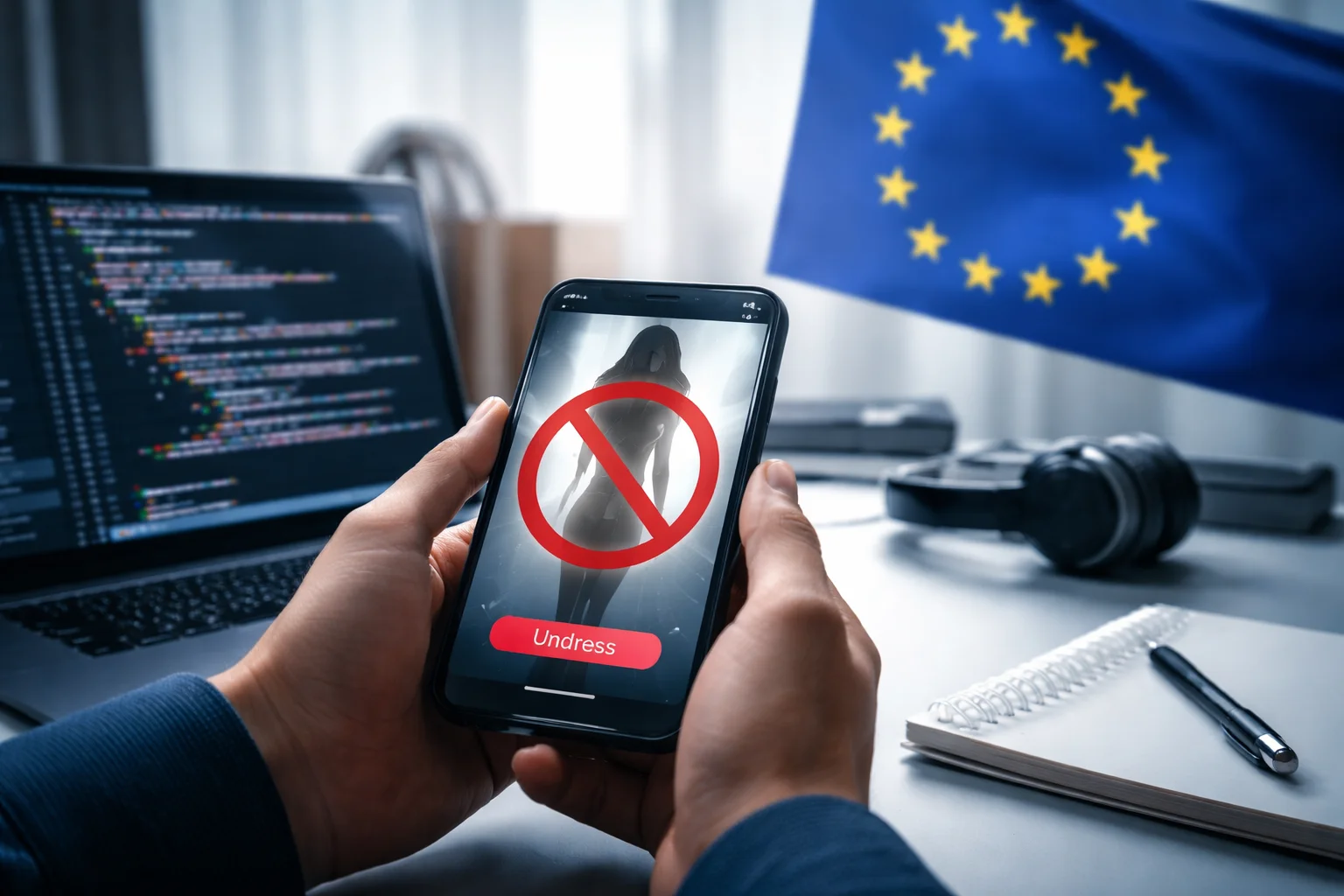
European lawmakers are moving to restrict one of the most controversial uses of artificial intelligence. The AI undressing apps ban is gaining strong support in the European Parliament, signaling a shift toward tighter control of harmful AI tools. These apps generate explicit images of real people without consent, raising serious concerns around privacy and digital abuse.
Lawmakers target non-consensual AI content
The AI undressing apps ban received overwhelming backing from Members of the European Parliament. Lawmakers aim to classify these tools as unacceptable due to their ability to create explicit content using real images without permission.
This technology allows users to produce manipulated images within seconds. As a result, abuse can scale quickly and spread across platforms before victims can respond. Regulators are now prioritizing consent and accountability when defining illegal AI use cases.
Part of wider AI regulation changes
The AI undressing apps ban forms part of broader updates to the EU’s AI Act. Lawmakers are refining how high-risk systems are identified and controlled across the region.
At the same time, discussions include adjustments to compliance timelines. Some requirements may be delayed to give companies time to adapt, while still enforcing strict limits on harmful applications. Authorities are working to support innovation without allowing tools that directly enable abuse.
Rising pressure after abuse cases
Recent incidents have increased urgency around the AI undressing apps ban. AI-generated explicit content has already been used to target individuals, including both public figures and private citizens.
These cases show how accessible the technology has become. Users do not need advanced skills, which lowers the barrier to misuse and increases overall risk. Regulators now view these apps as a direct threat to online safety and personal rights.
Final approval still pending
The AI undressing apps ban still requires approval from EU member states and the European Commission before it becomes law. However, strong parliamentary support suggests the proposal will move forward.
If adopted, the ban could take effect soon and establish a clear regulatory stance against non-consensual AI-generated content.
Conclusion
The AI undressing apps ban reflects a broader shift in how regulators approach artificial intelligence risks. European lawmakers are setting firm limits on tools that enable exploitation and privacy violations. The final outcome will shape how AI systems are developed and used, especially in areas where technology directly impacts individual rights.
0 responses to “AI undressing apps ban advances in Europe”