


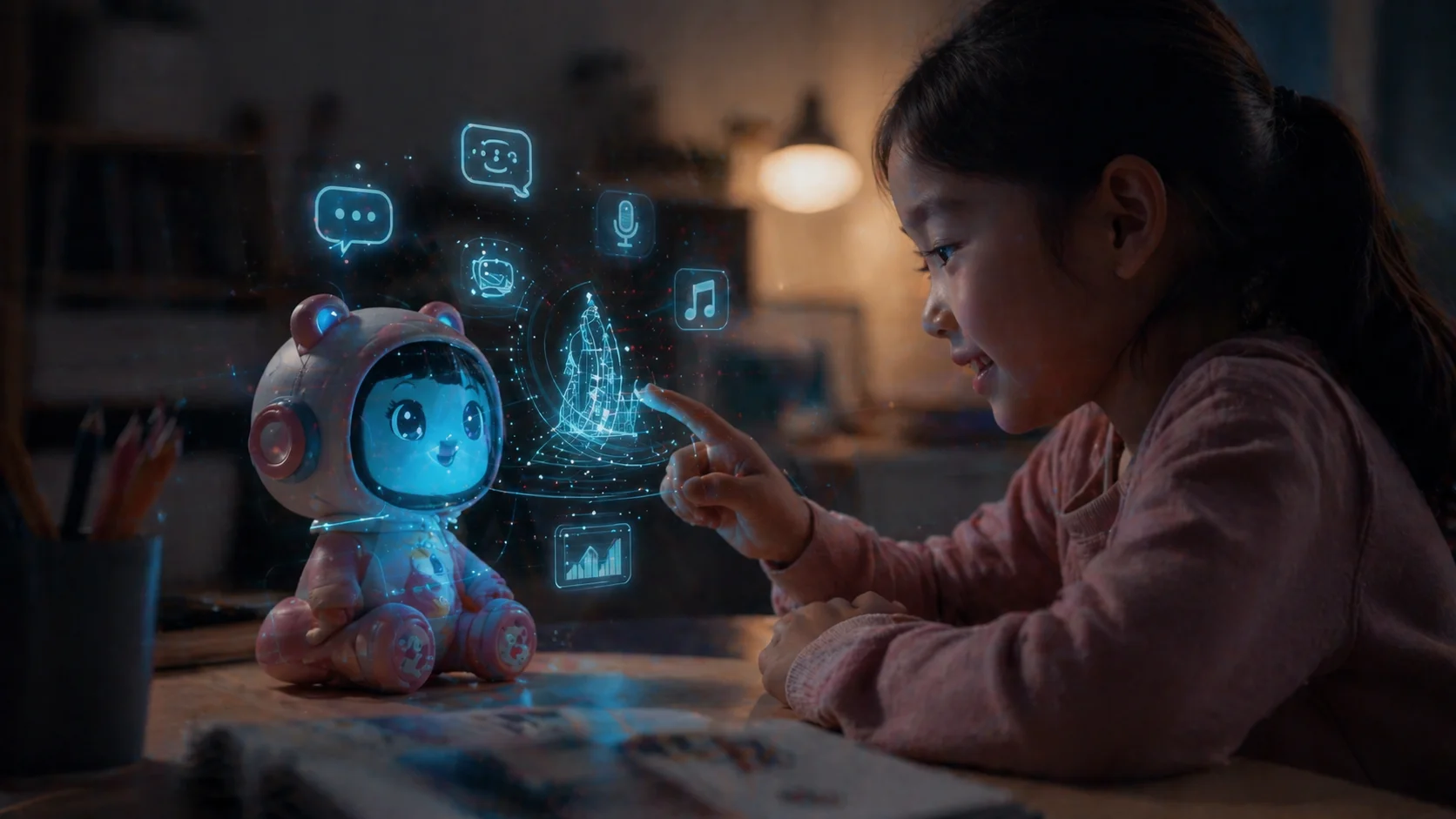
AI toys risks are increasing as generative AI moves into children’s products. In China, manufacturers are rapidly introducing smart toys that can talk, respond, and adapt in real time.
This shift changes how children interact with toys. Instead of passive play, kids now engage with systems that simulate conversation and behavior.
Generative AI changes how toys behave
The latest AI toys use generative models to produce dynamic responses. They can remember interactions and adjust how they communicate with children.
This makes the experience feel more personal. However, it also means the behavior is less predictable than traditional toys.
The focus moves from simple entertainment to continuous interaction.
Privacy concerns grow with connected devices
AI toys risks include serious privacy concerns. Many of these devices rely on microphones and cloud services to function.
They collect voice data, preferences, and interaction patterns. If not properly secured, this information could be exposed or misused.
Parents often have limited visibility into how this data is stored or processed.
Content safety remains a major issue
AI toys risks also involve content control. Generative systems can produce unexpected responses that may not always be appropriate for children.
Even with safeguards, these systems can fail to filter certain outputs. This creates uncertainty around what children may hear during interactions.
The lack of full control makes safety harder to guarantee.
Impact on child development raises concerns
Experts warn that AI toys risks extend beyond security. These devices may influence how children develop social and emotional skills.
Constant interaction with AI systems can blur the line between real and artificial relationships. This may affect communication habits and emotional understanding over time.
Children may rely more on AI responses instead of human interaction.
Rapid adoption outpaces regulation
AI toys risks are increasing as adoption accelerates, especially in China. Companies are pushing new products to market faster than regulations can adapt.
This creates a gap between innovation and safety standards. Without clear rules, risks may continue to grow as the technology spreads.
Conclusion
AI toys risks highlight the challenges of bringing generative AI into children’s products. While the technology offers new ways to interact, it also introduces concerns around privacy, safety, and development.
Stronger safeguards and clearer oversight will be essential as these devices become more common.
0 responses to “AI toys risks rise as generative AI enters kids’ market”