


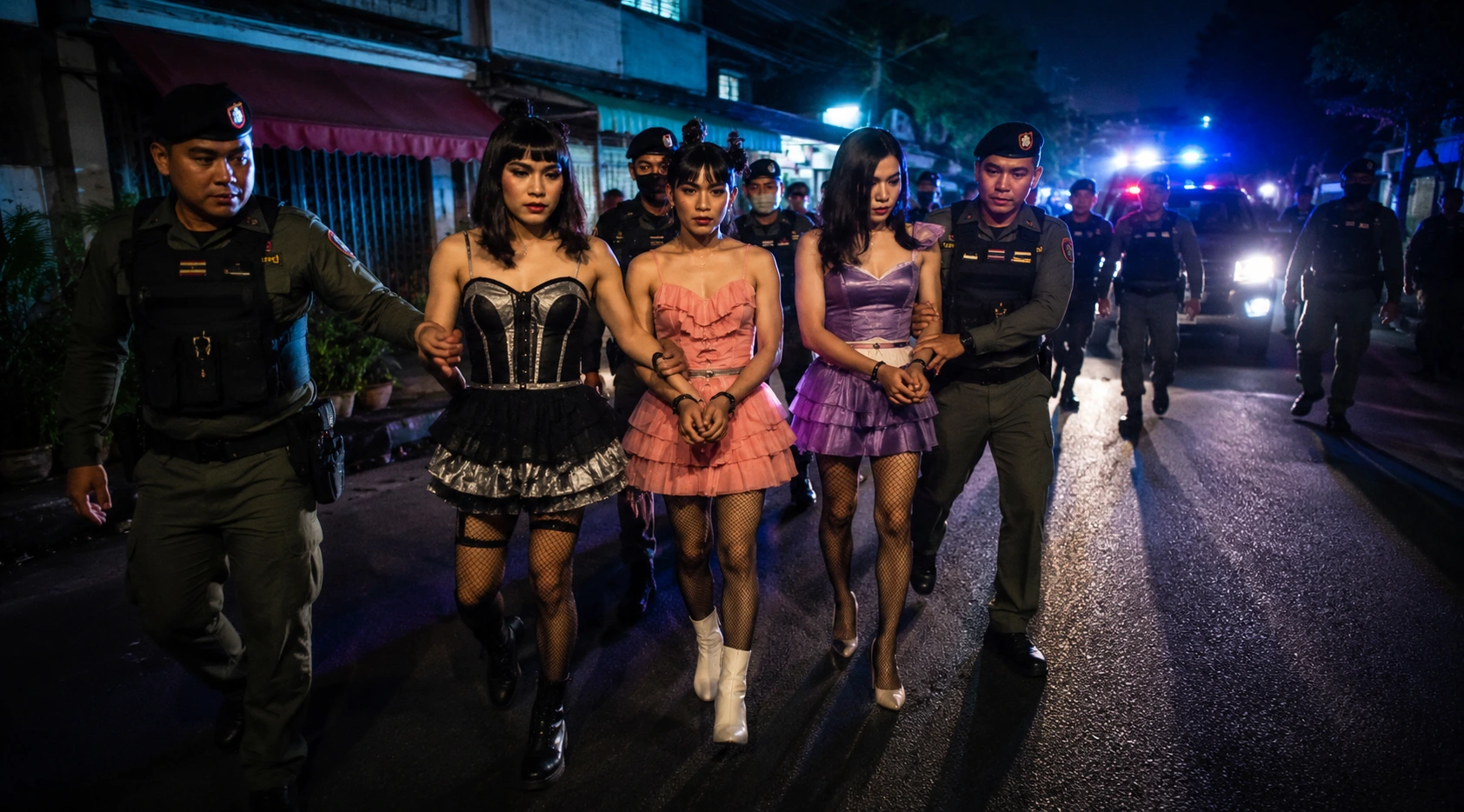
The AI police photo shared during a Thai drug raid investigation has raised new concerns about misinformation and synthetic media online. Social media users widely circulated an image that appeared to show undercover police officers dressed in drag during a narcotics operation. The unusual picture quickly attracted global attention and triggered widespread discussion across online platforms.
Authorities later confirmed that the image itself was fake and generated using artificial intelligence tools. While the police raid did take place, the viral photo did not reflect the actual operation.
The incident now serves as another example of how AI-generated content can blur the line between reality and fiction online.
Viral Raid Image Spread Across Social Media
The image gained momentum after appearing in posts connected to Thai law enforcement accounts. It showed several supposed undercover officers wearing colorful drag-inspired outfits during what looked like an active police operation.
Because the image appeared tied to official sources, many users assumed it was authentic. The unusual concept also helped the photo spread quickly across social media websites and messaging platforms.
Several online publications and content creators discussed the image before authorities clarified the situation. Many readers accepted the story immediately because the image looked realistic enough to appear genuine at first glance.
The combination of humor, shock value, and official branding helped the photo gain significant visibility online within a short period.
Thai Police Clarified the Image Was Fake
Thai authorities later explained that the viral image was created with AI software and did not depict real events. Officials stated that the underlying police raid happened, but officers were not dressed as drag performers during the operation.
According to reports, the image came from a social media administrator who used AI tools to create a humorous promotional-style post connected to the case.
The clarification arrived only after the photo had already spread widely online. By that stage, many social media users had already reshared the image or discussed it as a legitimate news story.
The situation demonstrated how quickly AI-generated visuals can influence public perception before fact-checking efforts catch up.
AI Content Is Becoming Harder to Verify
The AI police photo controversy reflects a growing challenge facing journalists, platforms, and internet users worldwide. Modern AI image generators can now produce highly convincing pictures with realistic lighting, facial details, and environments.
As these tools improve, many fabricated images become difficult to identify without closer inspection or technical analysis.
Experts have repeatedly warned that AI-generated content could accelerate the spread of misinformation, especially during fast-moving news cycles. False visuals often attract attention more quickly than corrections or official statements.
When artificial images appear alongside trusted branding or official communication channels, users may become even more likely to believe the content.
The Thailand incident highlights how even casual or humorous AI-generated posts can unintentionally create confusion on a large scale.
Newsrooms Face Increasing Pressure
Media organizations now face mounting pressure to strengthen image verification practices. Viral social media content often spreads globally before reporters can fully confirm its authenticity.
Some analysts believe AI-generated misinformation could become one of the biggest challenges facing digital journalism over the next few years.
Researchers and cybersecurity specialists continue developing detection systems designed to identify synthetic media. However, many experts admit that current detection technology still struggles against advanced AI-generated visuals.
As a result, human verification and source confirmation remain critical during breaking news events.
The Thai police incident may appear humorous on the surface, but it reflects a serious issue involving trust, authenticity, and digital information.
Conclusion
The AI police photo tied to the Thailand drug raid demonstrates how quickly synthetic media can mislead online audiences. Although the underlying police operation was real, the viral image itself was entirely fabricated using AI tools.
The confusion surrounding the photo spread rapidly before authorities issued clarification. The incident also showed how official-looking posts can increase the credibility of artificial content.
As AI-generated media becomes more advanced, both users and news organizations will likely face growing challenges verifying what is real online.
0 responses to “AI Police Photo Causes Confusion After Viral Thailand Raid Post”