


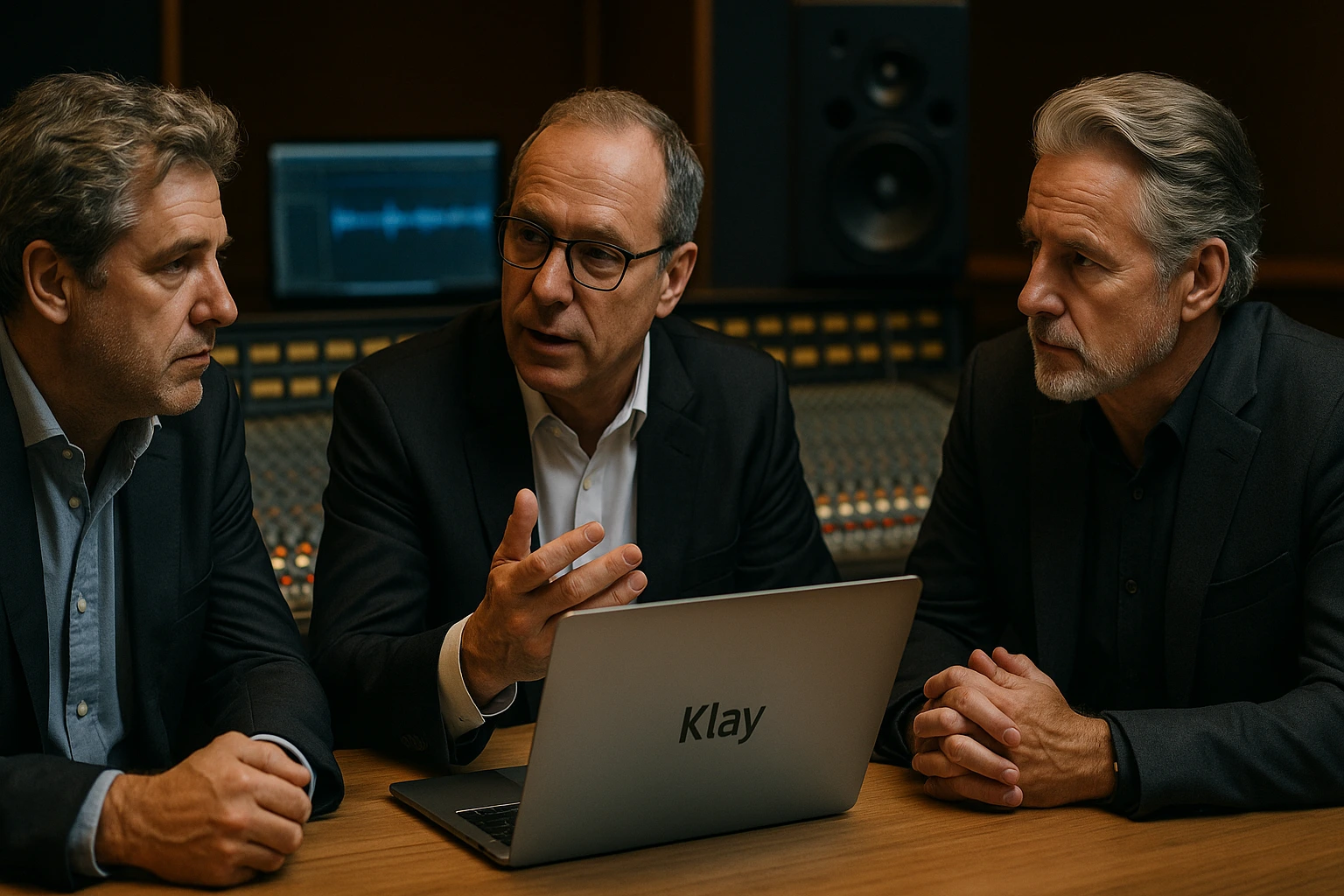
A major shift in AI music licensing arrived this week as Warner, Universal and Sony signed new agreements with the AI music startup Klay. These partnerships show how major rights-holders now adapt to emerging creative tools instead of resisting them. The move signals a coordinated attempt to merge music rights with AI-driven production under a regulated framework.
How the Klay Deals Came Together
The three global labels finalised separate licensing agreements with Klay. The company offers a subscription platform where users can reshape songs, create new versions and explore AI-assisted workflows.
Klay positions its service as a tool that enhances human creativity. The startup says its model rewards artists, protects writer rights and prevents unlicensed replication. Its leadership includes alumni from major tech and music institutions, which strengthens its position in an industry sensitive to misuse of catalogues.
What Klay Brings to the Industry
Klay’s platform appears designed to provide controlled remixing, style adaptation and AI-supported composition. Users can change the tone, genre or structure of a track while staying within licensed boundaries.
The company has been developing a framework that covers publishers, independent artists and labels. This structure attempts to avoid the unlicensed training controversies affecting other AI music projects. Klay’s strategy shows how AI developers can integrate rights protection from the start rather than retrofitting solutions after conflicts arise.
Why These Deals Matter
These agreements represent a turning point in AI music licensing strategy. Instead of defaulting to legal action, rights-holders now explore commercial partnerships with AI innovators.
The move establishes a precedent: AI platforms must negotiate licensed access to catalogues before deploying creative models. This protects songwriters and creates new revenue opportunities that combine technology and artistry.
For artists, it opens a potential pathway for safer AI collaboration tools. As for labels, it ensures oversight, royalty structures and catalog protection. For AI creators, it sets clear expectations about ethical use of data.
Challenges Ahead
Royalty and Transparency Demands
Labels and publishers will expect accurate reporting, transparent output tracking and reliable compensation systems.
Industry Scrutiny
Many executives remain cautious. They want proof that AI-music platforms can scale without violating rights or producing unwanted content.
Broader Legal Landscape
Ongoing lawsuits against unlicensed AI music models will shape the long-term direction of regulated AI music tools.
Conclusion
Conclusion: The AI music licensing deals between Klay and major labels mark a new chapter in industry collaboration. They show how rights-holders and AI platforms can build structured partnerships that balance innovation with protection. As these models mature, they will influence how music, technology and creative rights evolve across future digital landscapes.
0 responses to “AI music licensing deals reshape major labels”