


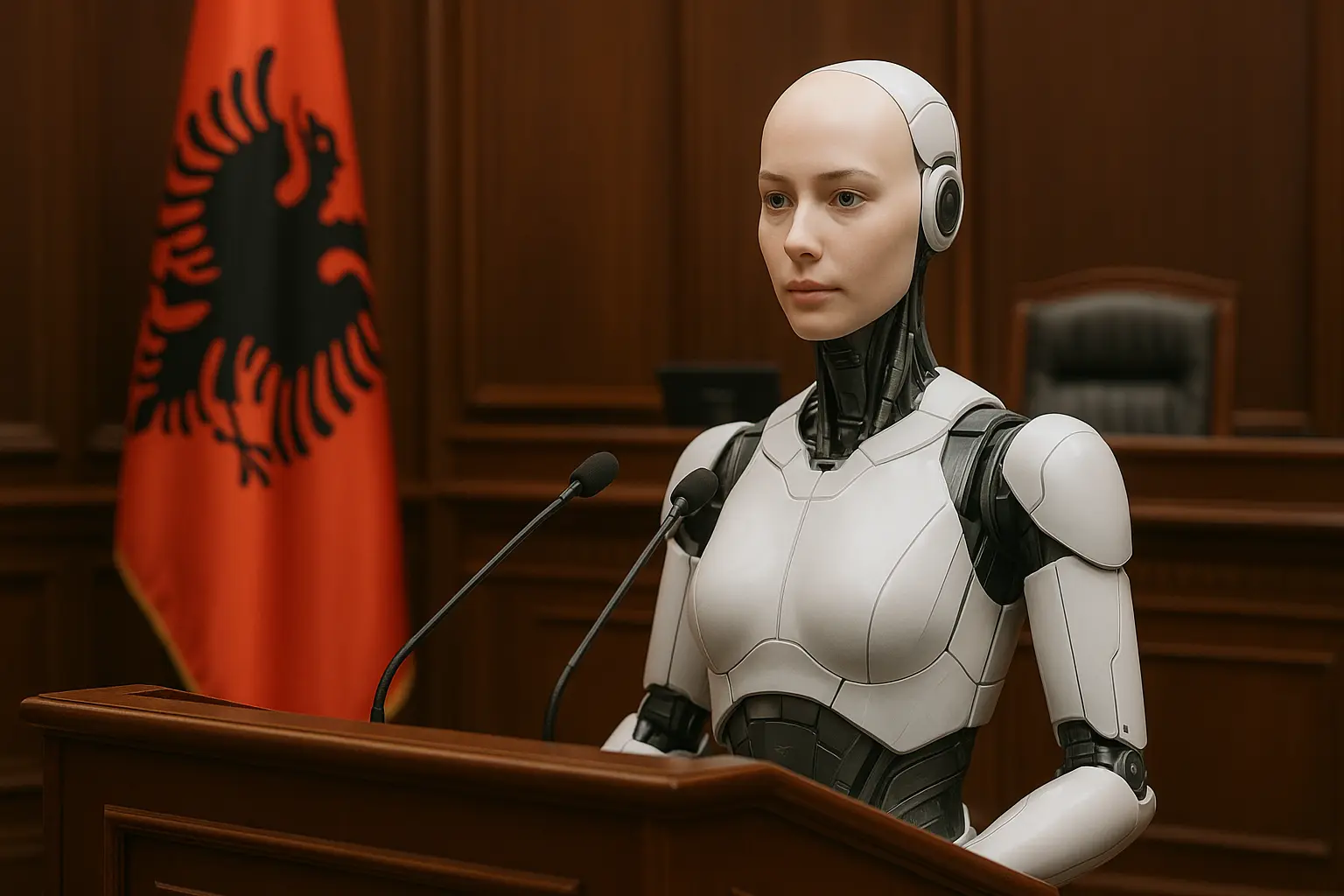
Albania’s government has shocked the world with its proposal to appoint an AI minister Albania chatbot named Djella. Presented as a tool to boost transparency and reduce bureaucracy, Djella has already been assisting citizens with digital services. However, the idea of granting it ministerial powers has sparked heated debate about accountability, ethics, and legality.
From Digital Assistant to Ministerial Candidate
Djella first launched in 2024 as part of the eAlbania platform. Its main role was answering questions and guiding citizens through tasks such as applying for permits, paying taxes, and renewing documents. In 2025, the government unveiled Djella 2.0, complete with an avatar and voice-based interaction. This upgrade aimed to help citizens less comfortable with technology by simplifying complex forms into conversational exchanges.
Now, Prime Minister Edi Rama has gone further, suggesting Djella could handle the oversight of public procurement. This leap positions Albania as one of the first countries to openly consider AI for such a central role in governance.
Benefits Claimed by the Government
Officials argue that Djella can transform how public services operate. Key benefits include:
- Transparency: Using AI to reduce human corruption risks in procurement.
- Efficiency: Eliminating paperwork and speeding up processes.
- Accessibility: Supporting citizens who struggle with digital platforms by using voice communication.
- Innovation: Positioning Albania as a leader in AI-driven governance.
Built on Microsoft’s Azure OpenAI technology, Djella reflects the government’s vision of using advanced tools to leapfrog traditional bureaucratic systems.
Ethical and Legal Concerns
Despite its promise, the plan to introduce an AI minister Albania has triggered major concerns:
- Accountability: An AI cannot swear an oath or assume legal responsibility.
- Liability: If errors occur, responsibility falls into a gray zone between developers and government.
- Democratic Oversight: Citizens cannot vote, dissent, or impeach a chatbot.
- Ethical Risks: Allowing AI decision-making in public procurement raises transparency issues of its own.
These unresolved questions highlight the risks of elevating Djella from a support tool to a decision-maker.
Conclusion
The proposal for an AI minister Albania is both bold and controversial. Supporters view Djella as a way to modernize governance and fight corruption, while critics warn about accountability gaps and democratic risks. Whether Albania pioneers a new model of AI-driven government or sparks a cautionary tale, the world is watching closely.
0 responses to “AI minister Albania: Djella Chatbot Sparks Debate”