


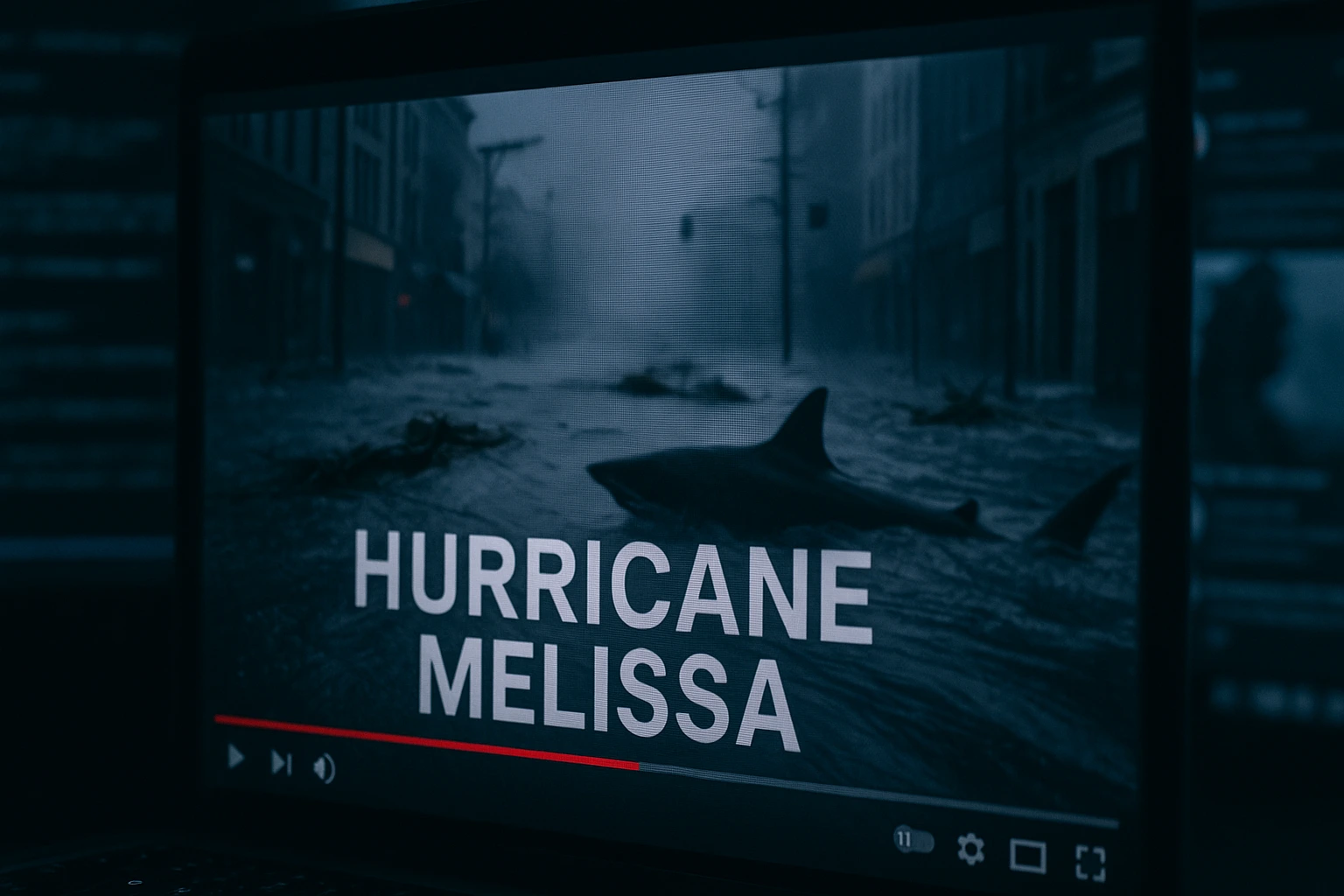
The rise of AI hurricane videos has flooded social platforms with fake footage linked to Hurricane Melissa. While the real storm battered the Caribbean, online users faced another crisis — a wave of fabricated clips showing sharks on city streets and dramatic rescues that never happened. The incident exposes how easily AI tools can distort reality during natural disasters.
Fake Hurricane Melissa Clips Go Viral
Dozens of viral videos on TikTok, X, and YouTube claim to show the devastation from Hurricane Melissa. Many include the Sora watermark, indicating they were created with OpenAI’s video generator.
Some depict sharks swimming through flooded neighborhoods, helicopters rescuing families, or entire towns submerged. Most lack any disclosure that they are AI-generated, blurring the line between fact and fiction.
Cybersecurity researchers and weather agencies confirmed that much of the footage is artificial. While the real hurricane caused significant damage, these exaggerated videos add confusion and panic online.
Why AI Hurricane Videos Are Dangerous
AI-generated storm clips create several serious risks for both viewers and authorities:
- Misinformation: Fake storm footage spreads faster than official updates, undermining real emergency communication.
- Public panic: People may act on false warnings or share misleading evacuation claims.
- Exploitation: Scammers use fake disaster videos to solicit donations or drive engagement for profit.
- Erosion of trust: The constant mix of real and fake content makes verifying genuine news harder.
As the AI hurricane videos continue to spread, their reach threatens to reshape how audiences interpret breaking news.
The Role of Social Media and AI Tools
Generative AI platforms like Sora make it effortless to produce convincing storm visuals. Social algorithms then reward this type of dramatic content, allowing fabricated scenes to trend quickly.
Social-media companies face growing pressure to introduce clearer labels, verification systems, and AI-detection tools. Without these safeguards, false narratives will continue to overshadow legitimate reporting.
Conclusion
The AI hurricane videos surrounding Hurricane Melissa show how generative AI can weaponize realism. As natural disasters intensify, so does the flood of digital misinformation. Platforms, creators, and viewers must act responsibly — verifying, labeling, and questioning content before sharing. Preserving public trust now depends on our ability to tell truth from simulation.
0 responses to “Fake Hurricane Melissa Clips Go Viral”