


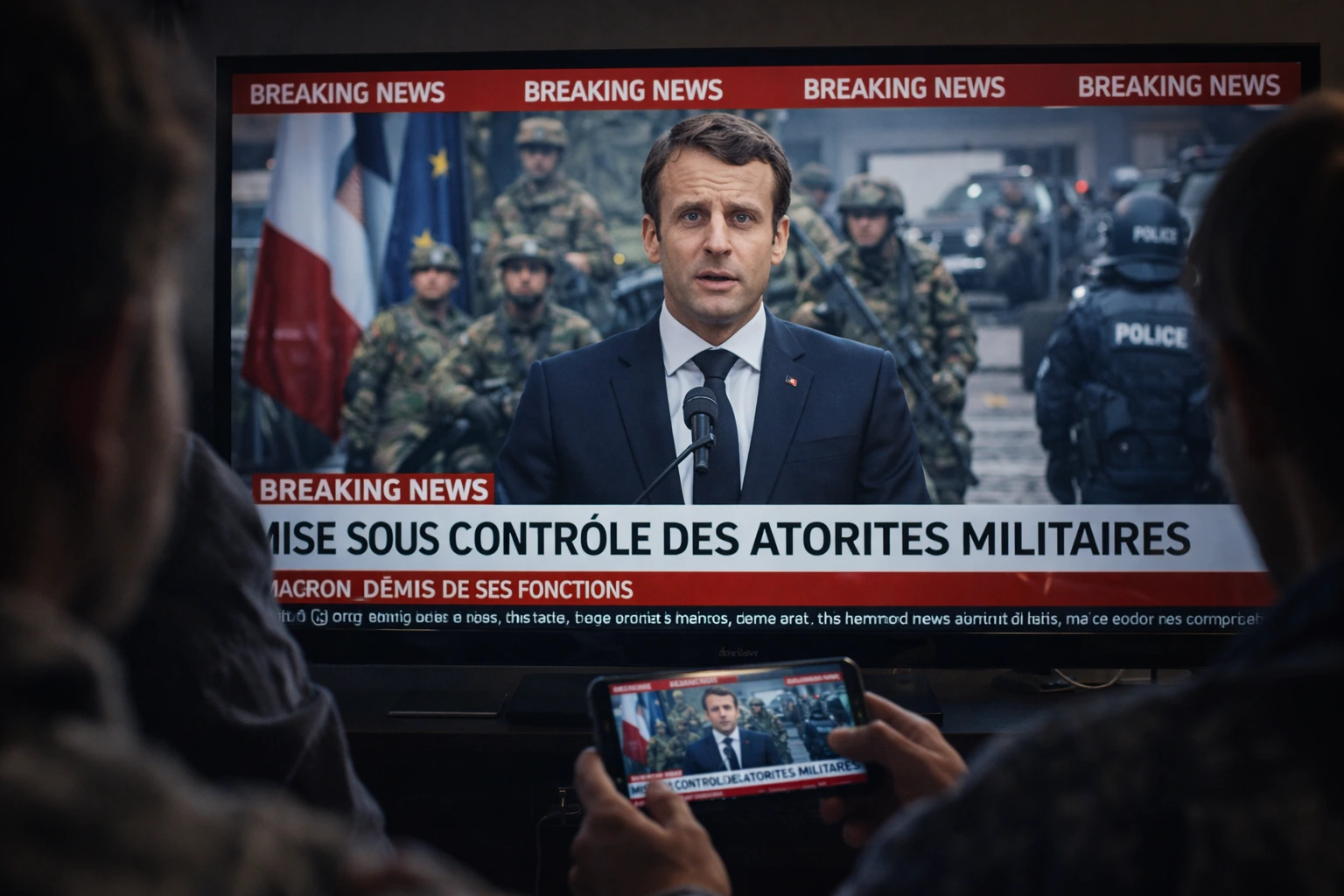
The AI coup video France incident has exposed how quickly AI-generated misinformation can spread before platforms intervene. A fabricated video falsely claiming a military coup in France and the removal of President Emmanuel Macron circulated widely on social media, reaching millions of users and triggering concern at the highest political levels.
Despite its false claims, the clip remained online long enough to spark confusion and diplomatic alarm.
What the fake video claimed
The video presented itself as a breaking news broadcast and asserted that French authorities had lost control of the country. It used AI-generated visuals and manipulated footage to simulate military movement and emergency conditions, creating the appearance of a sudden political collapse.
The production quality made the clip convincing enough that many viewers initially believed it was real. In at least one reported case, a foreign head of state contacted President Macron directly after seeing the video, seeking confirmation of events in France.
How the video spread
Once uploaded, the AI-generated clip spread rapidly across social media platforms. Algorithmic amplification pushed the video to large audiences before fact-checkers or moderators could react.
The speed of distribution highlights a growing problem. AI-generated political misinformation no longer relies on crude edits or obvious fabrications. Instead, it mimics professional news formats that viewers trust during breaking events.
Meta’s response draws criticism
French authorities asked Meta to remove the video after identifying it as false and potentially harmful. Meta initially declined, stating that the clip did not violate its content policies at the time.
That decision triggered backlash from French officials, including President Macron. He warned that unchecked AI-driven misinformation threatens democratic stability and public trust, especially during periods of political tension.
Why this incident matters
The AI coup video France case illustrates how AI tools lower the barrier to producing believable political deception. Individuals without advanced technical skills can now create content capable of influencing public opinion, disrupting diplomacy, and undermining confidence in institutions.
While some platforms experiment with AI-generated content labels, enforcement remains inconsistent. In fast-moving situations, misinformation often reaches massive audiences before corrective measures appear.
The wider challenge for platforms
This incident adds pressure on tech companies to adapt moderation systems for AI-generated threats. Traditional content rules struggle to address synthetic media that avoids explicit harm while still causing real-world consequences.
As generative AI becomes more accessible, platforms face increasing scrutiny over how they balance free expression against the risks of large-scale deception.
Conclusion
The AI coup video France incident shows how AI-generated misinformation can escalate from a viral post to an international concern within hours. Without faster detection and clearer enforcement, similar incidents may become more common. The case underscores the urgent need for platforms and policymakers to rethink how they handle synthetic political content in the AI era.
0 responses to “AI coup video France sparks backlash after fake Macron clip spreads”