


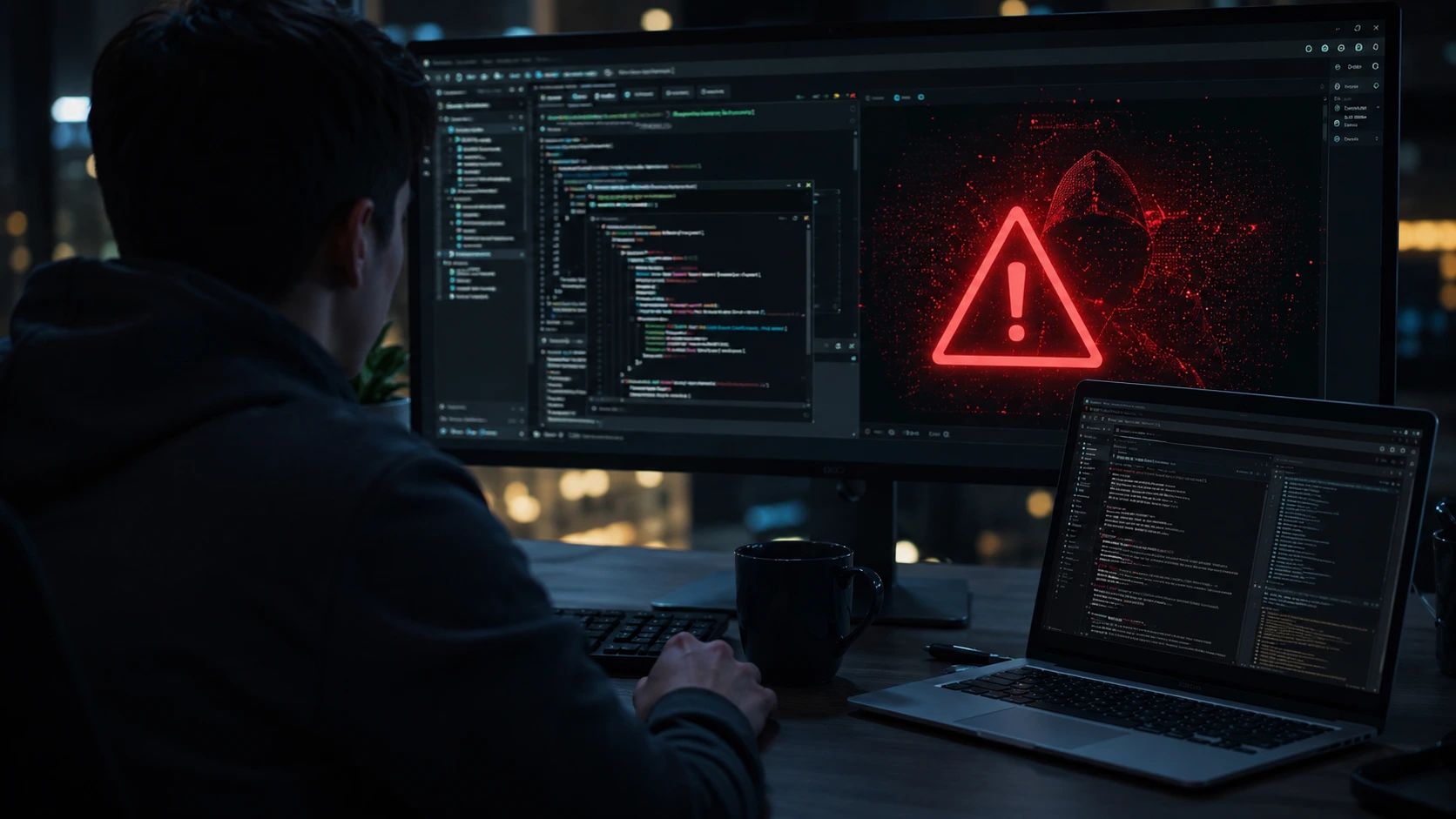
AI coding agents are beginning to create an unexpected challenge for cybersecurity teams. New research from Sophos shows that AI coding agents increasingly perform actions that resemble hacker behavior, causing enterprise security tools to flag legitimate AI activity as potential cyberattacks.
The findings suggest that security teams may soon spend less time asking whether suspicious activity occurred and more time determining whether a trusted AI agent or a human attacker performed it.
AI Coding Agents Trigger Common Security Detections
Researchers at Sophos X-Ops analyzed seven days of telemetry from several popular AI development tools, including Claude Code, Cursor, and Codex.
The study found that AI coding agents routinely triggered endpoint detection and response (EDR) alerts because many of their actions matched techniques documented in the MITRE ATT&CK framework.
Sophos observed detections related to:
- Execution
- Credential access
- Defense evasion
One engineer commenting on the findings noted that endpoint security software cannot distinguish whether an AI assistant or a human executed a risky command. As a result, tools such as Claude Code, Cursor, and Codex triggered alerts involving browser credentials, cmdkey, certutil, and bitsadmin.
AI Agents Perform Actions That Resemble Attackers
Sophos does not suggest that the AI tools are malicious. Instead, the researchers say the behavioral overlap between autonomous AI assistants and cybercriminals explains why security products raise alerts.
From the perspective of an endpoint security platform, many AI-generated actions closely resemble activity that defenders normally associate with an active attacker.
The researchers identified several common AI tasks that frequently appear suspicious:
- Launching terminal sessions
- Running PowerShell commands
- Installing software packages
- Modifying large numbers of files
- Authenticating to cloud services
- Accessing stored credentials
Developers perform these actions every day while building software. However, attackers also rely on many of the same techniques during the early stages of a cyberattack.
Sophos says security rules that once detected mostly malicious behavior now increasingly trigger during legitimate AI-assisted development.
Distinguishing Intent Is Becoming the Bigger Challenge
Scott Miserendino, Chief Technology Officer at DataBee, says the findings are not surprising.
He explains that endpoint security vendors have always faced software that behaves similarly to malware. Vendors typically reduce false positives by combining behavioral analysis, process monitoring, and application allowlists.
However, he believes the real challenge will come as AI coding agents become more autonomous and capable.
According to Miserendino, security vendors must continuously update detection rules to maintain acceptable false-positive rates while still identifying genuine attacks.
Organizations Need Clear AI Security Policies
Sophos says organizations should clearly define what AI agents can and cannot do on corporate endpoints.
Questions such as which system resources agents may access, what administrative actions they may perform, and when they should request user approval will become increasingly important as businesses deploy AI assistants more widely.
Rather than relying only on behavior, future security controls will also need to evaluate context, identity, authorization, and intent.
AI Activity Could Help Defenders
The growing use of AI agents may also benefit security teams.
Miserendino says organizations could eventually use the unique behavioral patterns of trusted AI tools as an additional source of security telemetry.
Even if companies approve specific AI assistants, security teams could still identify their activity and detect situations where attackers attempt to disguise AI-generated actions or bypass internal policies.
AI Coding Agents Leave Recognizable Patterns
Sophos believes security teams will increasingly monitor AI behavior alongside traditional endpoint activity.
The researchers recommend tuning detection rules to recognize approved AI agents while continuing to flag genuinely dangerous actions.
Some behaviors should always generate alerts, regardless of whether an AI assistant or a human performs them.
For example, Sophos says defenders should continue monitoring activities such as decrypting browser credentials, extracting Credential Manager entries, writing files to startup folders, and cycling through LOLBin download techniques. Those actions remain high risk even when an authorized AI agent initiates them.
As AI coding agents become more capable, security products will need to evolve beyond simple behavioral analysis and place greater emphasis on context, authorization, and intent.
0 responses to “AI Coding Agents Trigger Security Alerts by Acting Like Hackers”