


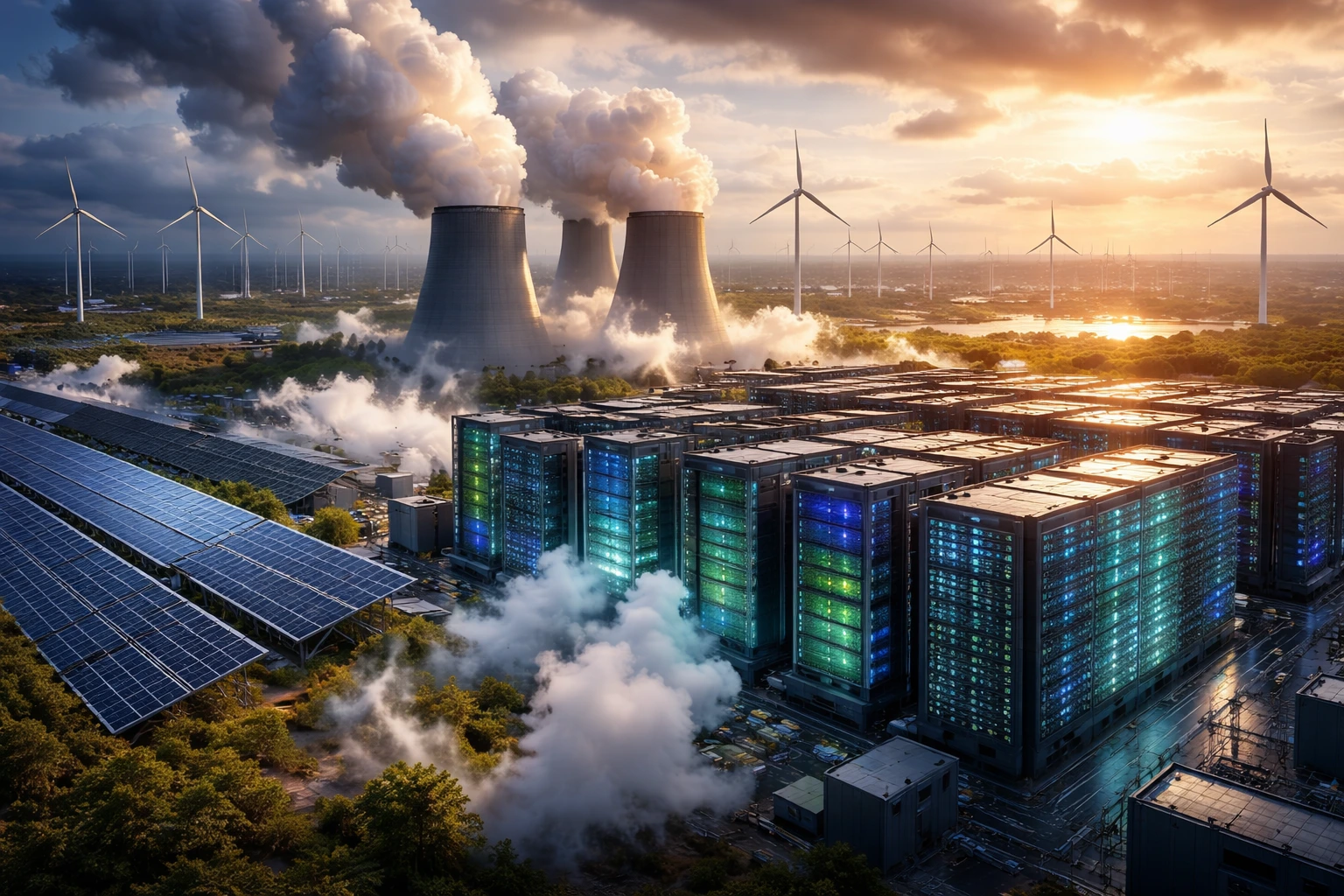
Artificial intelligence continues to scale across industries, but its environmental impact grows just as fast. The AI carbon footprint net zero debate focuses on whether expanding AI infrastructure can align with global climate targets.
Rising energy demand from data centers and AI training workloads now raises concerns about emissions, water use, and long-term sustainability.
How AI Increases Carbon Emissions
AI systems rely on large data centers that consume massive amounts of electricity. These facilities power model training, inference, and continuous updates.
As AI adoption accelerates, electricity demand rises accordingly. In regions that still depend on fossil fuels, this growth directly increases carbon emissions.
Cooling systems add further strain. Many data centers use large volumes of water to maintain safe operating temperatures.
Why Net Zero Goals Become Harder to Reach
Net zero targets depend on reducing emissions across all sectors. AI complicates this effort by driving rapid growth in energy consumption.
Even efficiency improvements struggle to offset rising demand. More models, users, and applications mean more servers running around the clock.
In some regions, data center energy use already rivals that of entire cities. Without cleaner power sources, emissions continue to climb.
Water Use and Environmental Stress
AI infrastructure affects more than electricity consumption. Cooling systems often rely on freshwater resources.
High water usage can stress local supplies, especially during droughts or heat waves. Communities near large data centers increasingly raise concerns about sustainability.
This pressure adds another challenge to achieving climate goals.
How AI Can Support Climate Solutions
AI does not only create environmental problems. It can also support climate mitigation when used responsibly.
AI tools help optimize power grids, forecast renewable energy output, and reduce waste in transportation and logistics. These applications can lower emissions across multiple sectors.
The challenge lies in balancing AI’s benefits against its operational cost.
Industry Efforts to Reduce Impact
Technology companies are investing in cleaner energy sources. Many data centers now rely on renewable electricity or long-term power agreements.
Engineers also design more efficient AI models. Smaller models that require less computation reduce energy use without sacrificing performance.
Improved cooling systems and better hardware utilization further lower environmental impact.
Policy and Accountability Challenges
Sustainability efforts vary widely across regions and companies. Clear reporting standards remain limited.
Without consistent measurement, tracking progress toward net zero becomes difficult. Policymakers face pressure to set rules that balance innovation with environmental responsibility.
Transparency will play a key role in managing AI’s footprint.
The Path Forward
The AI carbon footprint net zero challenge does not have a simple solution. Continued AI growth appears inevitable.
Reaching climate goals will require cleaner energy, smarter infrastructure, and responsible deployment strategies. Decisions made now will shape whether AI becomes part of the climate solution or a growing obstacle.
Conclusion
The AI carbon footprint net zero discussion highlights a growing tension between technological progress and environmental responsibility. AI offers powerful tools for efficiency and optimization, but it also demands significant resources.
Managing this balance will determine whether AI supports global climate targets or pushes them further out of reach.
0 responses to “AI carbon footprint net zero faces rising energy pressure”