


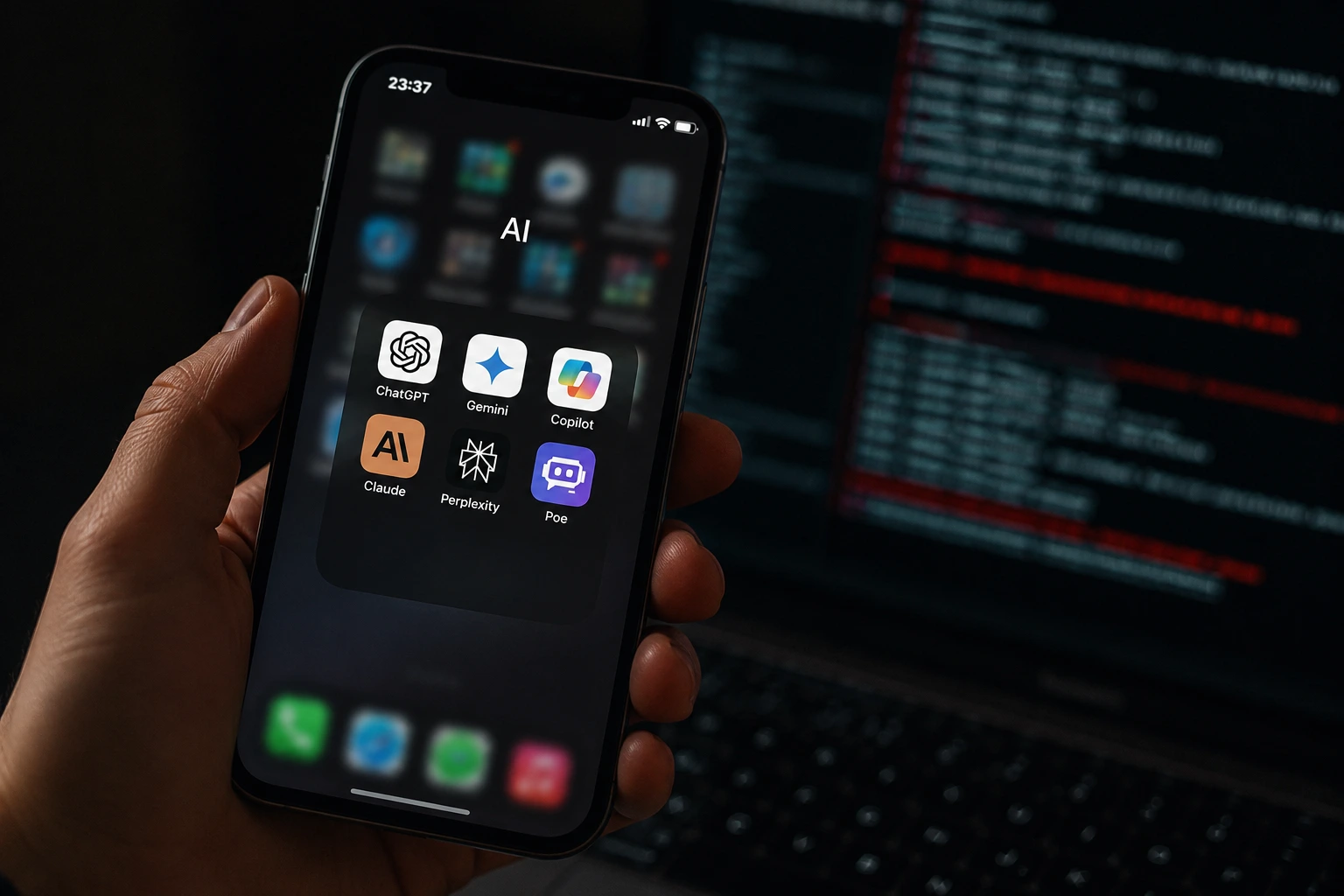
Hundreds of iPhone applications that rely on artificial intelligence have exposed sensitive credentials that attackers could exploit to access paid AI services. A new study found that nearly two-thirds of tested apps contained security weaknesses that exposed API keys, authentication tokens, or other credentials linked to popular AI platforms.
The findings suggest that many developers continue to make basic security mistakes while rushing to integrate AI features. As AI-powered apps become increasingly common, those errors could create financial, operational, and security risks for both developers and users.
Researchers Uncovered Widespread Exposure
The study examined 444 iOS applications that used large language models and other AI technologies. Researchers discovered security issues in 282 of them.
Many apps stored credentials directly inside the application code. Attackers can often extract those credentials through reverse engineering techniques and then use them to interact with AI services outside the intended application.
Researchers also identified weak authentication controls that failed to properly verify requests sent to backend systems.
The scale of the problem surprised the research team because the exposed credentials appeared across a broad range of applications rather than a small group of poorly maintained products.
Attackers Could Abuse Paid AI Services
API keys act as access passes that allow applications to communicate with AI providers. When developers expose those keys, attackers can potentially use them to submit their own requests through the affected accounts.
In many cases, that activity generates costs for the application developer rather than the attacker.
Researchers warned that exposed credentials could allow threat actors to consume large amounts of AI resources, automate abuse, or gain access to backend systems connected to the applications.
The issue affects multiple AI providers, showing that the problem stems primarily from insecure implementation practices rather than weaknesses within a specific platform.
AI Boom Fuels Security Shortcuts
The rapid growth of AI applications has created intense pressure on developers to release new features quickly. Security researchers believe that speed may be contributing to poor credential management practices.
Many developers focus heavily on functionality while giving less attention to how applications store secrets and communicate with external services.
The result is a growing number of apps that expose information attackers can easily extract.
Security professionals have warned about hardcoded credentials for years. Despite those warnings, the practice remains widespread across both mobile and web applications.
Many Developers Failed to Fix the Problem
Researchers contacted affected developers after discovering the vulnerabilities. However, many applications remained exposed long after receiving notification.
The slow response raises concerns about the overall security maturity of the mobile AI ecosystem. Attackers often monitor public disclosures and target applications that fail to address known weaknesses.
As AI adoption accelerates, experts expect threat actors to pay closer attention to exposed credentials and poorly protected backend systems.
Conclusion
The AI app credentials exposed across hundreds of iPhone applications highlight a growing security challenge in the AI industry. Researchers found that many developers continue to expose sensitive keys and rely on weak authentication controls, creating opportunities for abuse and unauthorized access.
The findings serve as a reminder that secure implementation matters just as much as innovation. As developers race to add AI features, strong credential management and proper access controls will remain essential for protecting both services and users.
0 responses to “AI App Credentials Exposed in Hundreds of iPhone Apps”