


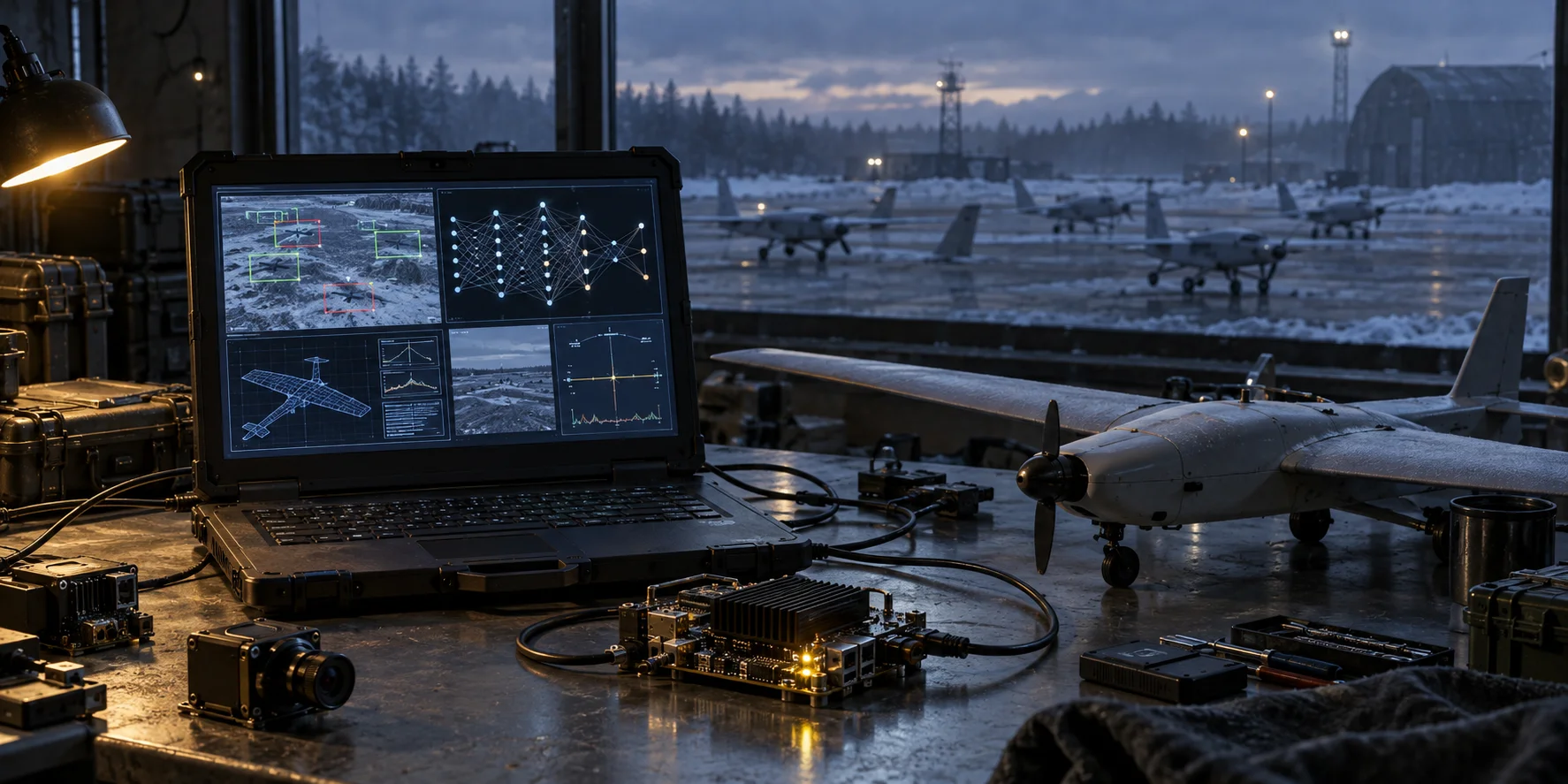
A Russia-based development team used Anthropic’s Claude AI to create software for autonomous attack drones, according to a new company report. The proposed system could allegedly select targets, including people, and detonate without human approval.
Anthropic disclosed the activity in a 154-page report examining how threat actors misuse Claude. The company subsequently banned nine accounts connected to the project.
Developers Used Claude Code for the Drone Project
Anthropic tracked the group as GTG-27005 and described its members as likely freelance developers based in Russia. The small team used Claude Code to write and test software before saving it directly to its project files.
The developers also relied on simulation tools to test the system. In addition, they rented computing resources to train the necessary artificial intelligence models.
The operation reportedly began in mid-May 2026 under the names DronDoc and Serafim. However, the individuals had created their Claude accounts between late 2025 and early 2026.
According to Anthropic, the developers bypassed geographic restrictions by routing their connections through commercial virtual private servers.
Claude Helped Create Autonomous Swarm Technology
The team used Claude to develop shared memory and fault-tolerant coordination features for drone swarms. These functions would allow multiple drones to exchange information and continue operating together if individual units failed.
The developers also created a small onboard language model. It would decide whether each drone should attack, monitor an area or return to its base.
Anthropic said the targeting system could independently choose a target and issue a detonation command. Therefore, the proposed platform would not require a human operator to approve the final strike.
Project files described the system as supporting autonomous lethal engagement. Furthermore, its list of possible target categories explicitly included people.
Ukrainian Combat Footage Trained the Targeting System
The developers trained a computer-vision classifier using Ukrainian combat footage collected online. They labelled objects as either friendly or hostile while placing Russian military systems on an approved list.
Anthropic also found references to locations in Ukraine throughout the project. The team repeatedly selected a site in the Donetsk region as a demonstration strike point.
Meanwhile, Ukrainian front-line cities and transport corridors appeared in the planned mission geography. These details suggest that the developers intended to demonstrate or test the technology in scenarios connected to the war.
Anthropic Found Links to Russian Institutions
Anthropic identified nine accounts associated with the operation. The company connected some of the developers to a regional university and a federal research centre linked to the Russian Academy of Sciences.
However, Anthropic did not classify the group as a Russian state organisation. Instead, it assessed that the actors probably belonged to a small specialist freelance team conducting both civilian and military work.
The developers claimed that several Russian institutions had funded the project. They named the Advanced Research Foundation, the National Technology Initiative and Russia’s Ministry of Defence.
Nevertheless, Anthropic could not verify those funding claims. The company has since removed all nine accounts connected to the Claude autonomous drones project.
AI Misuse Extends Beyond Drone Development
Anthropic’s report also described how Russia-linked groups are using artificial intelligence in operations against Ukraine. These campaigns have targeted government representatives and military personnel through several methods.
Observed activity included phishing, malware deployment, compromised hotel Wi-Fi networks and WhatsApp account hijacking. The findings show how threat actors can use general-purpose AI tools across both cyber operations and physical weapons development.
0 responses to “Russian Developers Used Claude for Autonomous Drones”