


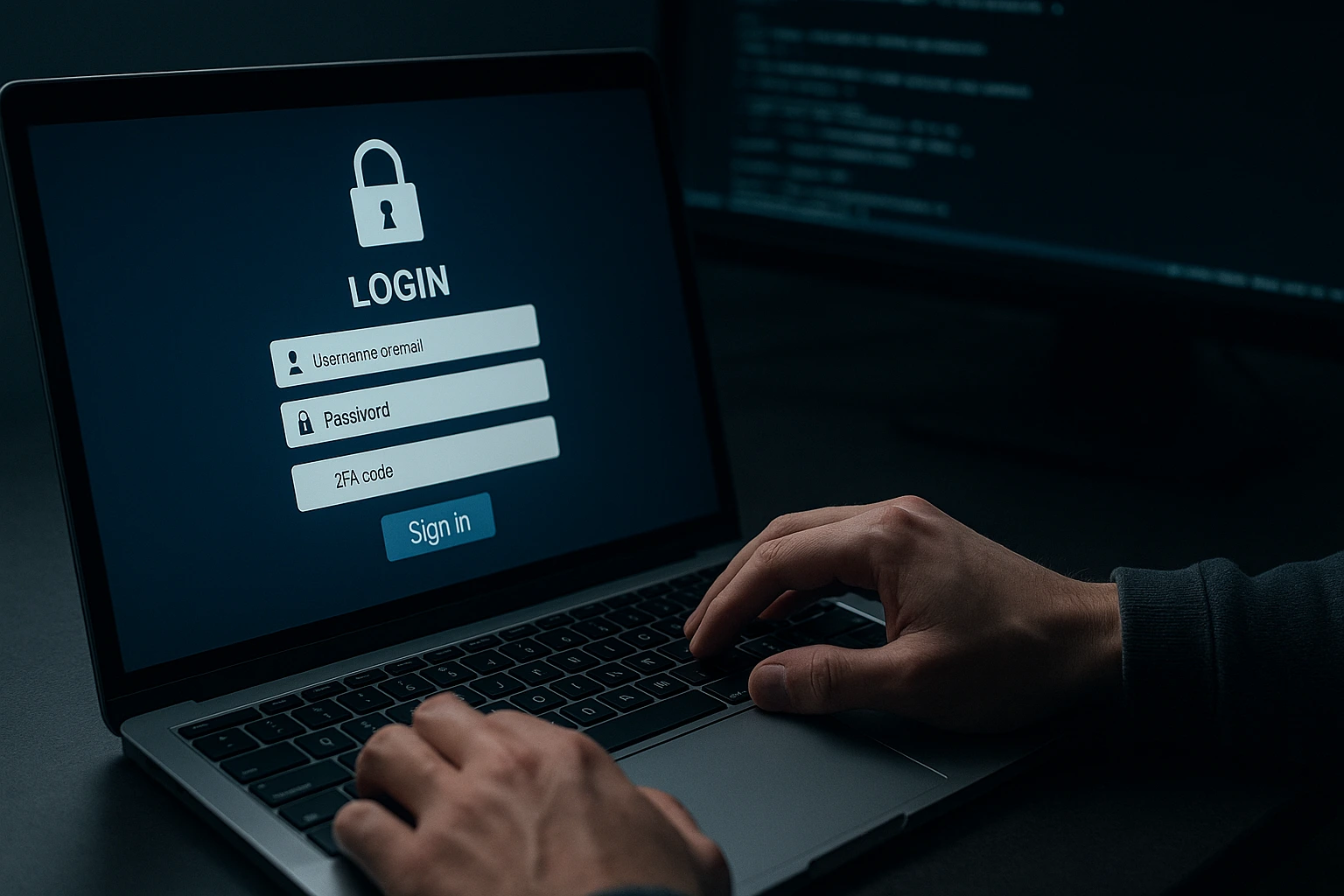
Legacy MFA flaws stand out as the Tycoon 2FA phishing platform spreads across the criminal ecosystem. Attackers now use ready-made kits to hijack sessions protected by SMS codes, push notifications and authenticator apps. The rise of this platform shows how outdated MFA methods struggle against modern phishing tactics and real-time interception attacks. Companies still relying on legacy MFA face higher risks as threat actors automate techniques that once required advanced expertise.
What the Tycoon 2FA Phishing Platform Does
The Tycoon 2FA platform operates as a full Phishing-as-a-Service kit. It targets business accounts, especially those tied to Microsoft 365 and Google Workspace. The service offers cloned login pages, automated dashboards for campaign control and reverse-proxy functionality that relays every user action.
Once a victim enters their credentials, Tycoon captures the details instantly. When the victim submits their MFA code, Tycoon forwards it to the legitimate service in real time, creating a live authenticated session for the attacker. This process grants threat actors full access without needing to break encryption or brute-force accounts.
How Tycoon Bypasses MFA
Tycoon succeeds because legacy MFA depends on user interaction. SMS codes, TOTP apps and push prompts do not verify website authenticity. They only check whether the user supplies a code. Tycoon inserts itself between the victim and the real service, turning every user action into attacker access.
Victims see a familiar login screen and submit their details, unaware that Tycoon proxies the entire session. The platform captures cookies, tokens and MFA responses, then hands attackers an active login without triggering alerts. This approach removes the need to steal passwords separately or wait for users to approve a suspicious push.
Why Legacy MFA Fails
Legacy MFA flaws stem from their dependence on user behaviour. Attackers only need to convince a victim to enter a code or approve a prompt. The authentication process does not confirm whether a legitimate domain is requesting the login, and that weakness creates a clear entry point for modern phishing services.
SMS codes can be intercepted, TOTP secrets can be replayed and push prompts can be abused with fatigue attacks. Even more advanced MFA configurations still rely on recovery paths or fallback options that criminals can exploit when they gain partial access.
What Organisations Must Do Next
Enterprises need phishing-resistant authentication to counter platforms like Tycoon 2FA. Modern solutions grounded in hardware-bound cryptographic keys eliminate code entry and trigger origin verification automatically. These methods confirm the real domain, validate proximity and remove the decision-making burden from users.
Companies should move away from legacy MFA, especially for high-value accounts. Improving identity security requires rethinking the entire login flow rather than expecting users to detect sophisticated phishing pages.
Conclusion
The Tycoon 2FA platform shows how easily attackers can defeat outdated authentication methods. Legacy MFA flaws create predictable openings that criminals now automate at scale. Organisations that depend on SMS codes, push prompts or TOTP apps must shift to phishing-resistant identity systems. Stronger authentication reduces user risk, blocks real-time interception and offers reliable protection against modern phishing campaigns.
0 responses to “Tycoon 2FA Phishing Platform Exposes Legacy MFA Flaws”