


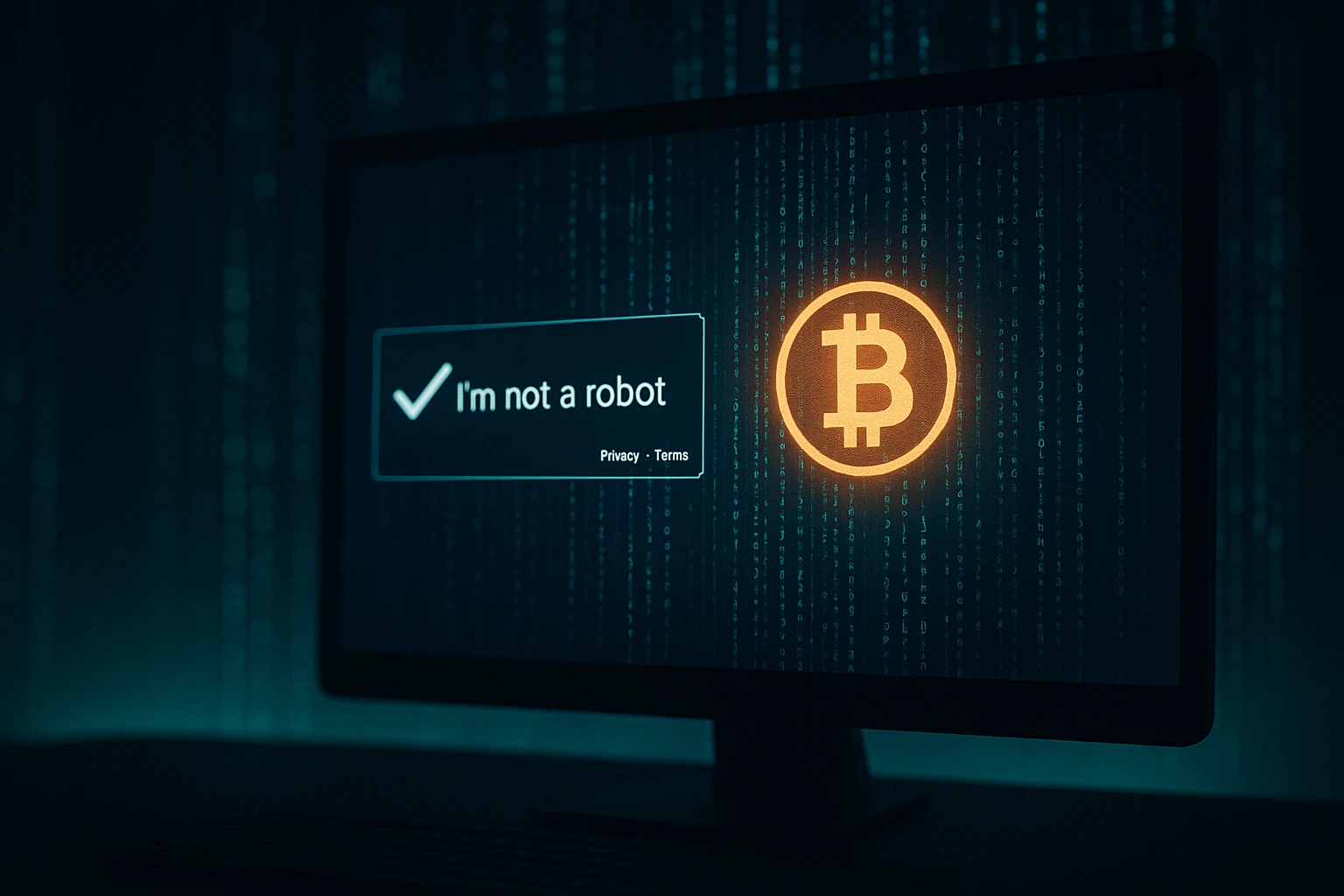
The fake CAPTCHA crypto scam is tricking users with convincing “I’m not a robot” prompts. Instead of verifying humans, these traps secretly deliver malware that steals cryptocurrency and sensitive personal data.
How the Scam Works
Researchers at DNSFilter discovered the campaign when users reported suspicious login errors. Attackers redirect victims to counterfeit CAPTCHA pages that look legitimate. Once someone clicks “I’m not a robot,” a hidden PowerShell script installs Lumma Stealer—a fileless malware that requires no download.
During a three-day monitoring period, 23 people encountered the fake CAPTCHA. Four of them triggered the malware, showing how easily the scam lures in victims.
The Malware Behind It
Lumma Stealer focuses on data theft. Once active, it extracts:
- Browser-stored passwords and cookies
- Two-factor authentication tokens
- Password manager vaults
- Cryptocurrency wallet credentials
The malware operates outside the browser, making detection difficult. Victims often remain unaware until funds disappear.
Where the Scam Appears
The campaign first surfaced on a Greek banking site. Since then, attackers have expanded to other domains, including human-verify-7u.pages.dev and recaptcha-manual.shop. These sites mimic trusted CAPTCHA providers, making the deception highly convincing.
Why It Hits Crypto Users Hard
The fake CAPTCHA crypto scam poses a severe risk to cryptocurrency holders. Once malware steals wallet data, attackers can drain accounts quickly and anonymously. Unlike stolen passwords, lost crypto cannot be recovered.
Security experts stress the need for strong content filtering, updated defenses, and cautious browsing habits. Even common verification tools like CAPTCHAs are no longer safe by default.
Conclusion
The fake CAPTCHA crypto scam shows how attackers exploit trust in everyday web interactions. By disguising malware as a harmless bot check, cybercriminals gain access to wallets, accounts, and private data. Staying vigilant and questioning even familiar security prompts is now essential.
0 responses to “Fake CAPTCHA Crypto Scam Targets Bitcoin Users”