


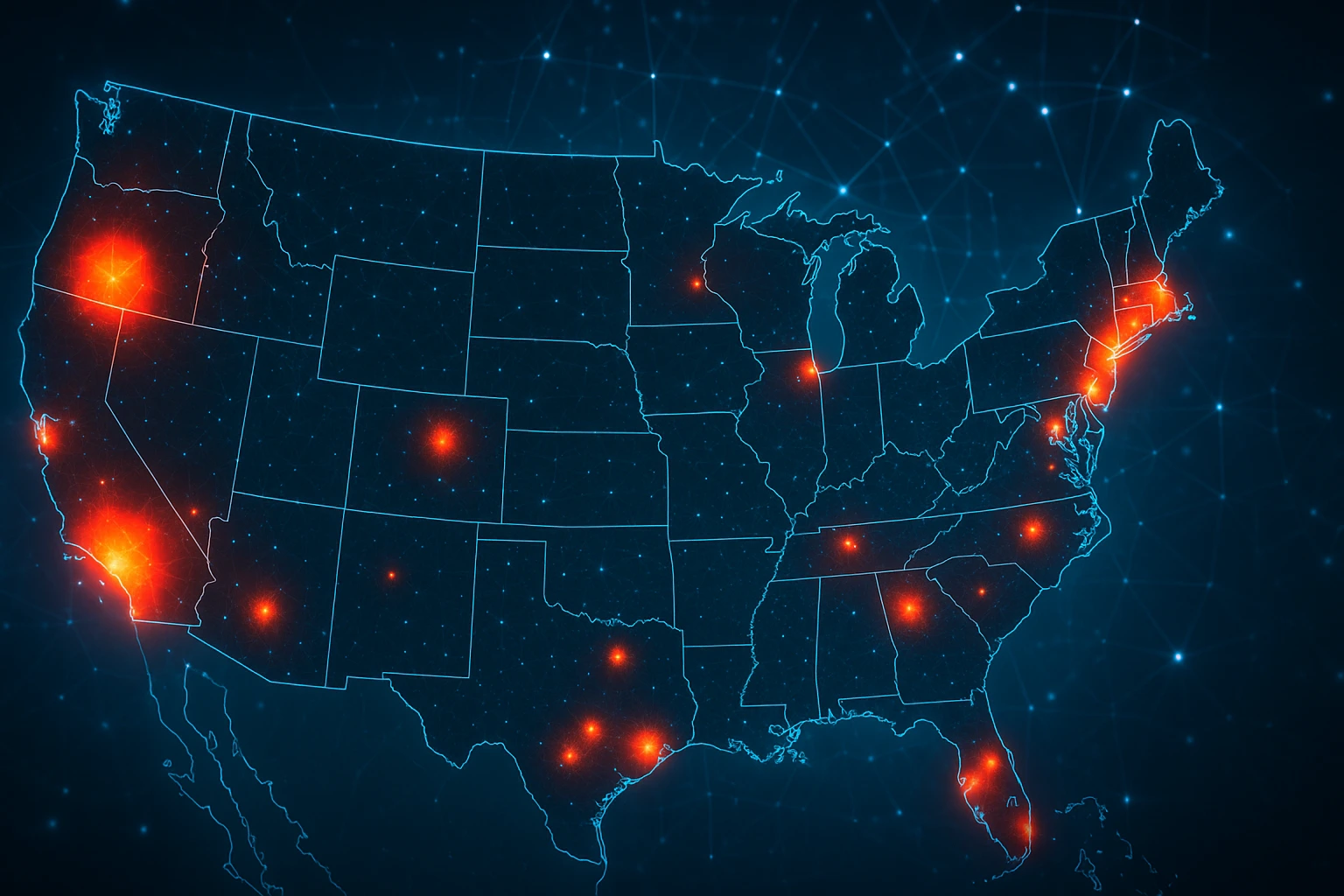
New data reveals which U.S. metro areas face the highest cybersecurity risks. The findings highlight cities that suffer from both technical vulnerabilities and staffing shortages. This insight should serve as a wake-up call for local officials and security leaders.
Cybersecurity Job Gaps Widen the Threat
The Washington D.C. metro area leads the risk index due to its staggering cybersecurity job vacancy rate—947 open positions per capita. Baltimore follows with 487 vacancies per capita, and San Jose comes in third at 310 openings. These figures spotlight a troubling talent gap across critical metro regions.
Industry Density Adds to Risk
Areas with dense concentrations of high-risk industries also rank near the top. Los Angeles and San Francisco host approximately 2,300 high-risk companies each. Fresno ranks third with just over 1,900 such firms. This heavy industry presence puts immense pressure on local cybersecurity defenses.
Why These Metro Areas Are Most Vulnerable
Two key factors drive risk: staff shortages and high exposure industries. Washington D.C. suffers from understaffed defenses just as federal systems face daily threats. Meanwhile, regions like San Francisco and L.A. struggle to keep pace with the demand to secure sprawling tech and healthcare infrastructure.
Wider Implications for Preparedness
These risk rankings show that cyber defense must go beyond technology. Human resources and industry context matter just as much. Cities with both high industry exposure and limited staffing face compounded vulnerabilities. This casts light not just on urgent city challenges but on national readiness.
What Needs to Happen
To mitigate risk, leaders must invest in cybersecurity training and talent pipelines. Public-private partnerships can help bridge staffing gaps. Local governments need to align tech upgrades with rapid industry growth. Only then can affected metro regions hope to reduce their exposure.
Conclusion
The ranking of most at-risk U.S. metro areas puts a spotlight on cybersecurity shortfalls at regional levels. With staffing challenges and industry concentration fueling threats, cities—from Washington D.C. to Fresno—need to act fast. The future of public and private security depends on it.
0 responses to “Most At-Risk US Metro Areas for Cyberattacks Ranked”