


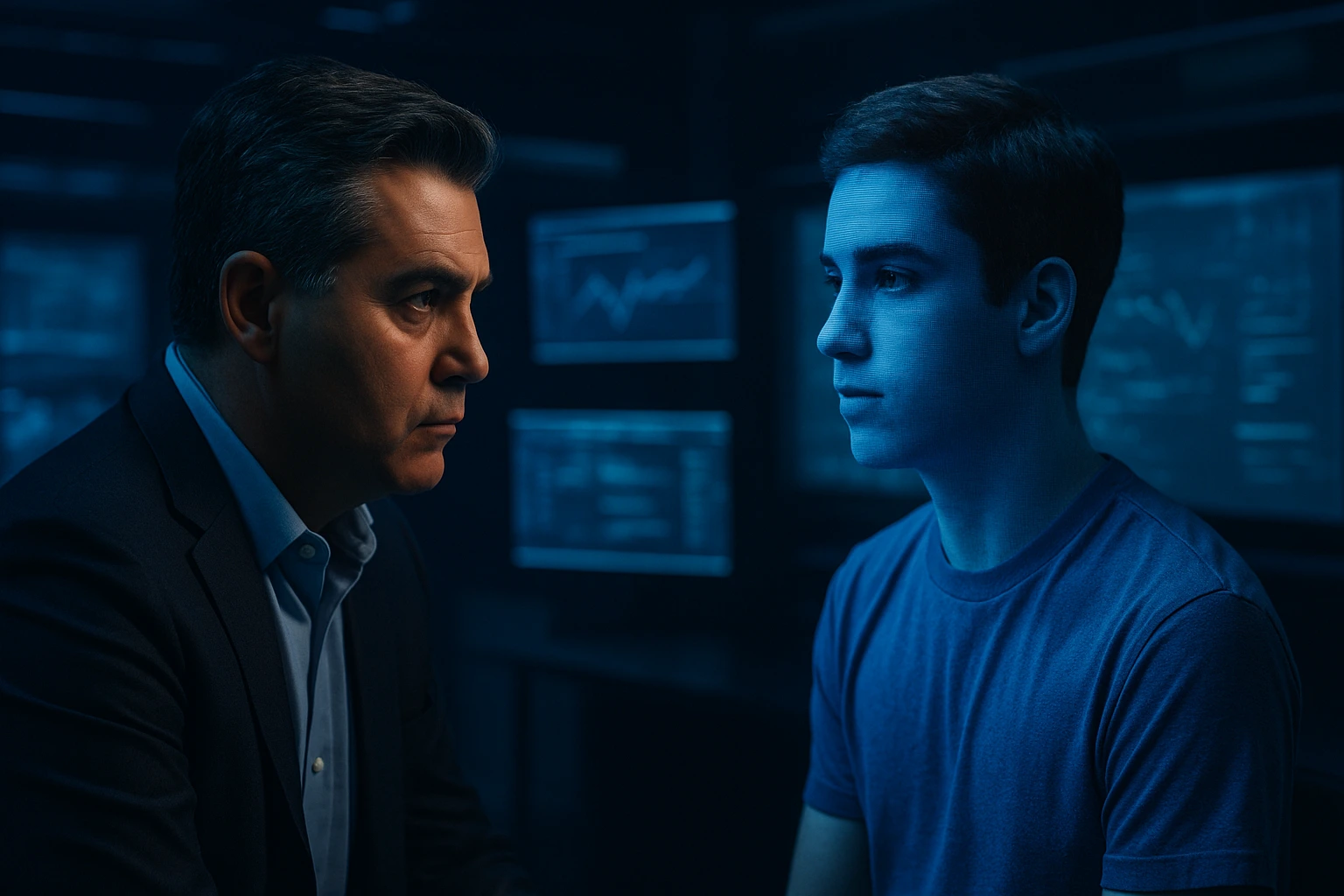
Jim Acosta, a former CNN journalist, has drawn heavy criticism after publishing an AI-generated interview with Joaquin Oliver, a teen killed in the 2018 Parkland school shooting. The segment appeared on his Substack show, where Acosta used an artificial intelligence avatar to simulate a posthumous conversation with the deceased student.
Viewers quickly condemned the episode. Critics called the AI interview “disturbing,” “ghoulish,” and “exploitative.” The backlash emerged across social media platforms, where users questioned both the ethics and the emotional intent behind the broadcast.
AI Used to Recreate Deceased Teen
Oliver’s parents created the AI avatar to raise awareness about gun violence in the United States. They used real-life footage and voice data to train the model, hoping it would serve a greater cause. While well-intentioned, the result left many uncomfortable.
The avatar responded with clinical, emotionless dialogue. Its statements felt stiff, overly polished, and unnatural. Critics said the interaction lacked human depth and authenticity. Some compared the avatar’s tone to a fictional character like Yoda, offering cryptic wisdom in an unconvincing delivery.
Internet Reacts with Strong Condemnation
Commentators, public figures, and everyday users reacted with shock and disapproval. Nicholas Fondacaro, editor at NewsBusters, described the segment as “very disturbing.” Dogecoin creator Billy Markus summed up his response in one sentence: “I hate this.”
Critics focused not only on the avatar but also on Acosta’s promotion. He posted on X, saying his interview was “one you don’t want to miss,” calling it “one of a kind.” His post triggered immediate backlash. Community notes under the post clarified that interviews involve real people, not simulations.
Stephen L. Miller, a media analyst, mocked the journalist for what he called a “ghoulish act of talking to AI ghosts.” Other pundits, such as Collin Rugg, called the event “insane.” Acosta eventually disabled replies to avoid further backlash.
Attempts at Justification Fall Flat
Amid criticism, Acosta defended himself by shifting the focus to Joaquin Oliver’s parents. He posted a video on Bluesky showing Manuel Oliver, the teen’s father, saying he and his wife had asked Acosta to participate in the project.
Acosta framed his involvement as an act of support for grieving parents. He emphasized their friendship and intentions behind the segment. But audiences on Bluesky responded with the same frustration voiced elsewhere.
One user said bluntly, “No mercy, Jim, you dumb ho.” Another accused him of deflecting blame. They said Acosta used the father as a shield instead of accepting responsibility.
Many comments pointed out that resurrecting a child to parrot political views—even with parental approval—crosses an ethical line. They viewed the act as digital puppetry, rather than meaningful remembrance.
Conclusion
The Jim Acosta AI interview with a Parkland shooting victim’s avatar has ignited fierce debate. While the parents supported the project, critics argue it blurs moral lines and exploits tragedy for spectacle. The incident highlights the growing discomfort with AI recreations of the dead, especially when used in public discourse.
0 responses to “Jim Acosta AI Interview Sparks Outrage Over Parkland Victim Avatar”