


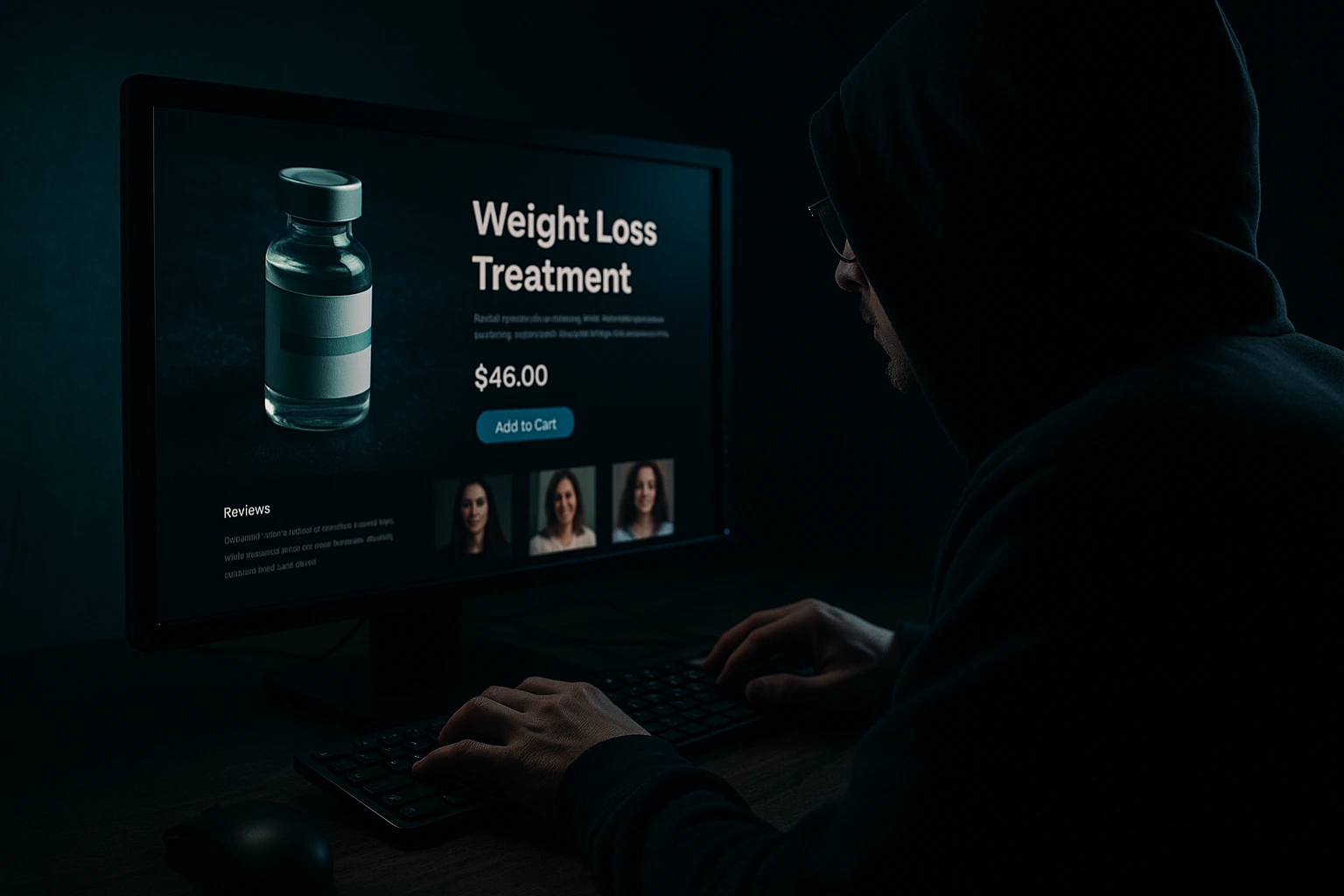
More than 140 fake online shops have launched a coordinated ghost store scam, targeting health-conscious shoppers. The fake stores sell unregulated Ozempic-style weight loss products using stolen images and fabricated endorsements.
How the Scam Works
These ghost stores pose as closing local businesses. They lure customers with emotional headlines and aggressive discounts. Products are often labeled as plant-based GLP‑1 oral treatments.
The sites use AI-generated reviews and unauthorized photos of professionals. They also hijack real people’s identities—such as dietitians or influencers—to build false trust.
Many victims paid around $46 but never received the product. Others got generic vitamins or unmarked bottles.
Platform Abuse and Rebranding
Scammers often build storefronts on Shopify. They run ads through Meta platforms like Facebook and Instagram. When a store gets flagged, it quickly rebrands under a new domain with the same scam.
Refunds are rare. Many victims used credit cards or PayPal, but chargebacks were often denied due to platform policies.
Why It’s Dangerous
The scam isn’t just about lost money. These unverified weight loss products pose real health risks. Without regulatory oversight, they can contain harmful ingredients or interact with medications.
Fake testimonials and AI-generated images lower consumer skepticism. That makes the scam especially effective in a social media environment.
How to Stay Safe
- Avoid new stores offering deep discounts and urgent messaging.
- Search for official business registrations or physical contact details.
- Use payment methods with buyer protection.
- Report suspicious ads or sellers on platforms directly.
Conclusion
The ghost store scam preys on consumers looking for affordable weight loss options. It hides behind fake brands, AI tools, and recycled websites. Until platforms and regulators act, shoppers must verify every online store before buying.
0 responses to “Ghost Store Scam Pushes Fake Weight Loss Treatments Online”