


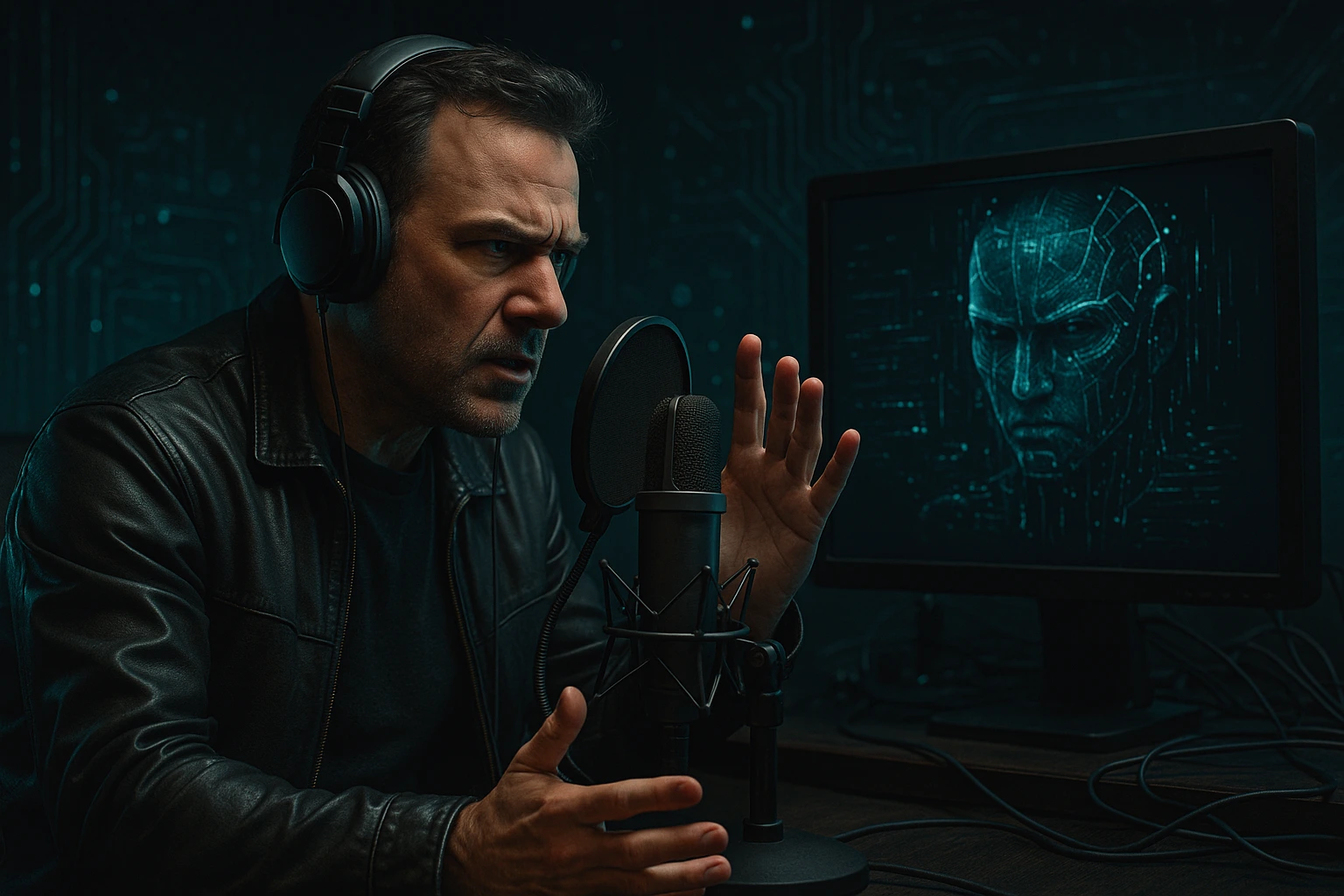
As AI-generated dubbing technology becomes more advanced, the voice actors AI threat has sparked a growing backlash among professional performers across Europe and beyond. Leading the charge is Boris Rehlinger, the French voice of Ben Affleck, Joaquin Phoenix, and even Puss in Boots.
“I feel threatened even though my voice hasn’t been replaced by AI yet,” Rehlinger told Reuters. He’s part of TouchePasMaVF, a French initiative aiming to protect human dubbing from automation.
While global streaming services like Netflix boost demand for dubbed content, AI solutions are gaining momentum due to their speed and cost-effectiveness—posing a direct threat to the livelihoods of thousands of industry professionals.
Streaming Growth Fuels AI Risk
According to GWI, 43% of viewers in Germany, France, Italy, and the UK prefer dubbed content over subtitles. The dubbing market is projected to grow to $4.3 billion in 2025 and reach $7.6 billion by 2033. With streamers chasing subscribers and advertisers, interest in AI dubbing tools is skyrocketing.
However, voice actor associations say the convenience of AI comes at the cost of quality, human nuance, and jobs.
“We need legislation,” Rehlinger said. “Just like we needed a highway code after replacing horse-drawn carriages with cars.”
EU Voice Actors Demand Stronger AI Laws
Voice actor unions across Europe are demanding urgent regulatory action. Germany’s VDS voice actors’ association launched a viral TikTok campaign in March with the message: “Let’s protect artistic, not artificial, intelligence.” The video has racked up 8.7 million views.
Their petition calls for:
- Explicit consent before using artists’ voices for AI training
- Fair compensation for AI use
- Transparent labeling of AI-generated content
Over 75,500 people have signed the petition, signaling strong public support.
Cedric Cavatore, a longtime voice actor in both film and gaming, warns that a lack of protections could destroy artistic creation. “When intellectual property is no longer protected, no one will create anything anymore because they’ll fear it’ll just be stolen tomorrow.”
The Industry Experiments with AI Dubbing
Despite backlash, many studios are cautiously exploring AI solutions. Netflix has used generative AI for visual effects and tested tools to sync lip movements with dubbed dialogue—though these tools still require local voice actors.
Under the new SAG-AFTRA contract in the US, dubbing into English must still involve human performers, even when AI helps with synchronization.
German studio Neue Tonfilm Muenchen, which worked on the German version of Conclave, is experimenting with hybrid dubbing. The fear, according to managing director Eberhard Weckerle, is that “AI will be used to make something as cheap as possible,” ultimately lowering quality.
A recent backlash hit Viaplay’s Murderesses series after it used a mix of human and AI voices via Israeli startup DeepDub. The resulting monotone delivery led to viewer complaints and removal of the dubbed version.
Ethical AI or Slippery Slope?
Some companies aim to find middle ground. Audio Innovation Lab and Flawless AI position themselves as ethical AI startups. They collaborate with real voice actors while using tech to improve syncing and adapt original voices to new languages.
Still, even ethical AI presents risks. “AI will reshape, not replace, voice work,” said Audio Innovation Lab CEO Stefan Sporn. He added that humans are still needed for scripting, emotional tone, and cultural nuance—“just not to the same extent.”
Conclusion
The voice actors AI threat is no longer hypothetical. As studios and streamers experiment with automation to cut costs, human voice artists are fighting for legislation, transparency, and the right to control their own work. Whether AI becomes a tool or a takeover depends on the choices made today—and who gets to make them.
0 responses to “Voice Actors AI Threat Grows as Industry Fights for Protections and Fair Use”