


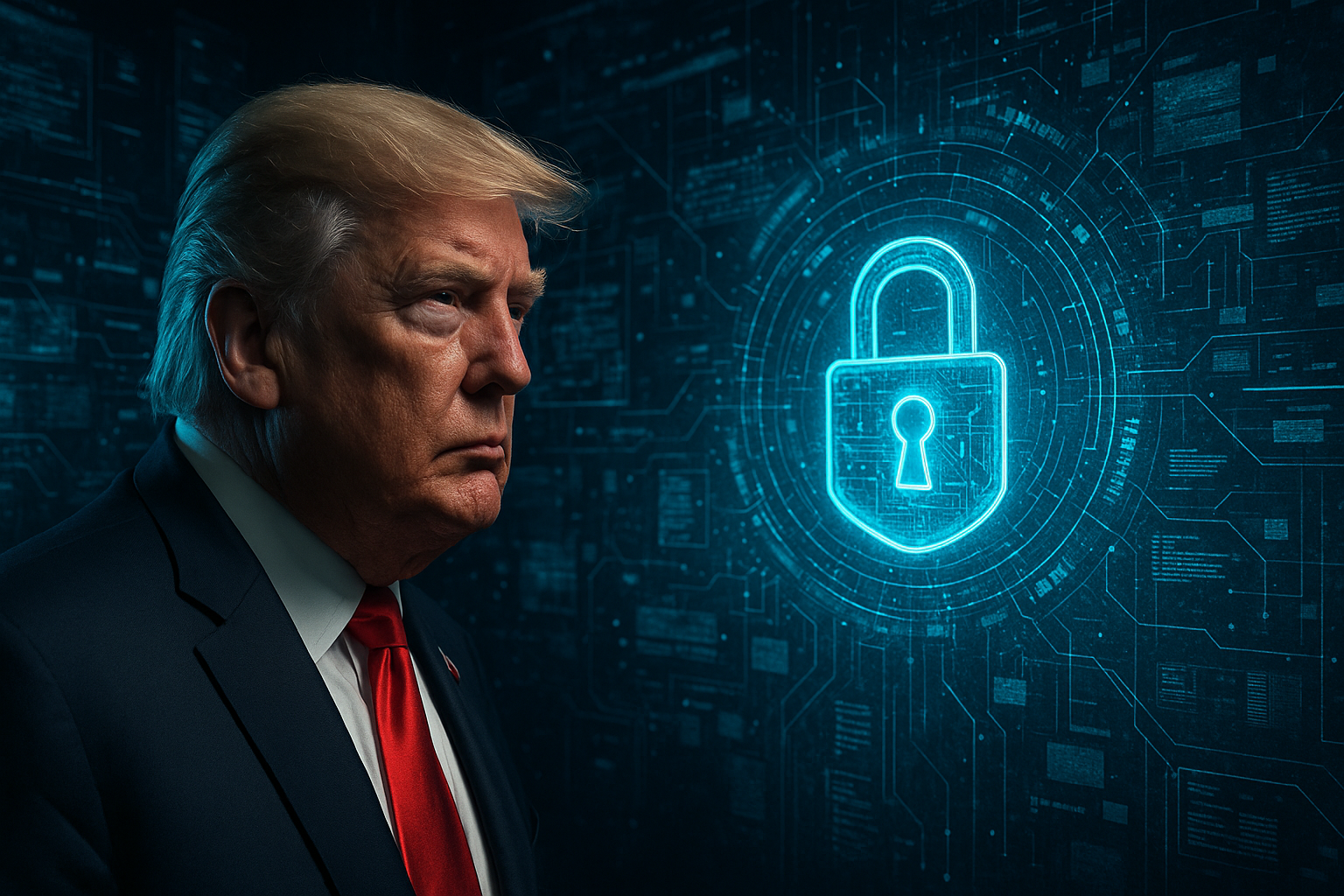
The Trump AI Action Plan promises to reshape America’s role in artificial intelligence. Announced at the White House, the new policy outlines 90 federal actions. It focuses on innovation, security, and global tech leadership—especially against rising threats from China.
President Trump stated that winning the AI race is critical. “This is a fight that will define the 21st century,” he declared. The Trump AI Action Plan positions cybersecurity as a strategic pillar across all initiatives.
Accelerating Innovation and Infrastructure
The plan identifies four key policy areas. It starts by encouraging rapid innovation and cutting red tape. It also promotes public-private partnerships and AI adoption across industries.
To support AI at scale, the US will fast-track permits for data centers and chip factories. Investments will boost the AI workforce, especially in high-demand trades like electrical and HVAC.
The plan also includes a controversial move: requiring frontier AI developers to ensure their models are bias-free to qualify for government contracts.
Expanding Global Alliances and Controls
The Trump AI Action Plan pushes for stronger international coordination. It outlines a new Cyber-AI Alliance with trusted allies to share threat intelligence and align security standards.
It also tightens export controls on semiconductors and advanced AI hardware. Geolocation and tracking tools will monitor where exported AI chips go. Offenders—whether companies or nations—will face penalties.
Protecting Critical Infrastructure
The plan warns that AI could make critical infrastructure more vulnerable. To fight this, the government will create an AI Information Sharing and Analysis Center (AI-ISAC). This group will share real-time AI threat data across sectors.
Agencies will develop AI-specific incident response protocols and issue new guidance to the private sector. Military-grade data centers built with secure-by-design principles will host sensitive government AI operations.
Addressing AI Biosecurity Threats
The Trump administration also flagged risks of AI misuse in biotech. The plan proposes customer verification for DNA synthesis tools. It aims to prevent AI-generated bio threats through strict enforcement and inter-lab data sharing.
Conclusion
The Trump AI Action Plan is bold and ambitious. It blends innovation, infrastructure, and security into a roadmap for global AI dominance. But success depends on swift implementation and global cooperation. Without it, the US risks falling behind in both technology and defense.
0 responses to “Trump AI Action Plan Puts Cybersecurity at Center Stage”