


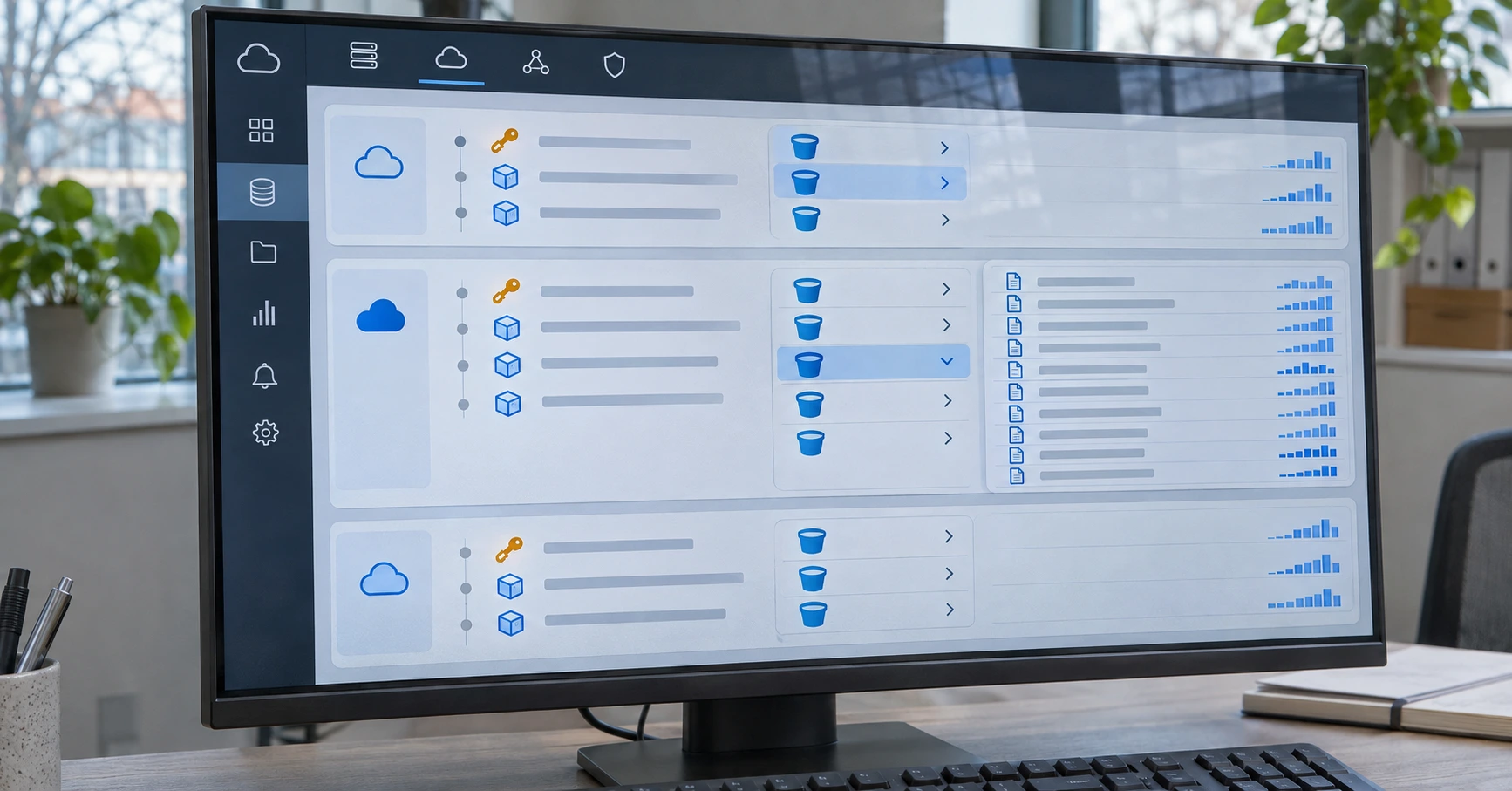
The Qubole AWS breach affected dozens of companies between October 14 and 26, 2026, after an attacker gained control of credentials for two users in a Qubole AWS account. The attacker used permissions that customers had granted the analytics provider to steal cloud data, including millions of files from one company alone.
Unused roles still granted access to customer accounts
Qubole helps companies process large datasets and run machine learning workloads. To let the platform manage computing resources, customers can create a cross-account role in AWS. Its trust policy specifies who can assume the role, while its permissions define what that identity can read or change.
Several customers still had roles that trusted Qubole’s account, even though those roles otherwise sat unused. As a result, the attacker could use the compromised provider credentials to obtain temporary access to multiple customer environments. The permissions each customer had assigned to its role determined how far that access extended.
In a November 11 statement, AWS said its services operated as designed throughout the Qubole AWS breach. Investigators have yet to establish how the attacker first obtained the credentials for the two Qubole users.
Attackers took passwords, keys and millions of files
The investigation began after a cloud data security firm spotted suspicious activity in customer environments. Researchers found that the attacker had retrieved secrets from AWS Secrets Manager and Systems Manager Parameter Store. The attacker also read configuration values from Lambda functions and checked the validity of credentials associated with AWS, Microsoft Entra ID and Okta.
In one observed seven-minute period, the attacker collected 100 passwords and keys. The file theft was similarly broad. Across the affected environments, the attacker downloaded data from every accessible Amazon S3 bucket. Researchers confirmed millions of stolen files at one customer, although the total across all victims remains unknown.
What AWS customers can check in CloudTrail
Investigators advised administrators to review AWS CloudTrail records from October 1 onward, starting roughly two weeks before the first known activity. Teams can look for unexpected sessions associated with Qubole’s account, then check which secrets and S3 files those sessions accessed. If they find unauthorized activity, investigators recommend revoking active role sessions and rotating exposed credentials.
AWS also urged customers to remove roles for integrations they no longer use. For integrations that remain active, administrators can narrow each role’s permissions, limit which identities can assume it and restrict access to approved source networks.
0 responses to “Qubole AWS breach exposes data at dozens of companies”