


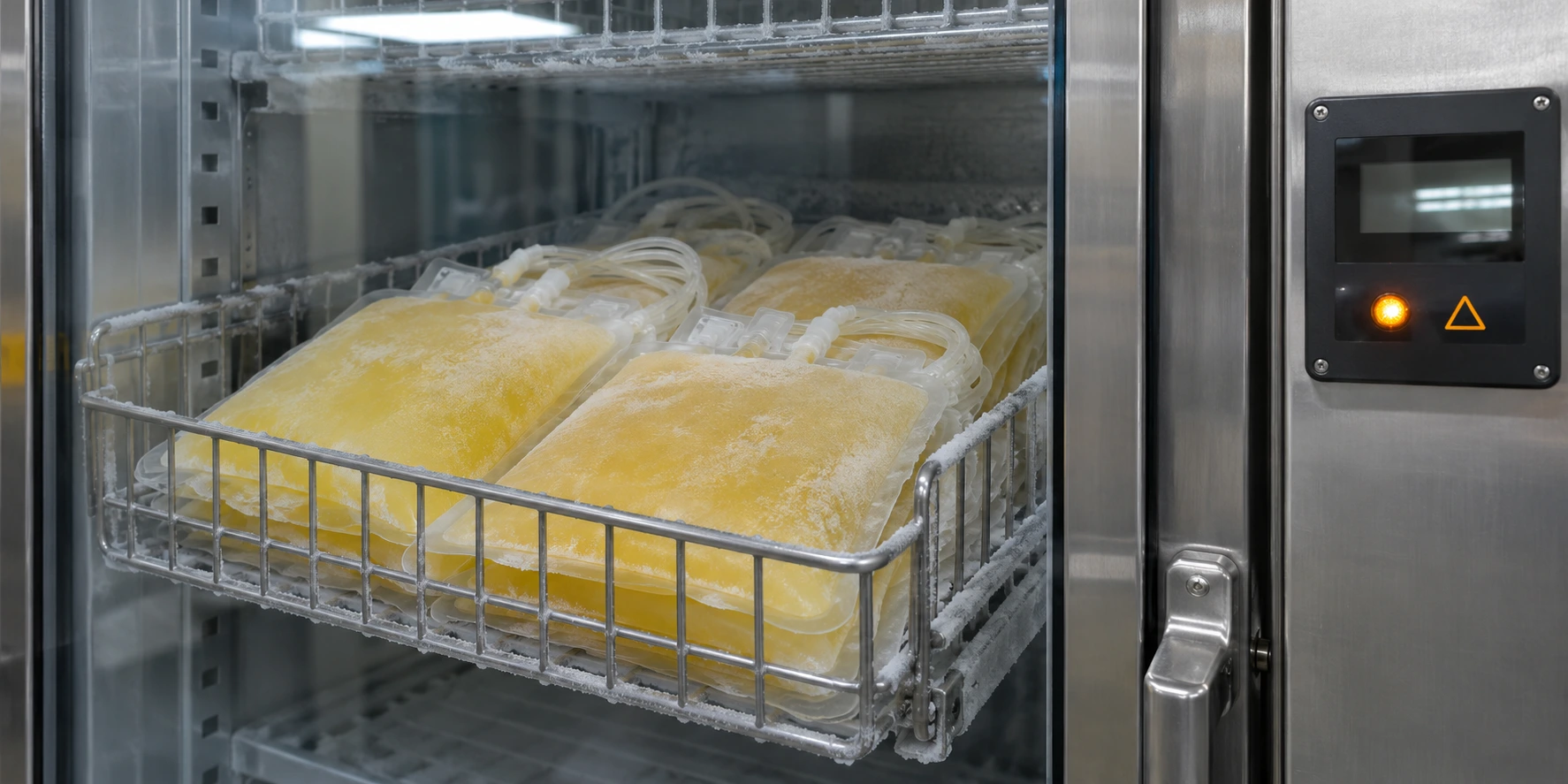
A blood storage attack in France on November 2 changed the temperature setting on cold rooms at the French Blood Establishment (EFS) to 110°C. An on-call technician spotted rising temperatures and alerted response teams, and EFS said the incident caused no damage to blood samples or products.
Technician spots rising temperatures in plasma storage
The 110°C figure describes the setting the attackers entered into the refrigeration controls. EFS did not report a peak temperature for the rooms or their contents. The affected equipment held frozen plasma, which the service normally keeps at −30°C or colder.
Early reports focused on donor samples that EFS retains for blood safety monitoring. However, the service later confirmed that the affected cold rooms also held frozen plasma intended for transfusions. EFS credited its monitoring and alarm systems with helping staff detect the changes quickly. As a precaution, staff moved some of the stored products to other facilities.
Entry point in blood storage attack remains unclear
EFS said the changes affected cold rooms that used refrigeration equipment from a service provider. Coolworld helps manage refrigeration for the blood service, raising the possibility that the attackers gained access through the contractor. However, officials have yet to confirm how the intruders reached the controls or who changed the settings.
The incident followed a series of refrigeration attacks at European food retailers. Two hacktivist groups, NoName057(16) and Z-Pentest Alliance, jointly claimed responsibility for attacks on food stores in several countries. Their claim concerned those retailers. French officials have not publicly linked either group to the blood storage attack.
Researchers find exposed refrigeration systems in 99 countries
Researchers disclosed a vulnerability in the Danfoss AK-SM 800A refrigeration controller in August. Danfoss subsequently issued security patches, although reports from the retail incidents indicated that some businesses still used default passwords. Investigators have not identified that controller or a default password as the entry point at EFS.
In a wider survey, security researchers at Forescout identified nearly 13,000 vulnerable refrigeration services across 99 countries, including many in Italy and Greece. At the French blood service, the first sign that staff needed to act came from the temperature readings themselves. Those readings allowed the response team to protect the stored plasma while the cause of the intrusion remained under investigation.
0 responses to “Blood storage attack sets French cold rooms to 110°C”