


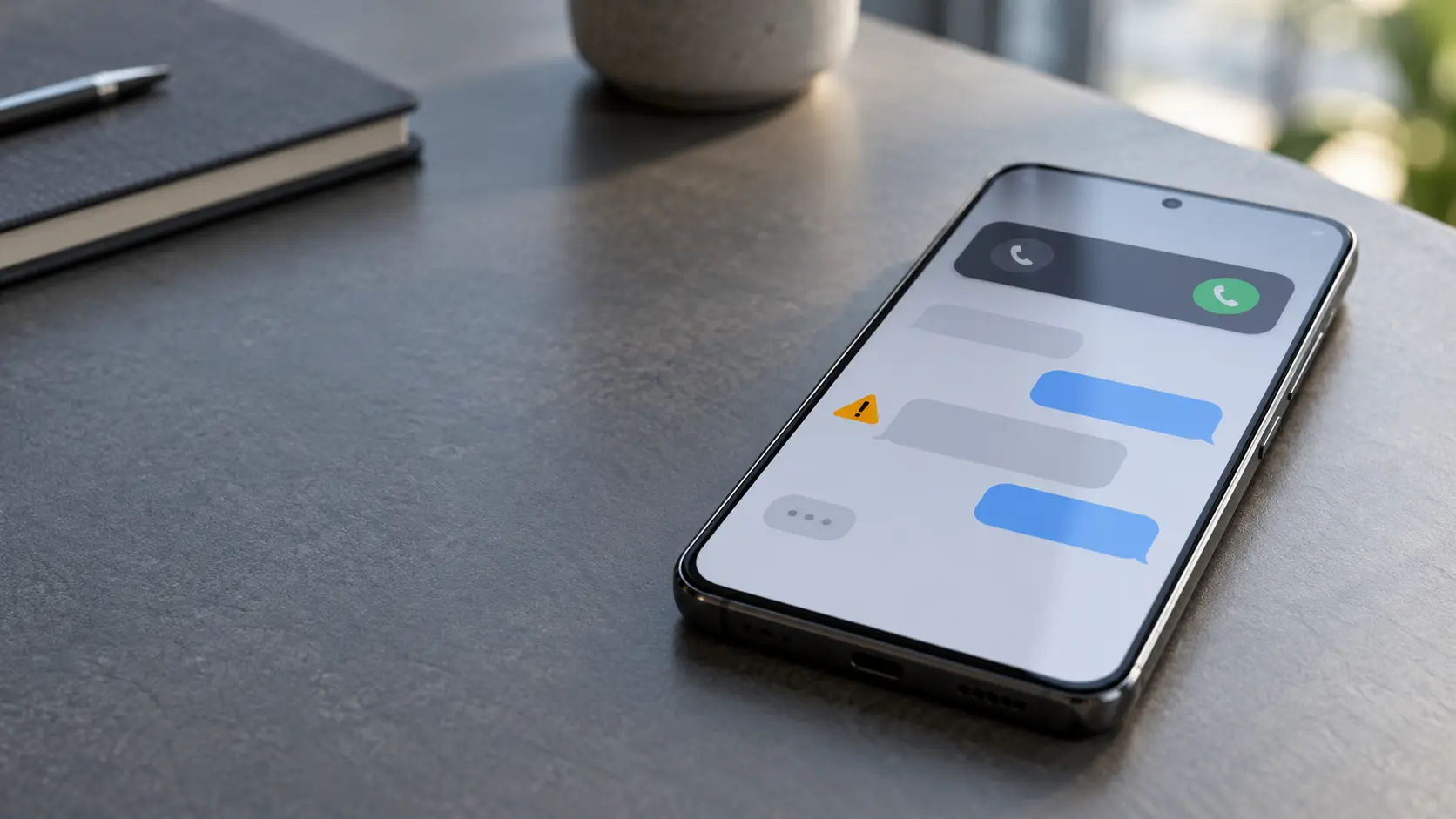
Google is expanding Android scam protection with AI-powered message analysis, suspicious-link checks and safeguards against unauthorized call forwarding. The features are rolling out to eligible devices, although availability varies by feature.
The update targets increasingly convincing fraud attempts, including fake bank alerts, spoofed phone numbers and AI-generated voices.
According to Google, its existing Phone and Messages protections flag more than five million suspected scam calls and texts each month. The new measures aim to identify additional threats that users might struggle to recognize themselves.
Google Messages Adds Optional Cloud Analysis
Google Messages is gaining Gemini-powered cloud analysis to assess complex conversations for signs of fraud.
The feature examines exchanges with unknown senders through Google’s Private AI Compute environment. Google describes that environment as encrypted and designed to protect the privacy of the information it processes.
However, the new cloud protections are off by default. Users must choose to enable them.
Alongside that capability, Google is adding on-device Gemini Nano checks for unfamiliar links, using real-time web signals. Messages will also display clearer warnings before users open links from numbers they have not saved.
Together, these checks aim to help users evaluate suspicious conversations before following a potentially harmful link.
Notification Checks Will Reach More Devices
Meanwhile, Google plans to expand on-device scam detection in chat notifications beyond its earlier Pixel rollout.
The company says Android device partners will bring the feature to hundreds of millions more users later this year.
That expansion could make automated scam warnings available across a wider range of phones. Nevertheless, the announcement does not mean every Android device will receive every protection immediately.
Screen Sharing and Call Forwarding Gain Safeguards
Android’s sensitive-information masking is also expanding to Chrome and Android WebView.
During live screen sharing, the feature hides sensitive areas such as login fields and payment screens. This limits what another person can see when a user shares their display.
Separately, Android now blocks applications from silently enabling call forwarding in the background.
Users will also see a warning before manually entered forwarding codes take effect. These codes, known as MMI codes, can change how the mobile network routes incoming calls.
Consequently, the additional warning gives users another opportunity to spot an unexpected forwarding request before activating it.
Verified Bank Calls Expand to More Institutions
Google is also broadening its verified bank calls system to include additional financial institutions.
The system checks whether a participating bank’s call center actually initiated an incoming call. If verification fails, it automatically ends the call.
According to Google, the feature has blocked more than three million fraudulent calls involving Banco do Brasil and Itaú Unibanco since June. Revolut and other international financial institutions also participate.
The broader Android scam protection rollout combines these bank checks with messaging analysis and device safeguards. However, eligibility and user settings will determine which features are active on an individual phone.
0 responses to “Android Scam Protection Adds AI Checks for Messages and Calls”