


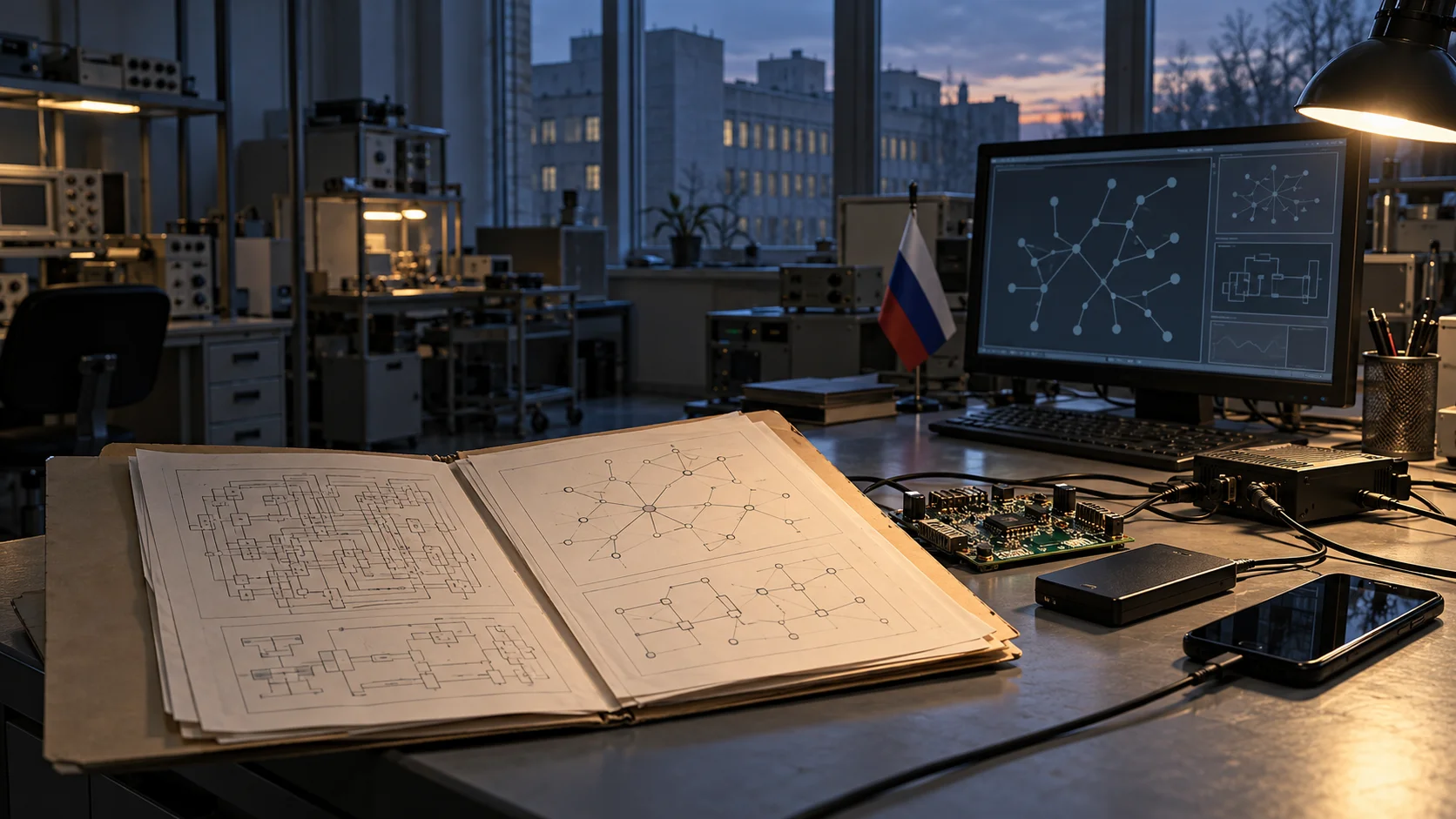
Leaked documents from a Russian research institute describe projects for stealing credentials, collecting mobile data and extracting information from corporate networks. According to DomainTools, the material offers a detailed view of development work supporting Russian cyber espionage.
The files allegedly came from SpetsVuzAvtomatika, a Rostov-on-Don institute with an official focus on information security and technology development. However, researchers say its internal documents reveal extensive work connected to state intelligence operations.
Internal Files Surface Despite Institute’s Denial
An actor began advertising the material on the darknet in May. The advertised collection included technical documents, IP address information and data from the institute’s Git development environment.
SpetsVuzAvtomatika denied that attackers had compromised its internal network. Nevertheless, DomainTools concluded that authentic, sensitive institute material had entered criminal circulation.
The collection contains technical reports, project requirements, source-code fragments and attack scenarios. Furthermore, researchers believe its breadth suggests access to several internal systems or a source with extensive privileges.
That assessment does not establish exactly how the material escaped the institute.
Projects Cover Multiple Stages of Intelligence Collection
DomainTools identified seven projects spanning target discovery, network access, data collection and operational support. Together, they describe capabilities that could automate several stages of cyber espionage.
Felix-23 and HAD focus on discovering targets, scanning systems, enriching information and actively testing potential targets.
Meanwhile, Putnik supports access within internal networks and credential theft. Initiative-24 explores controlling software agents inside corporate environments and extracting information through trusted cloud services.
Another project, Botany, focuses on modular data collection from Android devices. Blik, also described as Glare, concerns concealed storage and offline transfers.
Finally, Chain-24 addresses anonymous purchases of hosting and other services needed to support automated campaigns.
These projects suggest a coordinated development effort covering both intrusion capabilities and the infrastructure needed to sustain operations.
Documents Describe Work for Military Customers
The leaked records also describe direct work with Russian military customers, including Military Units 33949 and 64829.
Initiative-24 is among the examples researchers highlighted. Its documentation discusses managing software agents within corporate networks and collecting information for intelligence purposes.
According to DomainTools, the combined material supports its assessment that SpetsVuzAvtomatika develops capabilities for government cyber warfare and espionage.
However, development documents do not establish that every customer received a finished tool or deployed it against a target.
Earlier US Sanctions Linked Institute to the SVR
The institute’s public activities include software development, reverse engineering, electronics, testing and hardware research.
However, US authorities had already linked it to Russian intelligence before the leak emerged. In 2021, the US Treasury sanctioned SpetsVuzAvtomatika for developing hacking tools for Russia’s foreign intelligence service, the SVR.
The newly examined records add technical detail to that earlier assessment. They describe how individual projects could contribute to a wider Russian cyber espionage program.
Automation Plans Do Not Prove Operational Use
DomainTools says the documents show an effort to make intelligence operations more automated and autonomous. Researchers also suggest that future AI components could expand those capabilities.
That remains an assessment of the program’s potential direction. The supplied findings do not establish that every documented project already incorporates artificial intelligence.
Similarly, the leak does not prove that operators deployed every tool or carried out every attack scenario.
The distinction matters: the records expose development plans and capabilities, while the operational history of individual projects remains uncertain.
0 responses to “Institute Leak Exposes Suspected Russian Cyber Espionage Projects”