


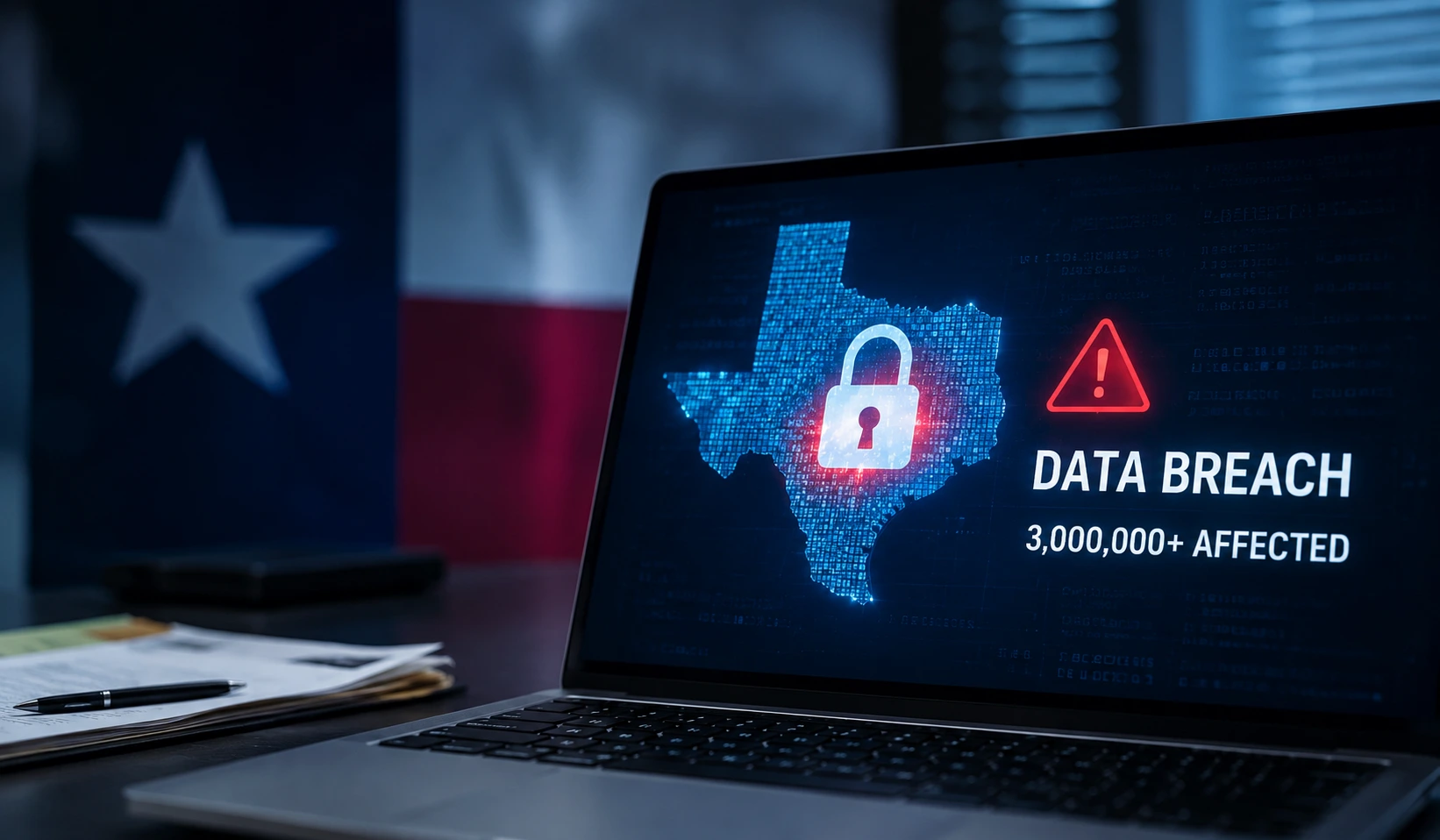
More than 3 million people may have had their personal information exposed after a cyberattack targeted a Texas system used to manage hunting and fishing licenses. State officials disclosed the incident after discovering unauthorized access to customer records maintained through a third-party platform.
The breach affected individuals who purchased licenses through the Texas Parks and Wildlife Department and has raised fresh concerns about the security of government contractors that handle large volumes of personal information.
Attackers Accessed License Records
Texas officials said attackers gained access to a database connected to the state’s licensing and registration services. The affected platform supports hunting and fishing licenses, boat registrations, and other recreational permits issued by the department.
Investigators determined that unauthorized individuals viewed and copied information stored within the system. Authorities have not publicly identified the attackers or disclosed how the intrusion occurred.
The investigation remains ongoing, and officials continue to analyze the full scope of the compromise.
Millions of Residents Affected
The incident impacted approximately 3 million current and former customers whose information was stored in the database.
Exposed records include names, mailing addresses, email addresses, phone numbers, driver’s license numbers, and identification details used during licensing transactions.
While the compromised data does not appear to include payment card information or Social Security numbers, cybersecurity experts warn that criminals can still misuse the exposed records.
Personal information often becomes valuable fuel for phishing campaigns, identity fraud attempts, and social engineering attacks.
Third-Party Provider at the Center of the Incident
The breach did not originate directly within Texas state systems. Instead, attackers targeted a third-party provider responsible for supporting licensing services.
This detail reflects a growing trend in cyberattacks. Criminal groups increasingly focus on vendors and contractors because a single compromise can expose information belonging to multiple organizations and millions of individuals.
Government agencies frequently rely on external providers to manage specialized services. While these partnerships improve efficiency, they also expand the number of systems that require strong security protections.
Recent breaches across both public and private sectors have shown that vendor security weaknesses can quickly become large-scale privacy incidents.
Officials Respond to the Breach
Texas authorities have begun notifying affected individuals and are working with cybersecurity specialists to investigate the attack. Officials also implemented additional monitoring measures and reviewed security controls surrounding the affected platform.
People whose information was exposed should remain alert for suspicious emails, text messages, and phone calls. Attackers often use publicly available breach information to create convincing scams designed to steal additional data.
Security experts recommend monitoring financial accounts, reviewing credit reports, and avoiding unsolicited requests for personal information.
Conclusion
The Texas data breach exposed personal information belonging to roughly 3 million people after attackers accessed a third-party licensing platform. Although highly sensitive financial information was not reportedly compromised, the incident still creates significant privacy and security risks for affected individuals.
The breach also highlights the growing threat posed by attacks against contractors and service providers. As organizations continue to rely on external vendors, strong oversight and rigorous security standards will become increasingly important in preventing future large-scale data exposures.
0 responses to “Texas Data Breach Exposes Information of 3 Million People”