


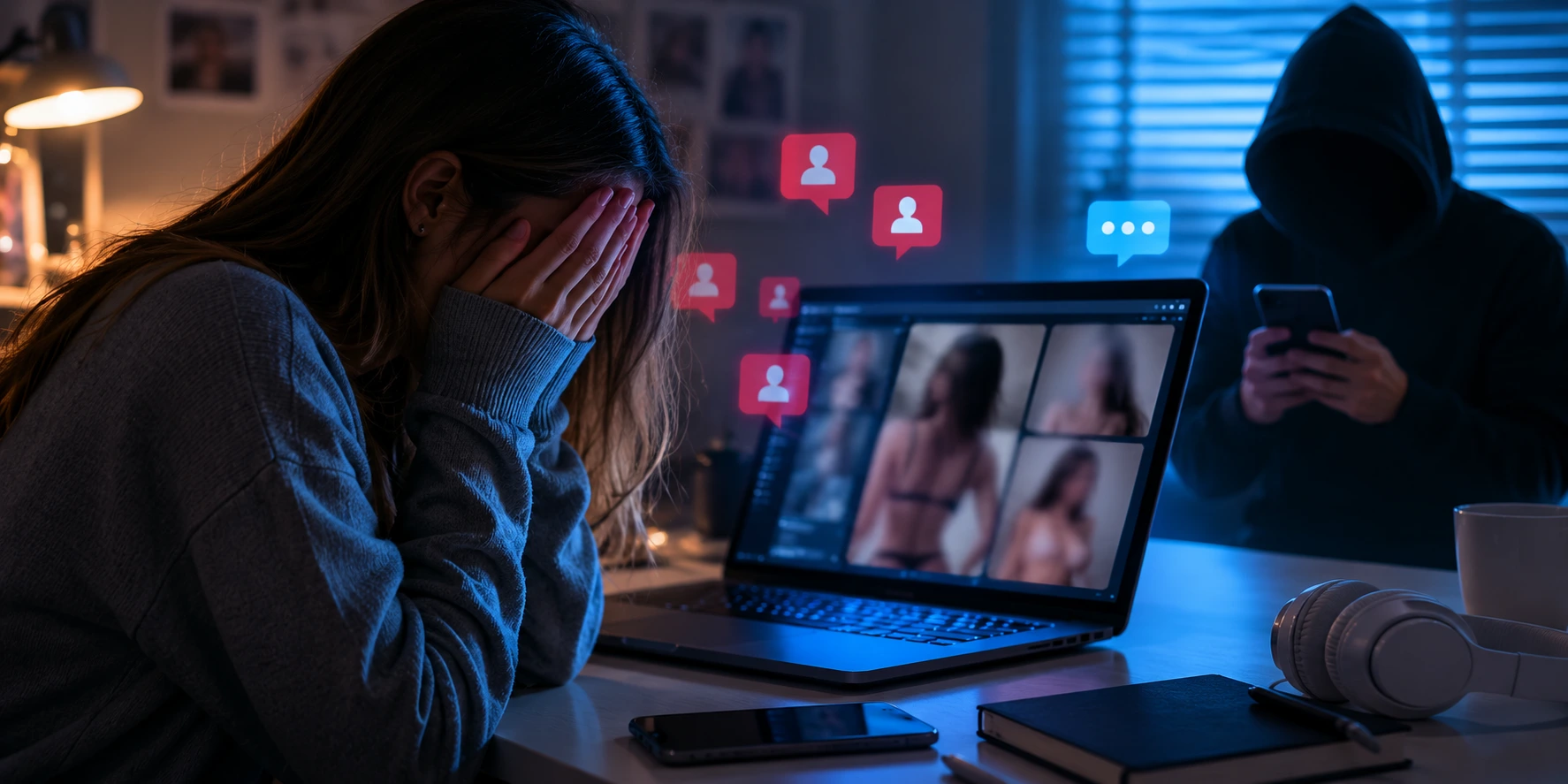
Federal prosecutors have charged a New York man with cyberstalking after he allegedly used AI-generated nude images, fake social media accounts, and racist messages to harass a college student in Georgia. Authorities say the campaign lasted for months and caused significant emotional distress to the victim.
The case highlights the growing misuse of artificial intelligence in online harassment schemes. Law enforcement officials say the suspect combined AI-generated content with impersonation tactics to damage the victim’s reputation and amplify the abuse across multiple online platforms.
Federal investigators view the incident as another example of how generative AI can intensify cyberstalking and digital abuse when malicious actors use the technology to target individuals.
Prosecutors Describe a Months-Long Harassment Campaign
According to court documents, 21-year-old Anthony Belford allegedly carried out the scheme between January and March 2025. Prosecutors say he created fake social media and email accounts that impersonated the victim and spread false claims within the victim’s community.
Authorities allege that Belford used those accounts to send racist and derogatory messages while pretending to be the victim. Prosecutors say he also created additional fake profiles that appeared to belong to the student and used them to distribute AI-generated nude images.
Investigators further allege that he used spoofed accounts on online forums to direct more people toward the fabricated content and increase its visibility.
AI Tools Continue to Fuel Online Abuse
The case reflects a broader trend that concerns lawmakers, educators, and cybersecurity experts. Advances in generative AI have made it easier for individuals to create realistic fake images using only a few publicly available photographs.
Researchers warn that non-consensual AI-generated intimate imagery has become one of the fastest-growing forms of digital harassment. Victims often face reputational harm, emotional distress, and long-term privacy concerns even when the images are entirely fabricated.
The widespread availability of AI image-generation tools has lowered the technical barriers for offenders, allowing harassment campaigns to scale more easily than in the past.
Authorities Increase Focus on AI-Driven Crimes
Federal authorities continue to pursue cases involving AI-generated intimate imagery under cyberstalking, harassment, and digital forgery laws. Recent prosecutions show that law enforcement agencies are increasingly willing to treat AI-assisted abuse as a serious criminal offense rather than a technology-related prank.
Officials also point to newer laws that target the creation and distribution of non-consensual AI-generated intimate content. These measures aim to give victims stronger legal protections and provide prosecutors with additional tools to pursue offenders.
As generative AI technology continues to evolve, investigators expect similar cases to become more common.
Conclusion
The AI nude cyberstalking case against Anthony Belford demonstrates how artificial intelligence can amplify online harassment when combined with impersonation and social media abuse. Prosecutors allege that the defendant used fake accounts, racist messages, and AI-generated nude images to target a college student over several months. As authorities confront a growing number of AI-assisted harassment cases, the incident underscores the need for stronger safeguards against technology-enabled abuse.
0 responses to “AI Nude Cyberstalking Case Leads to Federal Charge”