


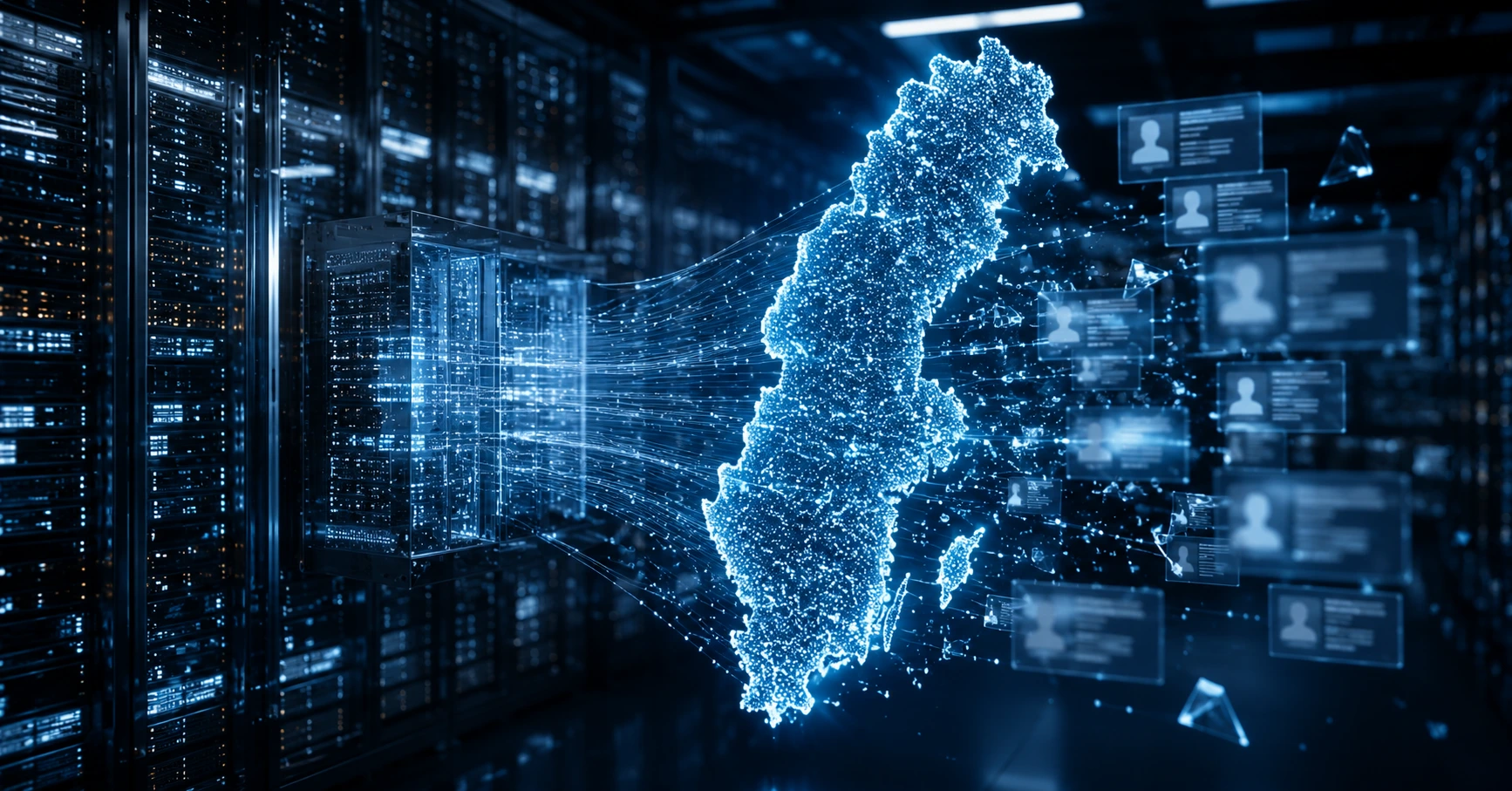
A massive dataset allegedly containing information on 5.4 million Swedish citizens has appeared on a cybercrime forum. The seller claims the records came from a compromised data provider. Researchers who reviewed samples have confirmed that the information appears genuine.
The discovery has triggered fresh concerns about privacy and data security in Sweden. The country maintains extensive public records, making it difficult to determine if the information came from a breach or was gathered through legal sources.
Regardless of its origin, experts warn that a dataset of this size could become a valuable resource for cybercriminals.
Millions of Records Offered for Sale
The threat actor advertised the database on a well-known hacker forum. According to the listing, the archive contains personal details linked to millions of Swedish residents. Researchers examined portions of the data and found names, phone numbers, and residential addresses.
The seller presented the collection as stolen information. However, security experts remain cautious about that claim. Sweden’s public information laws allow broad access to many types of personal records. As a result, large datasets can sometimes be assembled without breaching a company’s systems.
This distinction is important. A criminal advertisement does not automatically confirm that a cyberattack occurred.
Public Information Can Still Create Risks
Even if the records originated from public sources, the dataset still creates security concerns. Criminals often prefer centralized databases because they save time and effort. Instead of collecting information from multiple locations, they gain access to a ready-made archive.
Large collections of personal information can support phishing campaigns, identity fraud, and social engineering attacks. A message becomes more convincing when it includes accurate personal details. Victims may be more likely to trust emails, text messages, or phone calls that reference real information.
Attackers also combine multiple datasets to build detailed profiles of potential targets. These profiles can improve the success rate of fraud campaigns.
Researchers Urge Caution
Security researchers note that cybercriminals frequently exaggerate breach claims to attract buyers. In some cases, threat actors collect publicly available information and market it as stolen data. The tactic increases the perceived value of the dataset and helps generate interest on underground forums.
Researchers have not confirmed that a company was hacked to obtain the records. They continue to examine the available evidence. However, the authenticity of the personal information remains a concern.
The incident highlights how easily large volumes of personal data can circulate online. Once information appears in criminal marketplaces, controlling its distribution becomes difficult.
Growing Focus on Data Protection
The alleged exposure arrives as governments and organizations face increasing pressure to protect personal information. Data aggregation has become a major issue across Europe. Even legally available records can create privacy risks when collected into massive databases.
Security experts recommend that citizens remain alert for suspicious messages and unexpected requests for personal information. Criminals often use leaked or aggregated data to make scams appear legitimate.
Conclusion
The alleged Swedish data leak has drawn attention because of its scale. The dataset reportedly contains information linked to 5.4 million citizens. Researchers believe the records are authentic, but questions remain about how they were collected. Even if the information came from public sources, the centralized database could help cybercriminals launch phishing attacks and fraud campaigns. The case serves as another reminder that large collections of personal data can create significant privacy risks.
0 responses to “Swedish Data Leak Claims to Expose 5.4 Million Citizens”