


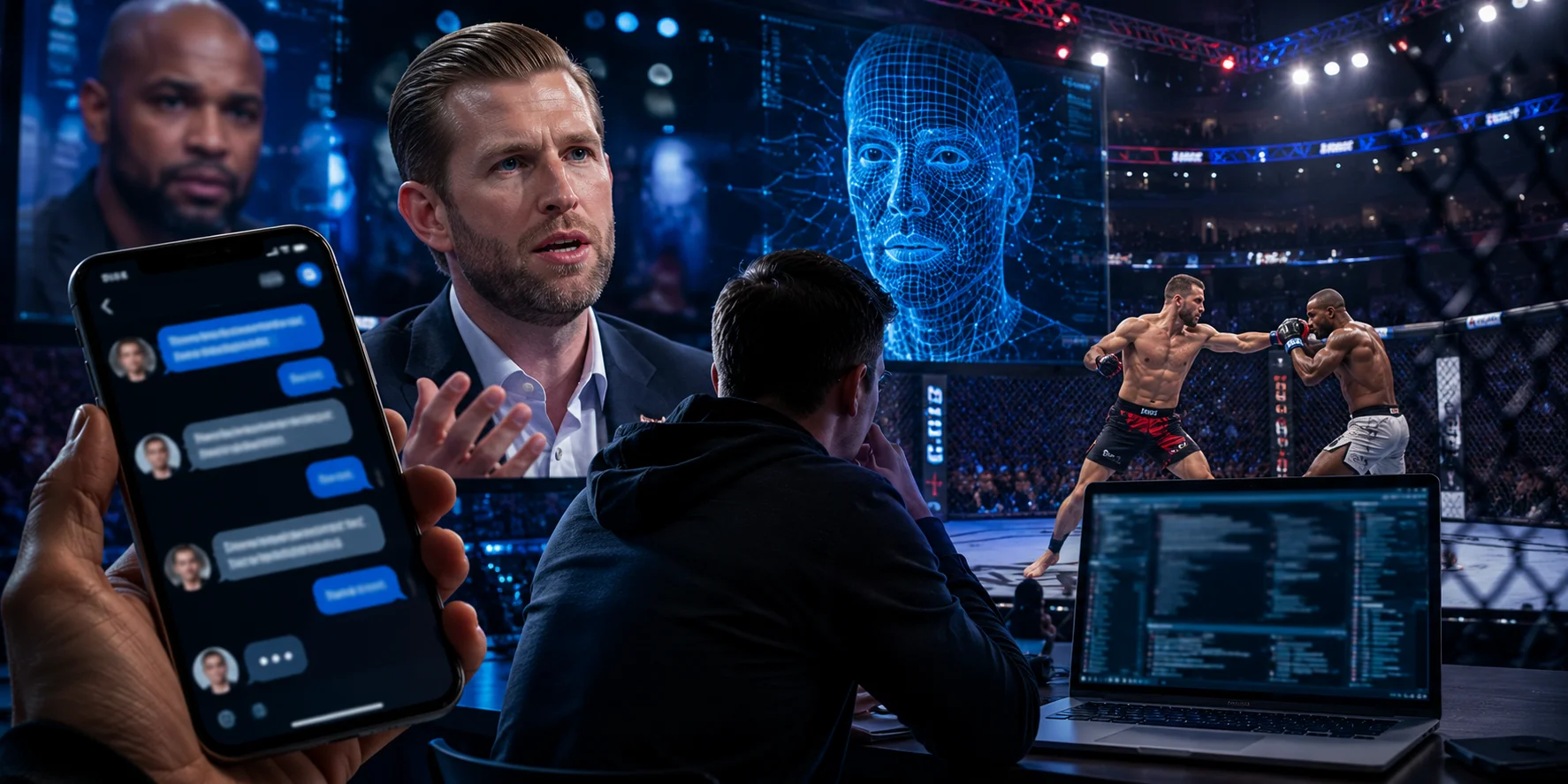
A UFC deepfake controversy has drawn attention to the growing threat of AI-generated misinformation. The debate began after screenshots circulated online that appeared to show Eric Trump asking former UFC champion Daniel Cormier for insider information before a high-profile UFC event.
The alleged messages quickly spread across social media and sparked speculation about betting integrity. Eric Trump denied sending the messages and claimed they were fabricated using artificial intelligence. The incident has renewed concerns about how easily deepfakes and manipulated content can influence public discussions.
Viral Screenshots Trigger Online Debate
The controversy started when screenshots appeared online showing an alleged conversation between Eric Trump and Daniel Cormier. The messages suggested that Trump sought information about fighter injuries and possible fight outcomes before the event.
Additional screenshots reportedly showed questions about whether certain fights were “rigged” and whether betting opportunities existed. The images spread rapidly across social media platforms and generated widespread discussion among MMA fans and political observers.
The situation gained even more attention because the UFC event took place at the White House during celebrations linked to President Donald Trump’s 80th birthday. The unusual setting helped amplify public interest in the story.
Eric Trump Denies Authenticity
Eric Trump strongly rejected the allegations and stated that the messages were fake. He said he had never communicated with Daniel Cormier and described the screenshots as AI-generated content.
Representatives associated with the Trump Organization also backed those claims. They argued that artificial intelligence has made it increasingly difficult to distinguish real communications from fabricated material. According to Trump, the incident demonstrates how easily false information can spread online.
The dispute intensified after reports surfaced that some of the original social media posts had been deleted. Questions quickly emerged about the source of the screenshots and whether any accounts involved may have been compromised.
Deepfakes Create New Verification Challenges
The controversy highlights a growing challenge facing public figures, businesses, and media organizations. Advances in generative AI allow threat actors to create convincing fake messages, images, and videos with increasing realism.
Security experts have warned that deepfakes can damage reputations, influence public opinion, and undermine trust in digital communications. Even when content is eventually proven false, the original claims often continue circulating online.
As AI tools become more accessible, verifying the authenticity of digital content has become increasingly important. Organizations now face greater pressure to confirm information before responding publicly.
Growing Focus on AI-Driven Disinformation
Governments, technology companies, and researchers continue exploring ways to address AI-generated misinformation. Concerns have increased as synthetic media becomes more sophisticated and easier to produce.
Recent legislative efforts and industry initiatives aim to improve detection capabilities and create stronger protections against deceptive AI content. However, experts acknowledge that the technology continues evolving rapidly.
The Eric Trump controversy demonstrates how quickly disputed content can dominate public discussion. It also shows how difficult it can be to establish the truth once AI-related claims enter the conversation.
Conclusion
The UFC deepfake controversy serves as another reminder of the challenges created by artificial intelligence. Disputed screenshots and allegations can spread globally within hours, regardless of their authenticity.
As deepfake technology advances, individuals and organizations will need stronger verification processes to separate legitimate information from manipulated content. The ability to confirm authenticity may become just as important as the information itself.
0 responses to “UFC Deepfake Controversy Sparks Debate Over AI Misinformation”