


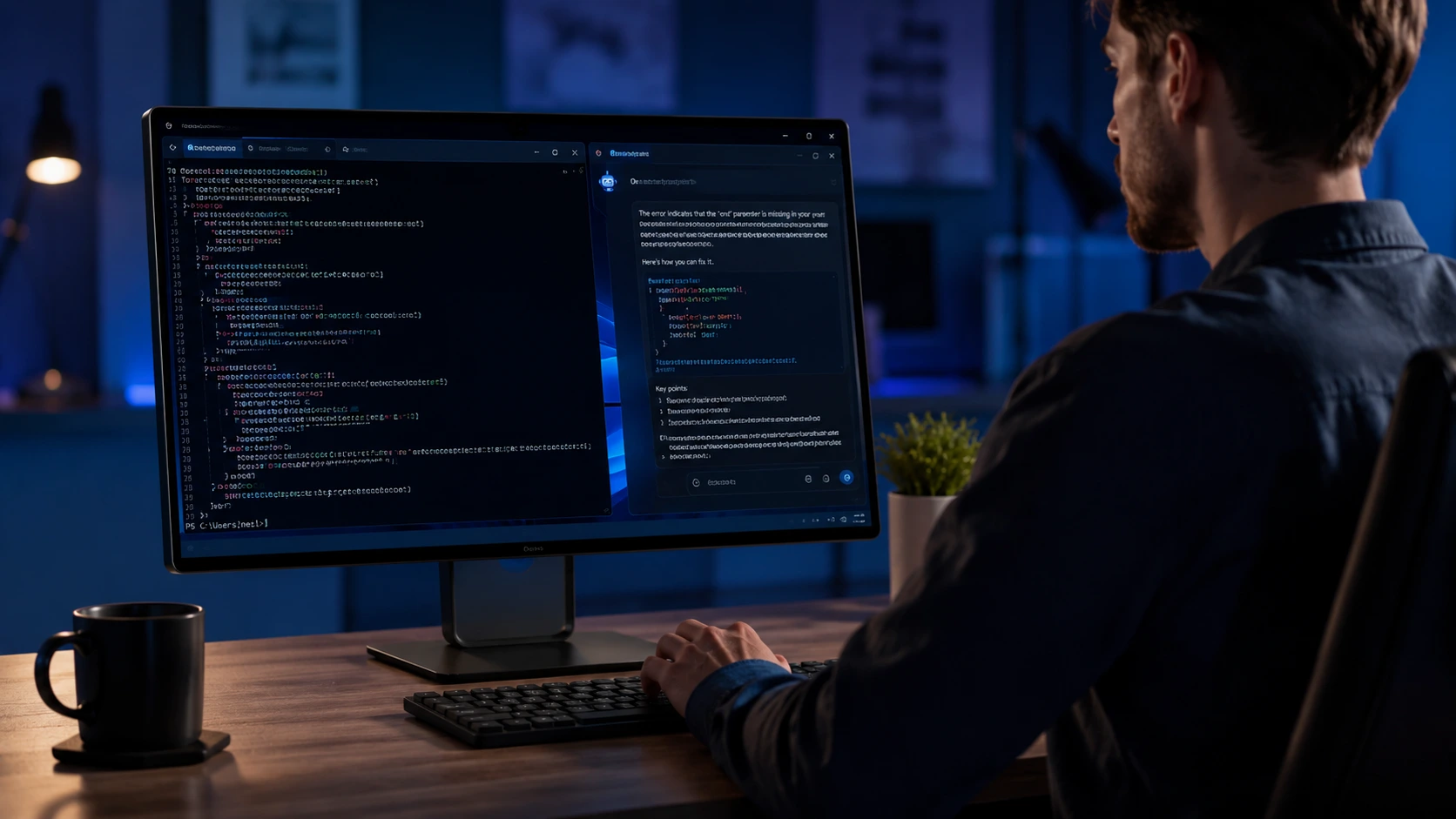
Microsoft is taking another step toward embedding artificial intelligence throughout its software ecosystem. The company has introduced Intelligent Terminal, an experimental project that brings AI agents directly into the Windows command-line experience.
The new tool allows developers to interact with AI assistants without leaving the terminal. Instead of switching between browsers, documentation sites, and chatbots, users can access contextual AI support alongside their command-line sessions.
The project offers a glimpse into how Microsoft believes software development workflows will evolve as AI becomes a standard part of everyday tools.
AI Assistance Moves Into the Terminal
Intelligent Terminal is based on Windows Terminal but adds built-in support for AI agents. Microsoft developed the project as an open-source experiment that combines traditional command-line functionality with conversational AI capabilities.
The application includes a dedicated AI panel that remains aware of activity occurring inside the terminal session. Developers can ask questions about commands, troubleshoot errors, generate scripts, and receive suggestions based on the context of their current work.
Because the assistant can access terminal output directly, users no longer need to copy logs or error messages into separate AI tools. This creates a more streamlined workflow and reduces interruptions during development tasks.
Microsoft Wants Developers to Stay Focused
The launch reflects a broader trend in software development. AI tools are increasingly becoming part of existing workflows rather than standalone applications.
Many developers already rely on AI assistants for coding, debugging, and documentation. Intelligent Terminal extends those capabilities into command-line environments, which remain a critical part of modern software development.
Microsoft says the goal is to help developers solve problems faster while reducing the need to jump between multiple applications. By keeping AI support inside the terminal, the company hopes to create a more efficient development experience.
Support for Multiple AI Agents
The platform is designed to support more than a single AI model. Developers can connect different AI agents through Microsoft’s agent framework, giving users flexibility over which tools they use.
This approach differs from many AI-powered applications that lock users into one provider. Instead, Intelligent Terminal acts as a workspace where different agents can assist with tasks depending on the user’s preferences and requirements.
The project also supports background agent activity, allowing AI systems to work on tasks while developers continue using the terminal.
Part of Microsoft’s Growing AI Strategy
The release arrives as Microsoft continues integrating AI features across Windows and its developer ecosystem. The company has already expanded AI capabilities through GitHub Copilot, Windows Copilot, and a growing collection of AI-powered productivity tools.
Bringing AI directly into the terminal demonstrates how Microsoft is moving beyond chat interfaces and embedding intelligent assistants into specialized software. The strategy aims to place AI wherever users perform their daily work rather than requiring separate applications.
For developers, that could mean faster troubleshooting, improved automation, and fewer interruptions during complex projects.
Conclusion
Intelligent Terminal highlights Microsoft’s vision for the future of software development. By combining command-line tools with context-aware AI agents, the company is turning the terminal into more than a place to run commands. Although the project remains experimental, it signals a future where AI assistance becomes a built-in component of the tools developers use every day.
0 responses to “Intelligent Terminal Brings AI Agents to Windows”